
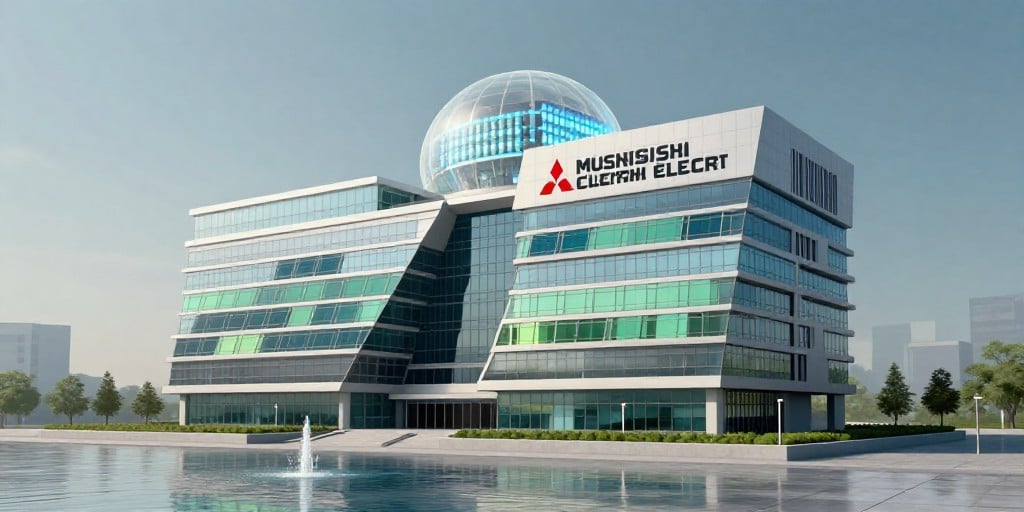
Mitsubishi Electric Corp Partners with Japan’s NEDO on Zero‑Energy Conversion of a Malaysian Office Building
Mitsubishi Electric Corporation (Mitsubishi Electric) has entered into a strategic partnership with the Japan New Energy and Industrial Technology Development Organization (NEDO) to retrofit the company’s headquarters in Selangor, Malaysia, into a zero‑energy building (ZEB). The initiative, driven by the Sustainable Energy Development Agency (SEDA) and a consortium of Japanese technology firms, aims to retrofit an existing commercial structure with advanced energy‑saving systems and an integrated building energy management platform. The project serves as a demonstrator for decarbonising existing buildings throughout the ASEAN region and will assess the practical application of ISO/TS 23764, a standard that provides a pragmatic framework for building decarbonisation.
Technical Overview of the Retrofit Program
Building Envelope and Thermal Mass Optimization
The retrofit will commence with a comprehensive audit of the building envelope, including façade, roof, and glazing. Advanced high‑performance insulated panels, double‑glazed low‑emissivity windows, and phase‑change materials (PCM) will be installed to reduce conduction losses. The integration of a variable‑ratio heat‑pump system will allow for dynamic thermal mass management, ensuring that the building remains within optimal temperature ranges while minimizing HVAC load.
Integrated Energy Management Platform
Central to the conversion is the deployment of Mitsubishi Electric’s Smart Building Management System (SBMS). The platform will gather real‑time data from a network of IoT sensors that monitor temperature, humidity, occupancy, and energy consumption. An AI‑driven analytics engine will predict peak load periods and automatically adjust HVAC, lighting, and ancillary systems to maintain energy efficiency. The platform will also interface with the local grid’s demand‑response signals, enabling the building to function as a virtual energy storage asset.
Renewable Energy Generation
To achieve zero net energy, the project will install a rooftop photovoltaic (PV) array capable of delivering up to 1.5 MWp of power. Complementary battery energy storage systems (BESS) with a capacity of 3 MWh will smooth intermittency and provide ancillary services to the grid. The PV array will be coupled with a concentrated solar thermal (CST) system to provide high‑temperature process heat for the building’s water‑heating and sterilisation needs, further reducing the dependence on fossil‑fueled backup.
Heat Recovery and Circularity
Heat‑recovery ventilators (HRVs) will capture sensible heat from exhaust air streams and reinject it into the fresh supply air, reducing the heating demand by up to 40 %. Additionally, a greywater treatment unit will recycle building wastewater for non‑potable uses such as irrigation and toilet flushing, thereby lowering potable water consumption by an estimated 30 %.
Economic Implications and Capital Expenditure Drivers
Cost–Benefit Analysis
The projected capital investment for the retrofit is approximately USD 25 million. Using a discounted cash flow analysis with a discount rate of 8 % and an expected project lifetime of 25 years, the net present value (NPV) of the retrofit is estimated at USD 3.5 million. The internal rate of return (IRR) is calculated at 11 %, surpassing typical industry benchmarks for large‑scale commercial projects. Sensitivity analysis indicates that a 5 % increase in renewable energy tariffs can improve the IRR to 13 %, underscoring the importance of favourable policy frameworks.
Market Signals and Investment Momentum
The partnership sends a strong signal to capital markets regarding the viability of retrofitting existing commercial buildings in the ASEAN region. Institutional investors, increasingly focused on environmental, social, and governance (ESG) metrics, are likely to view such projects as attractive opportunities for long‑term, stable cash flows. The initiative also aligns with Malaysia’s National Green Technology Policy, which offers tax incentives and feed‑in tariffs for renewable energy projects.
Supply Chain and Infrastructure Considerations
Component Sourcing and Logistics
The supply chain for high‑performance building materials will be anchored in Japan, with key components such as PCM panels, advanced glazing, and BESS modules sourced from specialized manufacturers. To mitigate lead‑time risks, Mitsubishi Electric has secured long‑term contracts with multiple suppliers, ensuring a continuous flow of critical parts even amid global semiconductor shortages.
Infrastructure and Grid Integration
Integration with the local utility grid will require the installation of a 3‑phase 11 kV connection to the building’s rooftop. The grid operator has committed to a 10‑year power purchase agreement (PPA) at a fixed tariff of USD 0.05 per kWh, guaranteeing revenue streams for the PV generation. The project’s BESS will also participate in frequency regulation markets, providing additional revenue streams and enhancing grid resilience.
Regulatory Landscape and Standardisation
ISO/TS 23764 Implementation
ISO/TS 23764 outlines a systematic methodology for assessing and mitigating the carbon footprint of existing buildings. By applying the standard’s criteria, Mitsubishi Electric will quantify baseline emissions, set measurable reduction targets, and report progress in a transparent, internationally recognised format. This approach not only facilitates compliance with local and international regulations but also positions the building as a best‑practice exemplar for future retrofit projects.
Alignment with ASEAN Green Building Guidelines
The retrofit adheres to the ASEAN Green Building Code, ensuring that all materials and technologies meet the region’s environmental performance thresholds. This alignment also streamlines certification processes and enhances the building’s marketability to tenants who prioritize sustainability.
Conclusion
The Mitsubishi Electric–NEDO partnership represents a technologically sophisticated and economically viable model for converting legacy commercial buildings into zero‑energy structures. By leveraging advanced thermal envelope solutions, AI‑driven energy management, and integrated renewable generation, the project not only reduces carbon emissions but also delivers tangible financial benefits. The initiative sets a precedent for similar upgrades across ASEAN, fostering a regional shift toward sustainable industrial infrastructure and reinforcing the global momentum toward net‑zero emissions.