Corporate News
Market Performance and Sectoral Context
During the most recent trading week, Zalando SE’s share price registered a modest yet notable rise across both the German DAX index and the broader European equity markets. The uptick contributed to an overall positive tone for the DAX, which closed the session within the upper half of its daily trading range. Within the German market, Zalando stood out among a cohort of technology and consumer‑goods stocks that benefited from a general lift, reflecting investor confidence in digital‑first retail and logistics platforms.
This incremental price movement, while small in absolute terms, underscores a broader trend: European investors are increasingly attentive to companies that combine e‑commerce growth with advanced logistics capabilities. The DAX’s performance, buoyed by firms such as Zalando, suggests that technology‑driven efficiencies continue to be a key driver of value creation in the German market.
Technological Innovation: Automated Returns Processing
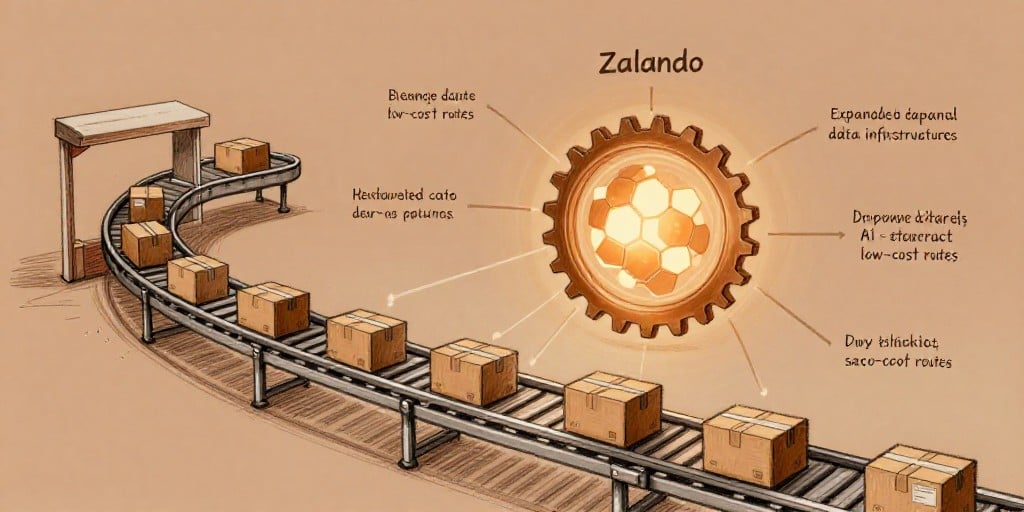
A pivotal factor behind the recent investor enthusiasm is Zalando’s continued expansion of automated returns processing. In partnership with Teradyne Robotics and Sereact, the retailer has deployed a closed‑loop training system that harnesses physical artificial intelligence to automate the handling of returned fashion items. The system has already been piloted at fulfillment centers in Germany and Poland, and a demonstration is slated for the upcoming NVIDIA GTC Berlin conference.
Key Features of the System
- Physical AI Integration – The system uses robotics and machine vision to identify, sort, and recondition returned garments without manual intervention.
- Closed‑Loop Training – Data from real‑world returns feed back into the system’s learning algorithms, continually improving accuracy and speed.
- Scalable Deployment – The modular architecture allows rapid scaling to additional warehouses and markets as Zalando expands.
Strategic Rationale
- Logistics Efficiency – Automating returns reduces sorting time, enabling faster replenishment of inventory and improving order fulfillment cycles.
- Cost Reduction – Lower labor requirements translate into direct cost savings, enhancing operating margins.
- Sustainability Alignment – The initiative aligns with European regulations that discourage the disposal of returned merchandise, positioning Zalando as a responsible steward of circular economy principles.
Operational Implications and Financial Impact
The integration of the returns‑automation system into Zalando’s existing AI‑driven logistics infrastructure has already yielded measurable improvements in operational metrics:
- Faster Processing Times – Returns are sorted and reconditioned more rapidly, shortening the cycle from return receipt to resale.
- Lower Labor Costs – Automation reduces the need for manual sorting teams, directly impacting cost structures.
- Higher Resale Rates – Improved inspection accuracy increases the likelihood that returned items are suitable for resale, thereby bolstering revenue generation from refurbished goods.
These efficiencies are expected to accelerate Zalando’s revenue growth trajectory, as the retailer can convert returns into sales at a higher rate and with lower associated costs. Investors are keenly monitoring these developments, assessing the extent to which technological innovations can translate into sustainable competitive advantage and profitability.
Corporate Governance and Investor Engagement
On the governance front, a recent voting‑rights announcement disclosed that BlackRock, Inc. has crossed the 3 % threshold of voting shares in Zalando. Under German securities law, this threshold triggers a public notification and signals growing institutional interest in the company’s long‑term prospects. While this disclosure does not alter Zalando’s operational plans, it highlights the importance of shareholder engagement and the potential influence of major institutional investors on strategic direction.
The presence of a prominent asset manager like BlackRock also suggests that Zalando is attracting attention from investors who prioritize governance, transparency, and sustainable business practices. This aligns with broader market expectations that European firms integrate ESG considerations into their core strategy.
Broader Economic and Industry Connections
Zalando’s focus on AI‑enabled logistics reflects a cross‑sector trend where digital transformation is being leveraged to address supply‑chain bottlenecks. Similar initiatives are emerging in the automotive, electronics, and consumer goods sectors, where the efficient handling of returns and reverse logistics is increasingly recognized as a key value driver.
Moreover, Zalando’s strategy resonates with the wider European regulatory environment. The European Commission’s initiatives on e‑commerce and circular economy—particularly directives aimed at reducing waste from returned products—create a favorable policy backdrop for firms that invest in sustainable logistics solutions. By aligning its operations with these regulatory trends, Zalando not only mitigates compliance risk but also positions itself as a leader in responsible retail.
Conclusion
Zalando SE’s modest share‑price uptick, coupled with its strategic investments in AI‑driven returns processing, reinforces its standing as a leading European fashion retailer. The company’s ability to translate technological innovation into operational efficiencies, cost reductions, and revenue gains is attracting both market and institutional interest. As the retail and logistics sectors continue to evolve in response to digital disruption and regulatory imperatives, Zalando’s focus on automation, sustainability, and shareholder engagement offers a compelling case study of how traditional retail can adapt to the demands of a rapidly changing economic landscape.