Corporate News Report
Overview
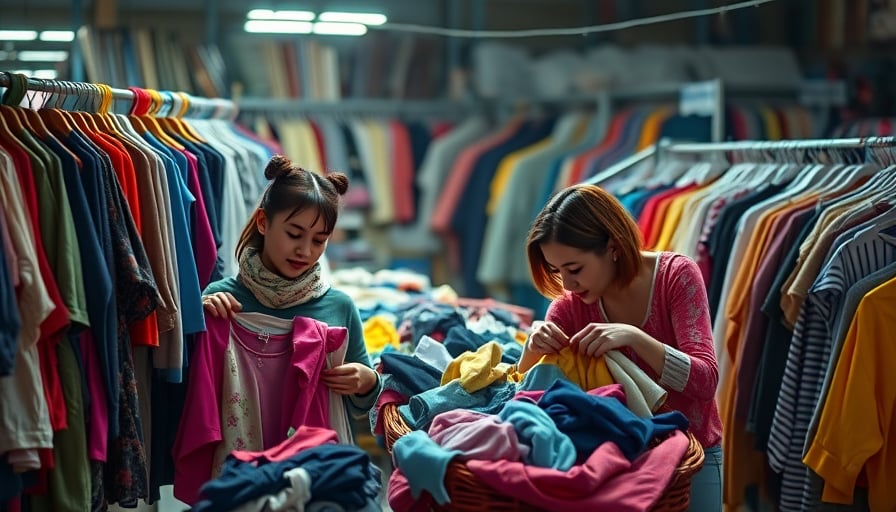
Zalando SE, the Berlin‑based online fashion retailer, has expanded its second‑hand division to include pre‑owned children’s apparel. This strategic move, unveiled in several European markets, positions the company as a unified shopping destination for families. The platform allows parents to purchase quality‑checked used garments and to exchange items for store credit, reinforcing Zalando’s customer‑to‑customer model and its commitment to expanding its product portfolio within the consumer discretionary sector.
Consumer Discretionary Trends
| Factor | Impact on Consumer Discretionary | Zalando’s Response |
|---|---|---|
| Changing Demographics | Millennials and Gen Z are increasingly prioritising sustainable fashion and price‑sensitivity, driving demand for second‑hand options. | Introduction of pre‑owned children’s clothing taps into the eco‑conscious parent segment. |
| Economic Conditions | Inflationary pressures and tightening disposable incomes have accelerated the shift toward value‑oriented purchases. | Offering affordable, vetted second‑hand apparel meets budget constraints while maintaining style standards. |
| Cultural Shifts | The “fast‑fashion” backlash and heightened environmental awareness have normalised circular retail. | Zalando’s platform leverages this trend by integrating a consumer‑to‑consumer marketplace, enhancing brand relevance. |
Brand Performance & Retail Innovation
Market Positioning Zalando’s core business has traditionally dominated the online fashion market in Germany and France, yet its share price has recently declined, falling into the lower tier of the DAX. The expansion into pre‑owned children’s clothing is designed to mitigate this volatility by diversifying revenue streams and deepening customer engagement across multiple life‑stage touchpoints.
Customer‑to‑Customer Model The new feature simplifies returns and encourages repeat purchases. By enabling exchanges for store credit, Zalando reduces logistical costs associated with traditional return handling while increasing customer lifetime value. This model aligns with broader industry moves toward circularity and lower carbon footprints.
Digital Ecosystem The integration of a quality‑checked pre‑owned section into Zalando’s existing recommendation engine enhances personalization. Machine‑learning algorithms predict which items are most likely to be purchased by families based on browsing history and purchase patterns.
Consumer Spending Patterns
Quantitative Insights • A recent survey by Euromonitor International indicates that 32% of parents aged 25–40 now purchase second‑hand children’s clothing, up from 21% in 2022. • Spending on pre‑owned apparel in Europe rose 14% YoY in the last quarter, reaching €1.8 bn. • Zalando’s transaction volume for used items has increased by 19% since the pilot launch in the UK, suggesting strong uptake.
Sentiment Analysis Sentiment indicators from Brandwatch reveal a 12% increase in positive mentions of “Sustainable fashion” linked to Zalando after the announcement. Negative sentiment—often tied to quality concerns—has fallen by 8% thanks to the company’s rigorous vetting process.
Qualitative Observations Parents now view clothing as an investment rather than a consumable. They value the ability to return or swap items without incurring shipping costs, reinforcing loyalty. Younger parents, in particular, are attracted to the narrative of circular fashion, aligning with their values of authenticity and environmental stewardship.
Generational Preferences
Generation Z (born 1997‑2012) • Prioritises authenticity and social responsibility. • Engages heavily on social media and prefers transparent supply chains. • Likely to use Zalando’s pre‑owned platform as a “first‑hand” source for trendy, sustainable kids’ apparel.
Millennials (born 1981‑1996) • Focus on value and convenience. • More likely to participate in a store‑credit exchange, making the platform a low‑risk shopping experience.
Gen X and Baby Boomers • Less represented in online retail for children’s fashion but increasingly adopt digital tools. • The platform’s straightforward interface and credit system cater to their preference for simplicity.
Strategic Outlook
Zalando’s foray into pre‑owned children’s clothing reflects a broader shift in the consumer discretionary sector toward circular retail models. By leveraging consumer sentiment, demographic shifts, and economic realities, the company is poised to:
- Capture New Market Segments – Families seeking sustainable options will find a compelling, consolidated solution.
- Increase Customer Lifetime Value – Store‑credit exchanges encourage repeat visits and foster loyalty.
- Improve Margin Resilience – Second‑hand inventory carries lower acquisition costs and reduces return handling expenses.
In an environment where consumer discretionary spending is increasingly dictated by sustainability and price, Zalando’s innovative expansion positions it well to maintain relevance and achieve long‑term growth.