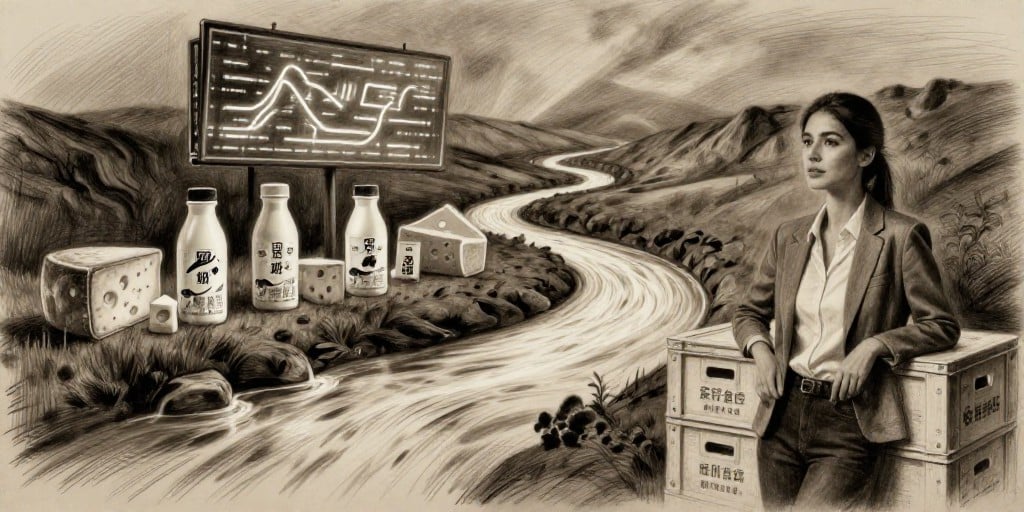
Corporate Insights: Yili’s Strategic Positioning in a Shifting Dairy Landscape
Inner Mongolia Yili Indus has announced a modest uptick in operating performance across recent quarters. While revenue trends remain modestly upward, the company’s core operating profit margin has experienced a modest recovery, signaling stronger profitability in the face of rising raw‑milk costs. Simultaneously, Yili has continued to emphasize shareholder returns through dividend declarations and a planned share‑repurchase program, underscoring its commitment to maintaining a stable financial policy.
Supply‑Side Resilience Amid Rising Raw‑Milk Prices
Yili has successfully mitigated the impact of a gradual rebound in raw‑milk prices. The firm’s scale and strategic positioning in the upstream supply chain appear to cushion potential cost pressures. This positioning is expected to sustain margins as the broader dairy market moves toward higher‑value products—such as low‑temperature milk and nutritional items—driven by evolving consumer preferences for premium and functional dairy goods.
Market Dynamics: Product‑Mix Shifts and Operational Efficiency
Yili’s performance aligns with a broader trend in the dairy industry, where leading firms are benefiting from product‑mix shifts and operational efficiencies. While raw‑milk price fluctuations continue to influence cost structures, the overall sector trajectory suggests that improvements in product mix and supply‑chain management will be key to sustaining profitability.
As the industry progresses, Yili’s focus on maintaining quality, enhancing distribution channels, and investing in product development positions it to capitalize on emerging opportunities in the evolving dairy market.
Editorial Perspective: Lifestyle Trends, Demographic Shifts, and Cultural Movements
The dairy sector is experiencing a convergence of digital transformation and physical retail innovation, driven by changing generational spending patterns and cultural shifts toward health consciousness and experiential consumption. Yili’s recent strategy reflects an acute awareness of these dynamics:
| Trend | Consumer Impact | Business Opportunity |
|---|---|---|
| Digital‑Physical Integration | Younger consumers (Gen Z, Millennials) value seamless omnichannel experiences, blending online discovery with in‑store sampling. | Retailers can leverage data analytics to personalize product recommendations, while physical stores act as experiential hubs that reinforce brand loyalty. |
| Health & Wellness Emphasis | There is growing demand for functional ingredients—probiotics, omega‑3s, plant‑based alternatives. | Companies can diversify into low‑fat, lactose‑free, or fortified dairy products, capturing premium pricing. |
| Sustainability & Transparency | Consumers increasingly scrutinize supply chains for ethical and environmental credentials. | Transparent sourcing, carbon‑neutral packaging, and circular initiatives can differentiate brands in crowded markets. |
| Experiential Retail | Post‑pandemic consumers seek in‑store experiences that cannot be replicated online (tasting rooms, interactive demos). | Physical outlets become brand storytelling venues, boosting foot traffic and average basket size. |
| E‑Commerce Growth | Online grocery sales continue to rise, especially for convenience items and subscription models. | Direct‑to‑consumer channels reduce middle‑man margins and provide granular consumer data. |
Forward‑Looking Analysis: Translating Societal Changes into Market Opportunities
- Capitalizing on Generational Spending Patterns
- Millennials and Gen Z are willing to pay a premium for products that align with their values, such as organic, low‑fat, or fortified dairy. Yili’s move toward low‑temperature milk and nutritional items aligns well with these preferences.
- Leveraging subscription services and mobile‑first payment options can enhance customer retention and lifetime value.
- Enhancing Digital-Physical Synergy
- Integrating IoT‑enabled smart packaging that communicates product freshness or provenance can bridge online information with in‑store experiences.
- Retail partnerships that offer in‑store pick‑up for online orders can reduce delivery costs while driving store traffic.
- Sustainability as a Competitive Lever
- Investing in renewable energy for dairy processing and carbon‑neutral logistics can reduce operating costs long‑term and appeal to eco‑conscious consumers.
- Transparent reporting on raw‑milk sourcing and animal welfare can strengthen brand trust and justify premium pricing.
- Data‑Driven Product Development
- Using consumer data from e‑commerce platforms and loyalty programs to identify gaps in the product portfolio (e.g., plant‑based yogurt alternatives) can accelerate time to market.
- A/B testing new flavors or functional additives in select markets can refine product offerings before full rollout.
- Strategic Supply‑Chain Partnerships
- Securing long‑term contracts with local farms can stabilize raw‑milk costs, allowing Yili to negotiate better pricing and maintain margin stability.
- Collaborative logistics with third‑party delivery services can expand reach into underserved rural or suburban areas.
Conclusion
Yili’s modest performance improvement and strategic focus on shareholder returns, supply‑chain resilience, and product diversification reflect a broader industry shift toward higher‑value, health‑centric dairy products. By aligning its operational strengths with emerging lifestyle trends—digital‑physical retail convergence, sustainability, and experiential consumption—Yili is poised to turn societal changes into tangible market opportunities. Continued investment in data analytics, supply‑chain transparency, and consumer‑centric product development will be essential for sustaining profitability and capturing the next wave of consumer demand.