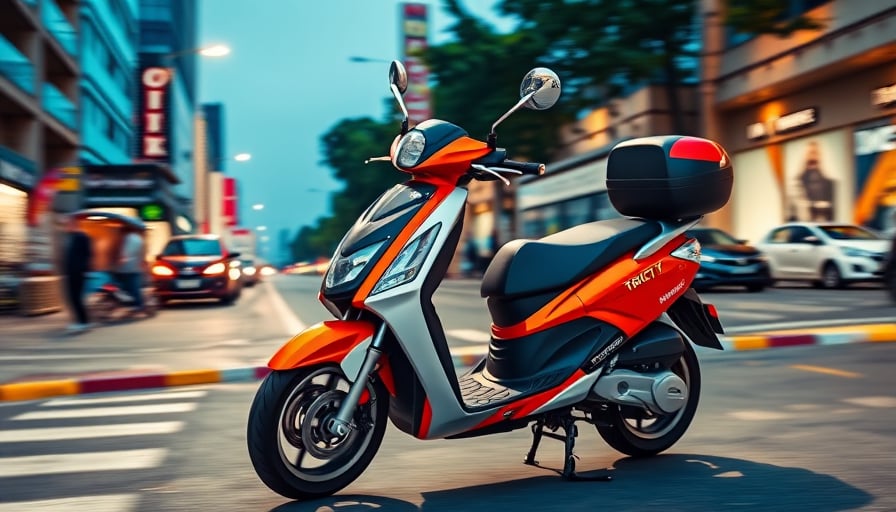
Yamaha Motor Co. and Autoliv Inc. Forge Joint Development Agreement for Airbag‑Enabled Commuter Scooter
Yamaha Motor Co. (NYSE: YAMA) and Autoliv Inc. (NYSE: ALV) have announced a joint development agreement to integrate an advanced airbag system into Yamaha’s upcoming Tricity 300 commuter scooter. The partnership seeks to bring the same safety sophistication that has long characterized high‑end motorcycles into the broader, rapidly growing commuter‑scooter segment.
Technical Overview of the Collaborative Product
The airbag module, designed and validated by Autoliv, is engineered to deploy in a frontal collision. Upon impact, the system absorbs the rider’s kinetic energy while preserving the scooter’s balance and maintaining its inherent storage capacity—an essential consideration for urban commuters who rely on compactness and versatility. Extensive simulations and full‑scale crash testing confirm the module’s compliance with international development standards, ensuring both rider protection and product reliability.
Market Timing and Strategic Intent
The first Tricity 300 units equipped with the Autoliv‑sourced airbag are slated for launch in the first half of 2026. Yamaha’s initiative reflects its broader strategy of enhancing rider protection across all two‑wheel vehicles, positioning the company as a leader in safety innovation beyond its traditional motorcycle domain. For Autoliv, the partnership represents an expansion of its product portfolio into the mobility‑safety market, leveraging its automotive safety expertise to serve a new consumer segment.
Industry Context and Competitive Dynamics
The commuter‑scooter market has experienced accelerated growth in urban centers worldwide, driven by increasing demand for affordable, efficient, and environmentally friendly personal transport. As usage volumes rise, so too do safety concerns, prompting manufacturers to differentiate through advanced safety features. Yamaha’s collaboration with Autoliv enables the company to offer a compelling safety proposition that could influence purchasing decisions in a segment where price sensitivity is high.
Autoliv’s move into scooter safety also underscores a broader industry trend: automotive safety providers are diversifying into alternative vehicle platforms—including electric bicycles, autonomous shuttles, and micro‑mobility devices—to capture emerging market opportunities and mitigate exposure to cyclical automotive demand.
Economic and Regulatory Implications
Regulatory bodies across several jurisdictions are beginning to consider mandatory safety standards for small two‑wheel vehicles, particularly those powered by internal combustion engines or battery electric systems. The early deployment of a proven airbag system could position Yamaha ahead of potential regulatory changes, while Autoliv stands to benefit from early market entry and the ability to demonstrate compliance to regulators.
From an economic standpoint, the partnership aligns with cost‑efficiency imperatives. By sharing development resources and leveraging Autoliv’s existing supply chain, both companies can reduce time‑to‑market and amortize R&D expenditures more effectively. Although financial terms remain undisclosed, the collaborative model suggests a risk‑sharing arrangement that could mitigate upfront capital outlays for Yamaha.
Broader Economic Trends and Cross‑Sector Insights
The convergence of automotive safety technology and micro‑mobility highlights a broader shift toward integrated safety ecosystems. The same sensor networks, data analytics platforms, and rapid deployment frameworks used in automotive safety are increasingly being adapted to other vehicle types. This trend illustrates the transferability of core safety principles across sectors, reinforcing the notion that foundational business disciplines—such as rigorous testing, regulatory compliance, and customer‑centric product design—transcend industry boundaries.
Furthermore, the partnership exemplifies how companies can maintain competitive positioning by identifying adjacent markets where their core competencies can be leveraged. Yamaha’s expertise in two‑wheel dynamics, combined with Autoliv’s safety engineering pedigree, creates a synergistic offering that could set a new benchmark for commuter scooter safety worldwide.
Outlook
While Yamaha and Autoliv have not disclosed commercial terms or production volumes, the joint development agreement signals a strategic alignment that could reshape the competitive landscape of the commuter‑scooter industry. As urban mobility continues to evolve, stakeholders will likely monitor how this collaboration influences safety standards, consumer expectations, and regulatory frameworks across the global marketplace.