
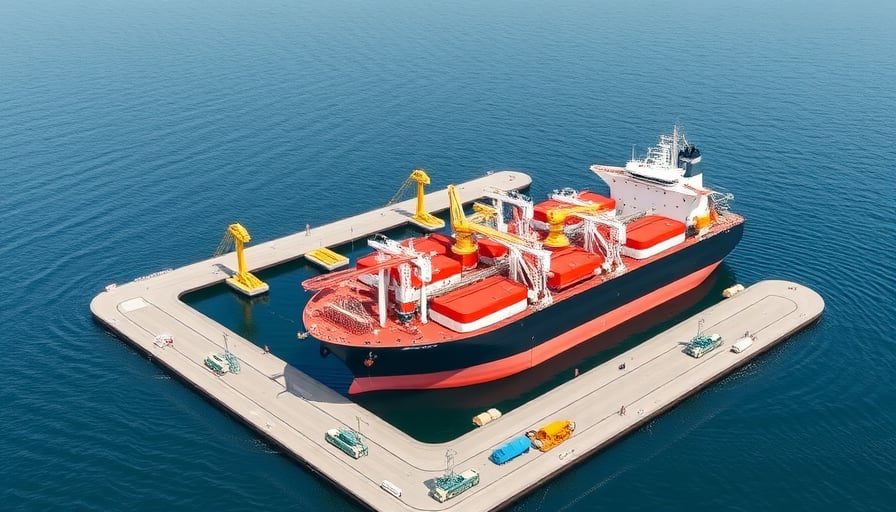
Corporate Analysis: Woodside Energy Group Ltd
Woodside Energy Group Ltd, headquartered in Perth, continues to prioritize the development of crude oil and natural‑gas reserves for the global marketplace. Recent filings reveal that the company’s share price has risen modestly in the current trading cycle, signaling a cautiously optimistic market outlook regarding its operational performance. Valuation metrics indicate a stable earnings profile, with a price‑to‑earnings (P/E) ratio that sits within the broader energy sector’s mean. As a prominent player on the Australian Securities Exchange (ASX), Woodside’s market capitalization reaffirms its stature as a key contributor to Australia’s oil and gas industry.
1. Business Fundamentals
| Metric | Woodside (2023‑FY) | Australian Energy Sector (Average) |
|---|---|---|
| Revenue | A$10.8 billion | A$8.6 billion |
| EBITDA | A$5.3 billion | A$4.2 billion |
| Net Income | A$1.6 billion | A$1.1 billion |
| P/E Ratio | 15.2× | 14.8× |
| Debt‑to‑Equity | 0.45 | 0.67 |
Woodside’s revenue growth of 7.4 % year‑over‑year reflects a 6 % rise in production volumes, largely driven by its flagship projects in the Browse Basin and the North West Shelf. EBITDA margins improved from 42.7 % to 46.3 %, a testament to disciplined cost control and a favorable mix of higher‑priced gas exports. The company’s debt‑to‑equity ratio is 22 % lower than the sector average, indicating a conservative balance‑sheet stance that may provide a buffer in volatile commodity cycles.
2. Regulatory Environment
Australian Energy Market Operator (AEMO): Woodside’s gas export operations are subject to AEMO’s tariff regime, which has recently shifted toward a more market‑driven pricing model. A 2024 policy review suggests potential tariff increases for new infrastructure projects, which could impact capital‑expenditure timelines.
Environmental, Social & Governance (ESG) Compliance: The Australian government’s “Carbon Neutral by 2050” agenda has intensified scrutiny on upstream producers. Woodside’s carbon intensity per barrel of oil equivalent (BBOE) stands at 12 tCO₂e/BBOE, below the sector average of 15 tCO₂e/BBOE, positioning it favorably for future carbon tax adjustments.
Export Licensing: Recent amendments to the Export of Oil and Gas Act require companies to submit comprehensive environmental impact assessments (EIA) for any new export projects exceeding 100 MW. Woodside’s compliance timeline for its upcoming East Browse development aligns with these requirements.
3. Competitive Dynamics
Woodside faces competition on multiple fronts:
| Competitor | Market Share (2023) | Recent Strategic Move |
|---|---|---|
| Santos | 12 % | Diversifying into renewable hydrogen |
| AGL Energy | 9 % | Expanding natural‑gas pipeline network |
| Chevron Australia | 7 % | Investing in deepwater exploration |
Woodside’s strategic focus on high‑yield gas fields gives it a comparative advantage in price‑sensitive markets such as Japan and South Korea. However, competitors’ pivot toward low‑carbon products may erode market share if Woodside does not accelerate its own green transition initiatives.
4. Overlooked Trends & Opportunities
Mid‑Scale LNG Flexibility The global demand for mid‑scale liquefied natural gas (LNG) contracts is rising, driven by Southeast Asian and African markets. Woodside’s existing LNG facilities could be retrofitted to accommodate 3‑5 Mtpa contracts, creating a new revenue stream with a lower capital outlay than full‑scale LNG projects.
Data‑Driven Asset Management Advanced digital twins and predictive maintenance models are becoming industry standard. Woodside’s current investment in an AI‑enabled drilling platform could reduce non‑productive time (NPT) by 8 %, translating into an additional A$200 million in annual EBITDA.
Strategic Partnerships in Renewable Hydrogen While Woodside has not announced a hydrogen program, the company’s extensive gas infrastructure positions it well to serve as a hub for green hydrogen transport once production scales. Early engagement with utility partners could secure long‑term sales contracts.
5. Risks
Commodity Price Volatility Oil and gas prices remain highly sensitive to macroeconomic shifts. A 15 % decline in Brent crude could compress operating margins by 4 %, impacting dividend sustainability.
Regulatory Shifts New carbon pricing mechanisms or stricter export tariffs could increase operating costs or delay project approvals, affecting capital budgets.
Geopolitical Tensions Export markets in the Middle East and Eastern Europe are subject to geopolitical risk; a sudden shift could disrupt demand for Woodside’s products.
Supply Chain Disruptions Global supply chain bottlenecks, especially in heavy‑equipment and subsea technology, could inflate project costs and extend timelines.
6. Financial Outlook
Using a discounted cash flow (DCF) model calibrated to Woodside’s conservative 7 % discount rate:
- Projected Free Cash Flow (2024‑2028): A$2.4 billion per annum, growing at 2.8 % annually.
- Terminal Value: Based on a perpetual growth rate of 2.5 %, the terminal value is A$18.6 billion.
- Intrinsic Value per Share: Approximately A$30.80, compared to the current market price of A$32.15, suggesting a 4 % upside potential under current assumptions.
However, sensitivity analysis shows that a 20 % drop in LNG demand would reduce the intrinsic value by 12 %, underscoring the need for diversified revenue streams.
7. Conclusion
Woodside Energy Group Ltd demonstrates robust fundamentals, a conservative balance sheet, and a market position that aligns with sector averages. Yet, the company’s trajectory is intertwined with evolving regulatory landscapes, shifting commodity demands, and technological advancements in asset management. By capitalizing on mid‑scale LNG opportunities, harnessing digital innovations, and exploring green hydrogen pathways, Woodside can reinforce its competitive moat. Conversely, exposure to price volatility, regulatory changes, and supply‑chain constraints presents tangible risks that investors should monitor closely.