WiseTech Global’s Resilient Yet Uncertain Upswing Amid a Cautious Australian Equity Landscape
WiseTech Global experienced modest gains in the Australian market, with shares rising slightly after a day of mixed performance across the ASX 200. The company’s share price edged up by a few tenths of a percent, reflecting a mild rebound that followed a sharp decline earlier in the week when the firm cut its earnings guidance due to power supply delays at its data centre. The broader market moved lower, with the benchmark S&P/ASX 200 trading near the 8,800 level, while the All Ordinaries index slipped modestly.
A Technical Rebound in the Face of Supply‑Chain Setbacks
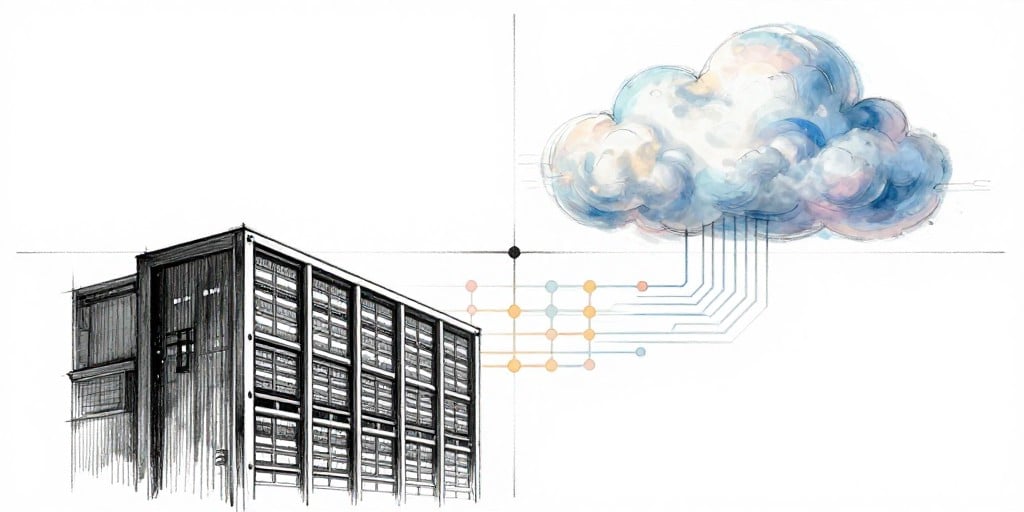
The week‑long slide in WiseTech’s valuation can be traced directly to a sudden pause in its data‑centre operations. Power supply delays, a seemingly mundane logistical issue, revealed the company’s vulnerability to a single node in its global network. While the firm’s earnings guidance was trimmed, the subsequent small uptick indicates that investors are willing to weigh the company’s underlying business model against short‑term operational hiccups.
From an industry perspective, the event underscores how critical resilient infrastructure is for software‑as‑a‑service (SaaS) providers that rely on uninterrupted cloud services. The incident also hints at the broader supply‑chain fragility that has become a hallmark of the post‑pandemic era, where power reliability—often taken for granted—has emerged as a competitive differentiator.
Technology Stocks: A Modest Counterbalance
In an environment where mining and energy shares were under pressure, technology names displayed a slight recovery. Xero and WiseTech Global were among the few tech names to add value, benefiting from a modest lift in the sector and supportive expectations from the Nasdaq. Afterpay’s parent company also saw a small uptick, while other technology names such as Appen and Zip traded in decline.
The relative resilience of WiseTech and Xero suggests that investors are still drawn to businesses that can generate recurring revenue through digital platforms, even when macro‑economic sentiment leans toward caution. This trend aligns with global observations: firms that have embedded advanced analytics, AI‑driven forecasting, or robust cybersecurity frameworks tend to weather market swings better than those relying on commodity‑heavy models.
Mining and Energy: A Persistent Soft Spot
The mining sector remained under pressure, with major miners like BHP and Rio Tinto posting modest losses. Oil and energy stocks were largely weaker, except for a small gain in Santos and a slight rise in Origin Energy. The decline can be attributed to several converging forces:
- Commodity price volatility: Fluctuating iron‑ore and copper prices dampen profit margins for miners, while energy stocks are sensitive to oil‑price swings.
- Geopolitical uncertainty: Escalating tensions in key resource regions add a risk premium that investors price in.
- Shift to renewables: Energy companies face regulatory pressure to transition to cleaner sources, potentially straining short‑term returns.
In contrast, technology firms like WiseTech sidestep such exposure, allowing them to maintain stable earnings trajectories despite macro‑economic turbulence.
Banking: Stability Amidst Minor Ups and Downs
Banking stocks were broadly stable, with National Australia Bank posting a modest gain and the other big four banks trading in the lower range of gains or marginal losses. The banking sector’s relative calm reflects the enduring role of financial institutions in providing liquidity and capital. However, the modest movements also reveal a cautious appetite for risk among investors, perhaps anticipating regulatory changes or shifts in monetary policy that could affect asset‑quality ratios.
Currency Dynamics and Global Implications
The currency market showed the Australian dollar near the $0.70 level against the U.S. dollar, while the Japanese yen remained steady in the low 158 range. A relatively stable Australian dollar suggests that currency risk has not yet become a major driver in Australian equity pricing. Yet, a future appreciation could erode export‑oriented companies’ margins, adding an additional layer of risk for tech firms with a global footprint.
The Broader Societal, Privacy, and Security Context
WiseTech Global’s data‑centre incident is not merely an operational hiccup; it raises deeper questions about the resilience of digital infrastructure that underpins global commerce. The company’s experience highlights the following broader implications:
- Privacy concerns: Power interruptions can compromise data integrity, raising questions about how companies safeguard customer data during outages.
- Security risks: Unplanned downtimes can open avenues for cyber‑attacks, especially if backup systems fail or are inadequately tested.
- Societal impact: The reliability of logistics software like WiseTech’s can affect supply chains that deliver essential goods, thereby influencing consumer confidence and economic stability.
From a regulatory perspective, such incidents may prompt tighter oversight on data‑centre compliance and encourage firms to adopt distributed cloud architectures to mitigate single points of failure.
Risk–Benefit Assessment
| Aspect | Benefit | Risk |
|---|---|---|
| Tech‑driven business model | Recurring revenue, scalability | Over‑reliance on cloud providers, data‑privacy issues |
| Supply‑chain resilience | Diversification of data‑centres, redundancy | Cost of additional infrastructure, complexity |
| Market sentiment | Sector rotation into tech | Volatility from macro‑economic shocks |
| Currency stability | Predictable export earnings | Potential appreciation eroding margins |
| Regulatory oversight | Increased compliance, consumer trust | Higher compliance costs, operational constraints |
The balance tips in favour of resilience, but the costs associated with enhancing infrastructure, implementing robust disaster‑recovery protocols, and navigating evolving privacy regulations cannot be ignored.
Conclusion
WiseTech Global’s modest share‑price uptick against a backdrop of a cautious Australian equity market demonstrates how technology firms can act as a buffer during periods of sector‑specific weakness. Yet, the data‑centre power‑delays incident serves as a cautionary tale: in a world where digital services are increasingly intertwined with physical logistics, any disruption in infrastructure can ripple across multiple layers—technical, economic, and societal.
Investors will likely continue to adopt a wait‑and‑see approach, monitoring not only the company’s earnings guidance but also its ability to manage supply‑chain risks and safeguard data integrity. For the broader market, the episode underscores the importance of investing in resilient, secure, and privacy‑respecting technology solutions—a priority that extends beyond short‑term earnings to long‑term societal stability.