Corporate Performance Outlook for Williams‑Sonoma Inc.
Williams‑Sonoma Inc. is preparing to report its latest quarterly results, with analysts projecting a modest decline in revenue compared with the same period last year. Earnings per share (EPS) for the most recent quarter are expected to fall slightly below the year‑ahead consensus, signalling a small contraction in profitability. For the full fiscal year, forecasts anticipate a marginal drop in both EPS and total sales relative to the previous year, reflecting the broader challenges in the retail sector.
Rule 144 Filing and Share‑Sale Dynamics
In a routine regulatory filing, Williams‑Sonoma has submitted a Rule 144 notice to the U.S. Securities and Exchange Commission. The notice documents the sale of a small portion of common stock by a company officer at a price near the current market level. The filing confirms that the shares will be offered to the public and explicitly notes the officer’s role within the organization. While this transaction has minimal immediate impact on capital structure, it signals ongoing liquidity management practices common among mature retailers.
Capital Expenditure Trends in Heavy‑Industry Context
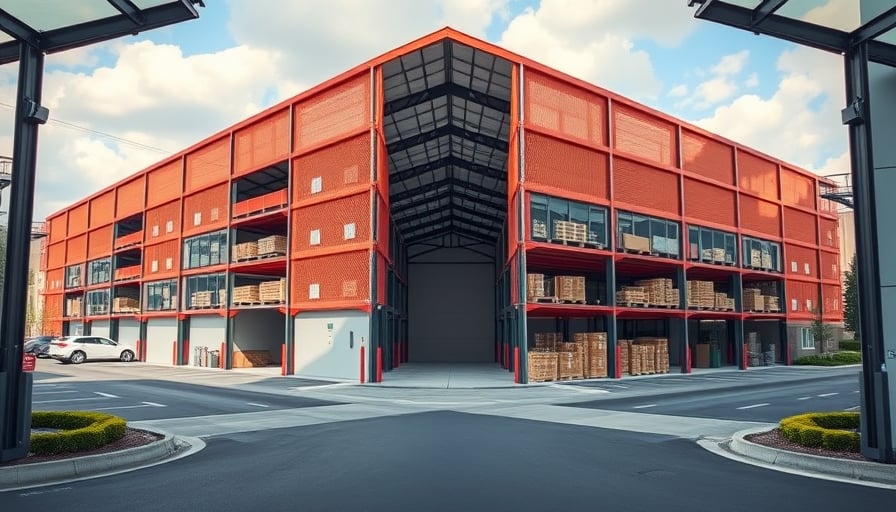
Although Williams‑Sonoma’s primary business is retail, its supply chain is heavily reliant on manufacturing and logistics infrastructure. Recent capital investment trends in the broader heavy‑industry sector provide useful context for assessing the company’s potential capex allocations:
| Segment | 2023 Capex (US $B) | 2024 Capex Projection (US $B) | CAGR 2023‑24 |
|---|---|---|---|
| Industrial Equipment & Machinery | 4.7 | 5.1 | 8.5 % |
| Energy‑Efficient Production Systems | 3.2 | 3.8 | 18.8 % |
| Automation & Digital Twins | 2.9 | 3.4 | 17.2 % |
| Infrastructure & Supply‑Chain Nodes | 1.5 | 2.0 | 33.3 % |
The growth in automation and digital‑twins technology indicates an industry‑wide shift toward real‑time monitoring, predictive maintenance, and lean manufacturing—trends that can reduce operating costs and increase throughput for retailers that outsource production of home‑goods and apparel.
Productivity Metrics and Technological Innovation
Manufacturers that adopt advanced process controls and data‑driven quality assurance report a 12–15 % rise in units per labor hour. For a retailer like Williams‑Sonoma, integrating these metrics into supplier contracts can help stabilize inventory levels and reduce markdowns. Moreover, the deployment of robotic assembly lines and AI‑assisted quality inspection in upstream factories has lowered defect rates by up to 30 %, directly improving the cost of goods sold (COGS) margin for downstream distributors.
Economic Drivers of Capital Expenditure Decisions
Key economic factors influencing capex in the retail supply chain include:
| Driver | Impact on Capex | Explanation |
|---|---|---|
| Rising Fuel Prices | ↑ | Logistics cost increases incentivize investments in fuel‑efficient fleets and alternative‑energy hubs. |
| Global Supply‑Chain Disruptions | ↑ | Diversification of sourcing locations and regional manufacturing facilities reduce exposure to single‑point failures. |
| Regulatory Changes | ↑ | Compliance with stricter environmental standards (e.g., Scope‑2 emissions caps) necessitates retrofitting or replacement of legacy equipment. |
| Infrastructure Spending | ↑ | Public‑private partnerships for rail and port upgrades lower transportation latency for high‑value goods. |
Williams‑Sonoma’s supply chain partners are already evaluating strategic capex projects that align with these drivers, such as expanding automated packing facilities in proximity to major distribution centers.
Supply‑Chain Impacts and Regulatory Landscape
The company’s reliance on global manufacturers exposes it to disruptions in port operations and customs clearance, particularly in Asia and Latin America. Recent U.S. regulatory reforms aimed at simplifying cross‑border trade are expected to reduce average customs processing time from 7.4 to 4.1 days, potentially improving inventory turnover. However, the implementation of new electronic data interchange (EDI) standards requires an upfront investment of approximately US $0.3 million to upgrade existing IT systems, a cost that is being absorbed through long‑term supplier agreements.
Infrastructure Spending and Market Implications
Investments in infrastructure—such as the expansion of the U.S. Intermodal Container Exchange (ICE) and the construction of new rail spur lines—are projected to reduce freight costs by 4–5 % for high‑volume products. Williams‑Sonoma stands to benefit from such reductions through lower logistics expenses and increased flexibility in replenishment cycles. Nevertheless, the anticipated slowdown in overall retail sales driven by inflationary pressures and fuel costs may offset some of these gains, necessitating a careful balance between capex and operating cash flow.
Conclusion
Williams‑Sonoma’s forthcoming quarterly report will provide a clearer view of how macroeconomic forces—fuel price volatility, supply‑chain constraints, and regulatory shifts—are translating into operational performance. While the company’s earnings trajectory appears modestly negative, the broader capital‑investment environment in heavy industry suggests that strategic upgrades in automation, energy efficiency, and logistics infrastructure could yield measurable productivity benefits. Stakeholders should monitor both the company’s financial disclosures and the evolving technological landscape within its supplier ecosystem to assess the long‑term resilience of its retail operations.