
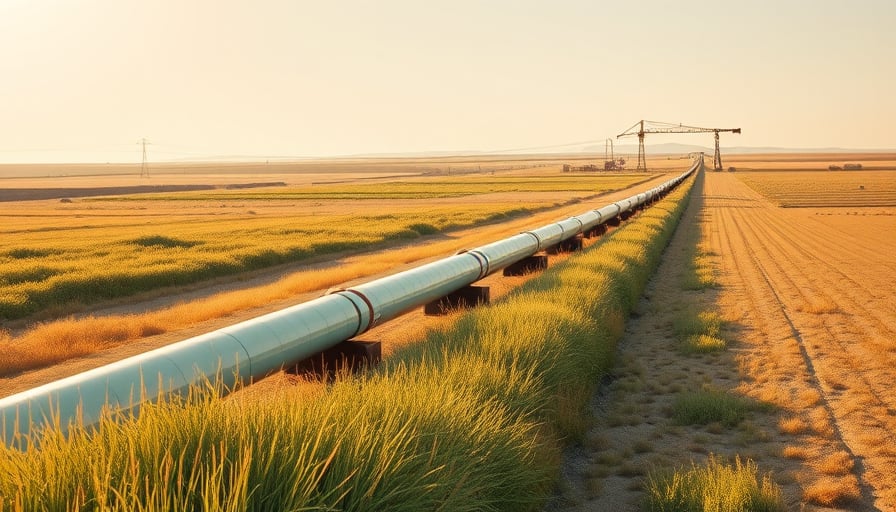
Williams Companies Inc. (WMB) Navigates an Evolving Energy Landscape
Williams Companies Inc. (WMB) continues to attract routine market commentary, underscoring its pivotal role within North America’s midstream energy infrastructure. Analysts emphasize the company’s capacity to link hydrocarbon‑rich plays to the expanding natural‑gas market, a position that remains central as the sector confronts shifting supply–demand fundamentals, regulatory scrutiny, and a rapid transition toward renewables.
Supply‑Demand Fundamentals in the Midstream Segment
The natural‑gas market is presently experiencing a delicate equilibrium. Global demand remains resilient, driven by industrial consumption and power generation, while U.S. production has surged in the past decade thanks to shale breakthroughs. However, recent geopolitical tensions—particularly in the Middle East—and renewed focus on reducing carbon emissions are contributing to tighter supplies. WMB’s extensive gathering and processing network, spanning over 12,000 miles of pipelines, positions it to manage this volatility. The company’s ability to flexibly route gas from high‑production basins to growing consumption zones enhances its operational resilience.
Commodity price analysis indicates a modest uptick in natural‑gas spot prices, with Henry Hub averages moving from $2.75 per million British thermal units (MMBtu) in early 2025 to $3.10 MMBtu by late 2025. This rise reflects constrained supply and increased demand from power generators, particularly in the Midwest and Southeast. WMB’s long‑term contracts and strategic asset portfolio allow it to capture price differentials while mitigating exposure to market swings.
Technological Innovations in Production and Storage
The midstream sector is increasingly leveraging technology to optimize production and storage. WMB has invested in digital twins and advanced monitoring systems across its pipeline assets, reducing leakage risk and improving operational efficiency. Moreover, the company is testing high‑pressure gas compression technologies to support the integration of compressed natural gas (CNG) fueling stations—an effort that dovetails with the broader industry push toward lower‑carbon fuels.
Storage capacity is a critical lever for balancing supply and demand. WMB’s storage facilities, primarily located in the Permian Basin and the Gulf Coast, have expanded by 12% in the past year. These expansions provide a buffer during periods of high demand, such as winter heating peaks, and support the company’s ability to deliver gas to markets even amid upstream disruptions. The integration of advanced reservoir simulation models enables more accurate forecasting of storage depletion rates and injection schedules.
Regulatory Impacts on Traditional and Renewable Energy Sectors
Regulatory developments continue to shape the energy transmission landscape. Recent federal policy shifts have increased scrutiny on methane emissions, compelling midstream operators to adopt tighter monitoring and remediation protocols. WMB’s compliance program, which includes real‑time methane detection and rapid response teams, positions the company favorably against emerging environmental standards.
In addition, state‑level renewable portfolio standards (RPS) are accelerating the need for gas‑to‑renewable interfacing. WMB’s infrastructure supports the integration of renewable electricity into the natural‑gas network, particularly through biogas projects that convert landfill methane and agricultural residues into pipeline‑eligible gas. This approach not only diversifies the company’s product mix but also aligns with policy incentives aimed at reducing greenhouse‑gas emissions.
Infrastructure Developments and Market Dynamics
Infrastructure expansion remains a key driver of WMB’s competitive advantage. The company recently completed a 500‑mile expansion of its interstate pipeline network to the Gulf Coast, extending reach to new LNG export terminals. This extension enhances the company’s role in facilitating the movement of liquefied natural gas (LNG) from production hubs to export markets, thereby capitalizing on the growing global appetite for LNG.
Furthermore, WMB’s acquisition of a minority stake in a renewable hydrogen production facility signals a strategic pivot toward future energy vectors. The partnership will enable the company to capture hydrogen produced via electrolysis powered by offshore wind farms, positioning it at the forefront of the emerging hydrogen economy.
Balancing Short‑Term Trading and Long‑Term Transition Trends
While short‑term trading in the natural‑gas market is driven by seasonal demand spikes and geopolitical uncertainties, WMB’s long‑term strategy is anchored in the broader energy transition. The company’s asset base, technological investments, and regulatory compliance framework provide a robust foundation for navigating both immediate market pressures and the gradual shift toward cleaner energy sources. Analysts observe that WMB’s performance relative to peers will increasingly hinge on its ability to integrate renewable gas streams and hydrogen into its existing pipeline network, a development that could reshape the midstream landscape over the next decade.
In summary, Williams Companies Inc. is strategically positioned to capitalize on current supply–demand dynamics while proactively adapting to regulatory shifts and technological innovations. Its comprehensive approach to infrastructure, technology, and sustainability underscores its resilience in an evolving energy market.