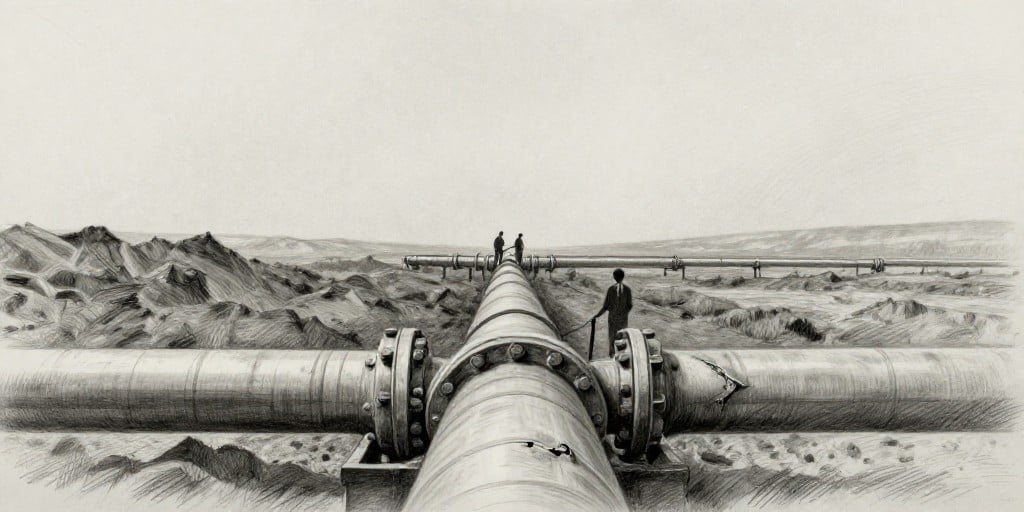
Williams Companies Inc. Prepares for Earnings Release on November 2, 2026
Williams Companies Inc. is scheduled to publish its latest quarterly financial results on November 2, 2026. Market participants are closely monitoring the company’s performance in the context of evolving energy markets, supply‑demand dynamics, and regulatory developments that shape both traditional and renewable power sectors.
Earnings Outlook
Analysts project a modest increase in earnings per share (EPS) for the quarter, with most forecasts indicating a slight rise relative to the same period in 2025. This incremental improvement aligns with the company’s gradual expansion of operating margins, driven by a combination of stable natural‑gas transportation volumes and incremental revenues from its midstream infrastructure portfolio.
For the full fiscal year, consensus estimates suggest a modest uptick in EPS compared with 2025 figures. Revenue projections for 2026 also point to a modest percentage growth, reflecting incremental gains from higher freight rates, contract renewals, and the gradual monetization of assets acquired through strategic acquisitions.
Supply‑Demand Fundamentals in the Energy Market
The natural‑gas market remains a key driver of Williams’s earnings trajectory. In the first quarter of 2026, U.S. natural‑gas consumption increased by 2.8 % YoY, bolstered by a mild winter and expanding petrochemical demand. Conversely, supply constraints in the Permian Basin and ongoing infrastructure bottlenecks—particularly at the Cushing hub—have maintained upward pressure on gas prices. According to the U.S. Energy Information Administration, spot prices at Cushing averaged $3.15 per million British thermal units (MMBtu) in Q1 2026, up 12 % from the previous year.
Williams benefits from its extensive gathering, processing, and transportation network, which has a strategic advantage in capturing high‑margin freight rates when spot prices rise. The company’s recent expansion of its 8 % line between the Gulf Coast and the Midwest has further improved throughput capacity, positioning it to capitalize on the ongoing shift toward natural‑gas‑to‑electricity conversions in the Midwest power grid.
Technological Innovations and Energy Storage
Innovation remains central to Williams’s long‑term competitiveness. The company has invested in advanced pipeline monitoring technologies, including fiber‑optic sensing and AI‑driven predictive maintenance, which have reduced downtime and operating costs. Additionally, Williams is exploring the integration of battery energy storage systems (BESS) to support grid services. While these deployments are still at a pilot stage, they align with broader industry trends toward hybrid solutions that combine natural‑gas supply with renewable dispatchability.
In the broader sector, the United States is witnessing a surge in modular storage projects, with a 15 % YoY increase in installed battery capacity. Regulatory incentives, such as the Inflation Reduction Act’s renewable energy credits and storage rebates, are accelerating adoption. Williams’s engagement with these incentives—particularly its participation in grid‑balancing agreements—could enhance its revenue mix in the coming years.
Regulatory Environment
Regulatory developments continue to influence both traditional and renewable energy markets. The U.S. Department of Energy’s (DOE) recent rule‑making on “grid edge” technologies has lowered the barriers for midstream companies to deploy BESS and virtual power plants (VPPs). This regulatory shift could open new revenue streams for Williams, allowing it to offer ancillary services to grid operators while leveraging its existing pipeline infrastructure for hydrogen and other alternative fuels.
Conversely, tightening environmental regulations on pipeline operations, especially in the Permian Basin and the Gulf Coast, may increase compliance costs. Williams has responded by accelerating its investment in leak‑detection systems and by pursuing carbon‑capture partnerships to mitigate regulatory risk. The company’s strategic focus on diversification—expanding into hydrogen transport and renewable natural gas (RNG) production—positions it to benefit from the policy shift toward low‑carbon energy sources.
Commodity Price Analysis
Natural‑gas spot prices in Q1 2026 averaged $3.15 per MMBtu, a 12 % rise from Q1 2025. Crude oil prices remained relatively stable, hovering around $70 per barrel, which has a secondary influence on Williams’s ancillary revenues from oil‑to‑gas conversions. The price differential between gas and oil has encouraged the natural‑gas industry to explore cross‑sector synergies, such as the utilization of LNG export terminals to diversify into maritime fuel markets.
Infrastructure Developments
Williams’s pipeline network expansion has been a key driver of revenue growth. The company’s recent completion of the 3,000‑mile Gulf‑to‑Midwest line has increased throughput capacity by 9 % and opened access to new mid‑market customers. Additionally, the company’s investment in the New York City LNG terminal—expected to operationalize by Q4 2026—will further diversify its asset base and create opportunities to supply renewable natural gas to the Northeast’s high‑energy‑consumption regions.
Balancing Short‑Term and Long‑Term Dynamics
Short‑term trading factors, such as seasonal demand spikes and supply disruptions, will continue to influence Williams’s quarterly earnings. However, the company’s strategic investment in pipeline modernization, battery storage integration, and hydrogen transport signals a clear shift toward long‑term energy transition trends. By balancing these immediate market pressures with forward‑looking infrastructure projects and regulatory compliance, Williams positions itself for sustained growth amid a rapidly evolving energy landscape.
In summary, Williams Companies Inc. is poised to deliver modest earnings growth in 2026, underpinned by robust natural‑gas demand, strategic infrastructure expansion, and emerging opportunities in energy storage and hydrogen. The company’s performance will likely reflect both the cyclical nature of commodity markets and the transformative impact of regulatory incentives that accelerate the transition to a cleaner, more resilient energy system.