
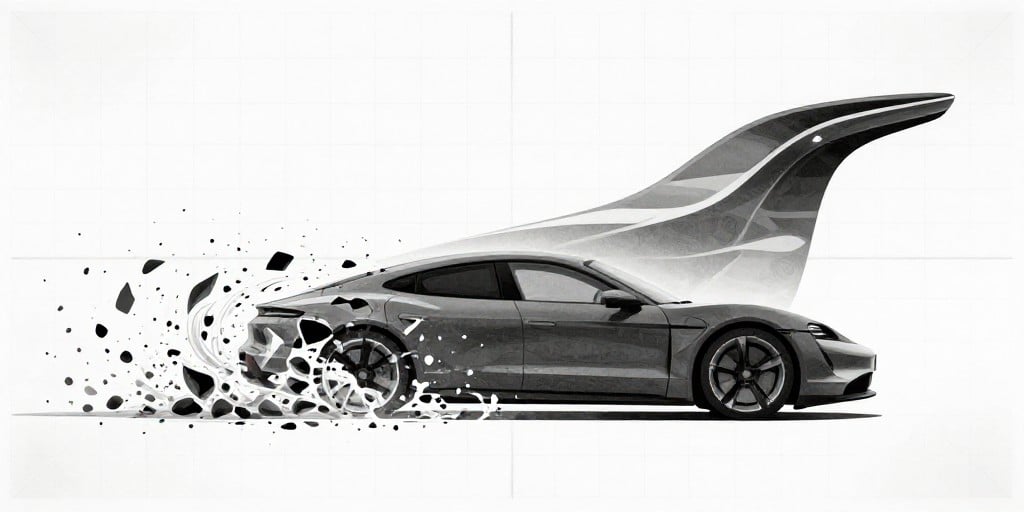
Porsche AG Considers Halting Taycan Production by 2030
Porsche AG, the Stuttgart‑based sports‑car manufacturer, is reportedly reassessing its electric‑vehicle strategy after a measurable decline in demand for its flagship electric sports car, the Taycan. Sources close to the company indicate that Porsche may discontinue production of the Taycan by the year 2030, a move that would constitute a significant shift in the firm’s product roadmap and electrification ambitions.
Context and Strategic Implications
The Taycan has been central to Porsche’s efforts to establish a foothold in the electric‑vehicle (EV) market. Since its launch, the model has demonstrated the brand’s capacity to merge high performance with zero‑emission technology, appealing to a niche but growing segment of luxury EV buyers. However, recent sales data suggest that market uptake has plateaued, and the vehicle’s price point relative to competitors such as the Tesla Model S and the Audi e‑Tron GT has limited its broader appeal.
Porsche’s leadership is now evaluating the long‑term viability of the Taycan program by weighing several factors:
| Factor | Assessment |
|---|---|
| Market dynamics | Strong demand for compact EVs and SUVs, weaker interest in high‑end electric sports cars. |
| Competitive positioning | Rivals are expanding mid‑size and crossover EVs; Porsche’s niche may narrow. |
| Internal resource allocation | Production capacity in Stuttgart is constrained; potential cost savings by reallocating resources to emerging segments. |
| Regulatory environment | Upcoming EU emissions standards and incentives favor mass‑market EVs over premium sports models. |
| Technological trajectory | Shift toward solid‑state batteries and autonomous driving may favor new product lines over the current Taycan architecture. |
Production Relocation Considerations
Initial reports had suggested that Porsche might relocate Taycan production from Stuttgart to Leipzig to streamline manufacturing and reduce costs. However, preliminary information now indicates that this relocation is likely no longer on the table. The company appears to be prioritizing a deeper analysis of the overall product strategy before making definitive decisions on plant operations.
Potential Alternatives
If Porsche proceeds with the discontinuation, several strategic paths could emerge:
- Pivot to New Technologies
- Development of next‑generation battery chemistries, such as solid‑state or lithium‑sulfur cells, to reduce weight and extend range.
- Investment in vehicle‑to‑grid (V2G) capabilities, positioning Porsche as a leader in smart grid integration.
- Re‑focus on Internal‑Combustion and Hybrid Offerings
- Reintroduction of high‑performance hybrid variants to retain the brand’s legacy while bridging the gap to full electrification.
- Expansion of the “Porsche Hybrid” lineup to capture consumers wary of a full electric transition.
- Diversification into New Segments
- Exploration of compact electric SUVs or crossovers that align with current market trends.
- Collaboration with other automakers to share platforms and reduce development costs.
Broader Industry Trends
Porsche’s deliberations mirror a wider pattern in the automotive sector, where luxury and performance brands grapple with the transition to electrification amid fluctuating consumer preferences and supply‑chain constraints. The decision to terminate a flagship model underscores the tension between preserving brand heritage and adapting to market realities. Investors and analysts will scrutinize the outcome, as it could reshape Porsche’s positioning in an industry that is rapidly shifting toward mass‑market EVs, autonomous technology, and sustainable manufacturing practices.