
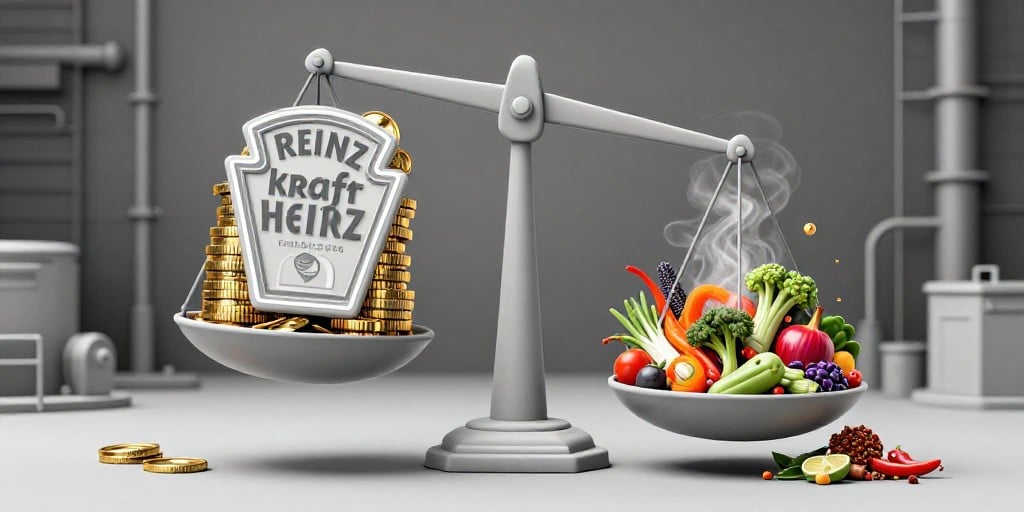
Kraft Heinz’s Re‑investment Decision Under Scrutiny
Kraft Heinz Company (NYSE: KHC) has become a touchstone for analysts reassessing the broader food‑manufacturing sector after its February decision to forgo a proposed corporate breakup and instead allocate $600 million toward fortifying its core brand portfolio. The company cited a belief that commodity inflation had peaked, yet recent data from the American Farm Bureau Federation (AFBF) suggests the opposite, raising questions about the prudence of the move.
Commodity Inflation Remains a Persistent Headwind
The AFBF’s 2026 Summer Cook‑Out Survey, released in late March, reports that a typical July 4 gathering for ten people now costs $73.82—the highest since 2016. The survey attributes this rise to record‑setting input costs, notably ground‑beef prices reaching $14.06 per pound, and notable increases in pork, beans, and canned goods. These figures imply that the price pressures Kraft Heinz faces may be more enduring than its management had projected.
From a financial perspective, the company’s 2026 adjusted earnings per share (EPS) in the first quarter amounted to $0.58, a 16 % beat on analyst estimates. While this short‑term performance bolsters confidence in its turnaround strategy, the full‑year guidance—forecasting modest organic net‑sales declines and an adjusted EPS range of $2.00 to $2.10—signals a more cautious outlook. Analysts have consequently downgraded the stock to “underperform,” citing sustained oil‑price inflation, potential changes to SNAP benefit structures, and a shift in consumer preferences toward health‑oriented products.
Market Dynamics: Private‑Label vs National Brands
Kraft Heinz’s challenges are mirrored in the broader retail landscape. Kroger’s first‑quarter 2026 results demonstrate that its private‑label portfolio is expanding at a faster rate than national brands, reflecting a consumer shift toward lower‑priced alternatives amid persistent food inflation. Kroger’s investment strategy—heavily weighted toward marketing, research and development, and brand renovation—has been slated for the second half of 2026. The timing of this investment raises a critical question: Can the $600 million allocation offset the structural cost pressures that the company is already experiencing, or will it simply erode margins?
Regulatory and Competitive Context
The food‑manufacturing sector is heavily regulated, with commodity prices influenced by a mix of domestic supply constraints, trade policy, and climate‑related disruptions. The U.S. Department of Agriculture’s forecasts for 2026 indicate a projected rise in input costs due to anticipated feed‑price inflation, while the Federal Trade Commission’s recent focus on anti‑trust compliance could constrain Kraft Heinz’s ability to pursue mergers that might otherwise alleviate cost pressures. In the competitive arena, smaller, niche brands that emphasize organic or non‑GMO ingredients are gaining market share, potentially eroding Kraft Heinz’s legacy brands.
Overlooked Trends and Emerging Risks
Supply‑Chain Resilience vs Cost‑Efficiency Kraft Heinz’s strategy to strengthen its core brands may inadvertently reduce flexibility in its supply chain. Diversifying sourcing or investing in vertical integration could offer better protection against commodity spikes but would require substantial capital outlays that are not reflected in current guidance.
Consumer Demand for Health and Sustainability While the company has committed to brand renovation, it has not yet made significant moves toward healthier formulations or transparent sourcing—areas where competitors are already investing. The growing consumer demand for clean‑label products poses a long‑term risk if Kraft Heinz remains slow to adapt.
Regulatory Shifts in SNAP and Food Assistance Potential reforms to the Supplemental Nutrition Assistance Program (SNAP) could alter purchasing patterns for lower‑priced brands. A tightening of eligibility or a shift toward healthier food options within the program could reduce the demand for traditional Kraft Heinz products.
Potential Opportunities
Private‑Label Partnerships Leveraging its manufacturing expertise to produce private‑label goods for retailers like Kroger could open new revenue streams and increase volume, thereby improving economies of scale.
Digital Transformation Investing in data analytics for consumer behavior could identify niche markets and inform targeted product development, allowing the company to capitalize on emerging health trends without overhauling its entire brand architecture.
Strategic Acquisitions If regulatory scrutiny eases, targeted acquisitions of smaller health‑focused brands could provide Kraft Heinz with a foothold in high‑margin segments and diversify its product mix.
Conclusion
Kraft Heinz’s $600 million commitment to core brand strengthening reflects a strategic pivot, but the underlying commodity inflation, evolving consumer preferences, and regulatory uncertainties suggest that the company faces a complex risk landscape. The forthcoming second half of 2026 will be pivotal: the ability of the investment to offset rising costs, capture market share, and position the company within a shifting competitive environment will ultimately determine whether Kraft Heinz can translate short‑term earnings beats into sustainable long‑term growth.