
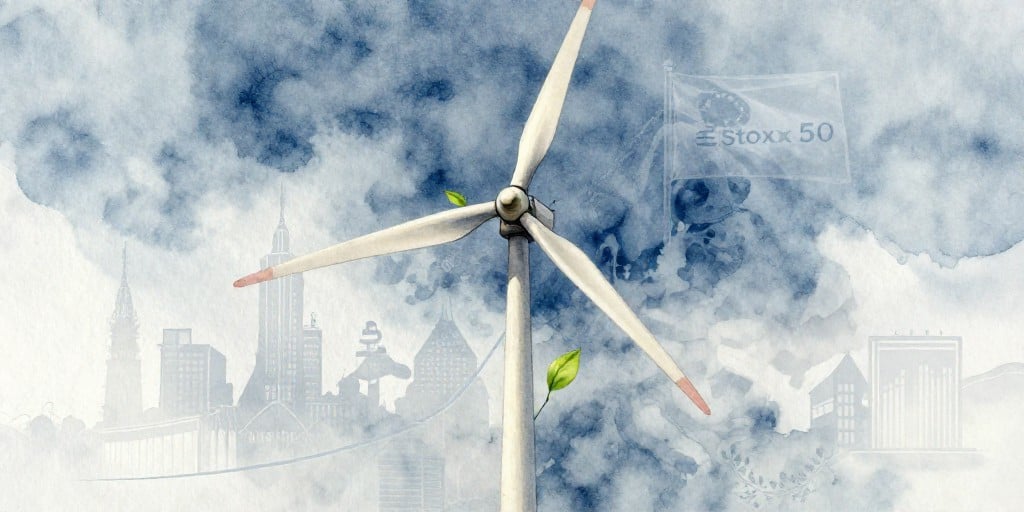
Corporate Analysis: E.ON’s Potential Return to the EuroStoxx 50 and Broader Market Implications
Overview
JPMorgan’s recent commentary suggests that E.ON SE could rejoin the EuroStoxx 50 during the index’s September review. The key determinant is the German energy company’s free‑float market capitalization, which must exceed the threshold that currently excludes it from the index. Analysts have highlighted that the slot could also be contested by a leading French banking group and a Finnish network‑equipment manufacturer, contingent upon the performance of those firms in the coming months. Should E.ON secure inclusion, it would mark the end of an approximately eight‑year absence from the index that began after the company’s restructuring following Germany’s nuclear exit.
Market Dynamics and Index Inclusion Criteria
Free‑float Market Capitalization: The EuroStoxx 50 employs a free‑float weighting methodology. For a company to qualify, its market value available to the public must surpass a dynamically adjusted threshold that reflects the overall index size. Analysts estimate that E.ON’s free‑float market cap is approaching this benchmark, primarily due to its steady dividend yield and the recent acquisition of renewable assets that have boosted investor confidence.
Competitive Landscape:
French Bank: The bank’s capital adequacy ratio and loan portfolio growth have recently improved, potentially raising its free‑float market cap.
Finnish Network Equipment Manufacturer: With a surge in demand for 5G infrastructure, this firm’s earnings and free‑float market cap have shown upward momentum. Both entities could, therefore, vie for the same index slot should E.ON’s valuation fail to meet the requisite threshold.
Implications for the Energy Sector
E.ON’s return would underscore a broader transition within the European energy market:
- Renewable Integration: E.ON’s expansion into offshore wind and battery storage aligns with EU decarbonisation targets, signaling investor optimism in the sector’s long‑term growth prospects.
- Price Volatility Management: The company’s hedging strategies, especially in gas futures, have positioned it to mitigate the impact of higher energy costs—a critical factor given the current inflationary environment.
Cross‑Sector Connections
- Banking vs. Energy: The French bank’s performance is intertwined with corporate lending to renewable projects, which could indirectly influence E.ON’s financing environment.
- Technology and Energy: The modest rise in German equity markets was partially driven by technology earnings, indicating a recovery in tech valuations that may translate into increased demand for energy-intensive computing infrastructure. This, in turn, could elevate energy consumption metrics for utility firms, including E.ON.
Macro‑Economic Context
- Inflationary Pressures: Persistent high energy costs have continued to weigh on consumer spending, yet the rebound in tech valuations suggests a resilience in capital markets.
- Fiscal Policies: European Commission’s ongoing subsidies for green infrastructure provide a tailwind for energy utilities, potentially boosting E.ON’s projected earnings.
Conclusion
JPMorgan’s analysis signals a potentially pivotal shift for E.ON, contingent upon its free‑float market cap surpassing the EuroStoxx 50 threshold. The outcome will be influenced not only by E.ON’s internal performance but also by the competitive dynamics of French and Finnish firms in adjacent sectors. Should E.ON re‑enter the index, it would reflect a broader narrative of European energy companies realigning with long‑term sustainability goals while navigating a complex macroeconomic landscape marked by inflation, regulatory changes, and technology‑driven growth.