Corporate Update: Aker BP ASA Registered Announces Upcoming Quarterly Results
Aker BP ASA Registered is slated to publish its latest quarterly financial statements on 29 October 2026, covering the period ending 30 September 2026. Market participants have issued a spectrum of forecasts for the company’s performance. On average, analysts anticipate a modest earnings‑per‑share (EPS) figure for the current quarter, though the exact magnitude remains undisclosed. Comparisons with the equivalent period in the prior year indicate that the company reported a higher EPS and a substantially larger revenue total then.
For the current fiscal year, consensus among analysts points to a higher EPS than the previous year’s performance. Revenue expectations for the full year also reflect an upward trajectory relative to the year‑before‑last figures, suggesting that the company anticipates stronger top‑line growth.
Overall, the market’s expectations for Aker BP’s forthcoming results reflect a cautious optimism about the company’s profitability and revenue prospects. The upcoming announcement will provide clearer insight into whether the company can sustain its growth momentum and deliver on analysts’ forecasts for earnings and sales.
Market Context: Energy Supply‑Demand Fundamentals
The Norwegian sector of the world’s energy markets is presently operating under a delicate balance of supply and demand dynamics. On the supply side, the region’s mature oil and gas fields continue to generate substantial production, yet the pace of new discoveries has slowed, creating a modest pressure on total output levels. Demand, meanwhile, remains buoyed by industrial activity in Europe and the United States, albeit tempered by ongoing supply‑chain constraints and the gradual shift toward decarbonisation.
In terms of commodity pricing, Brent crude has remained within a narrow band of $70–$80 per barrel over the past six months, a range that has provided a stable backdrop for refining margins. Natural gas prices on the spot market have fluctuated between $4.5 and $5.5 per million British thermal units (MMBtu), reflecting heightened demand in the heating sector across Northern Europe. These price dynamics directly influence Aker BP’s cost structure and revenue generation, particularly in the upstream segment.
Technological Innovations in Energy Production and Storage
Aker BP has been a key player in deploying advanced offshore production technologies, notably floating production storage and offloading (FPSO) units that enable extraction from deepwater fields. Recent deployments have incorporated high‑pressure, high‑temperature (HPHT) drilling techniques, improving recovery rates in mature reservoirs. The company’s investment in digital twins and real‑time data analytics is expected to further enhance operational efficiency and reduce downtime.
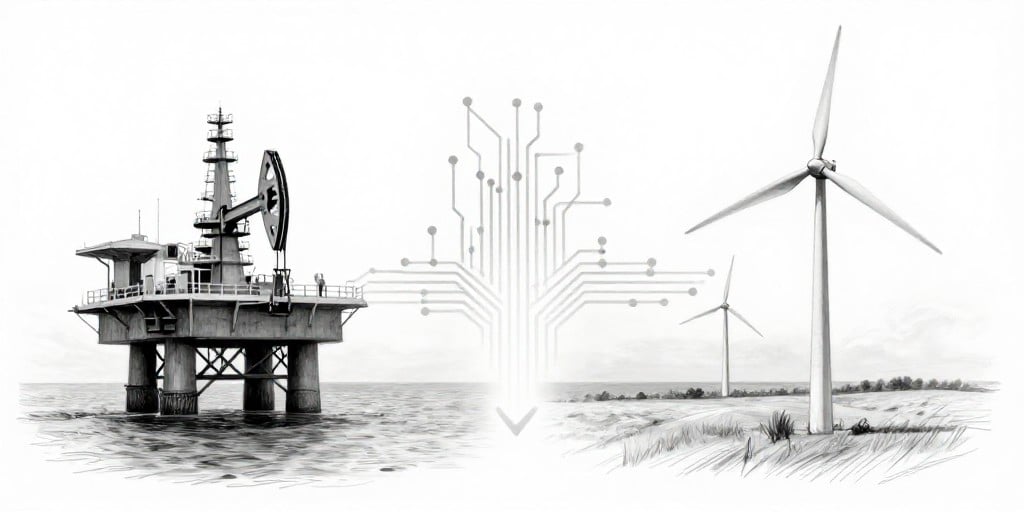
In the renewable domain, Aker BP has expanded its portfolio to include offshore wind projects in the North Sea. The integration of high‑capacity batteries and power‑to‑gas facilities is part of the company’s strategy to provide flexible, low‑carbon energy solutions. These innovations position the firm to capture growth in the green hydrogen market, an area projected to expand substantially as Europe advances its decarbonisation roadmap.
Regulatory Impacts on Traditional and Renewable Sectors
Regulatory frameworks continue to shape the operating environment for both traditional hydrocarbon production and renewable energy ventures. The European Union’s Green Deal and the European Climate Law impose stringent carbon intensity targets that are likely to increase the cost of fossil fuel extraction and refining. Conversely, the EU’s “Fit for 55” package, which sets a 55% reduction in greenhouse gas emissions by 2030, offers incentives for renewable projects, including accelerated tax credits and streamlined permitting processes.
In Norway, the state’s regulatory policy encourages the development of offshore wind and energy storage projects through favorable feed‑in tariffs and public‑private partnerships. However, the government’s commitment to maintaining a robust oil and gas sector remains, evidenced by continued support for exploration licenses and tax incentives aimed at sustaining production levels.
These regulatory shifts are poised to influence Aker BP’s capital allocation decisions, as the company balances investment between its traditional oil and gas operations and emerging renewable ventures to meet both shareholder expectations and policy mandates.
Infrastructure Developments and Market Dynamics
Aker BP’s strategic focus on infrastructure has accelerated in recent quarters. The company’s participation in the construction of the Nord Stream 2 pipeline (pending regulatory review) and the expansion of the Valhall gas storage facility have strengthened its logistics footprint. Additionally, the deployment of a new high‑speed subsea cable network linking offshore wind farms to the mainland grid enhances transmission reliability and reduces bottlenecks.
These infrastructure initiatives are expected to lower operational costs over the medium term and improve the company’s ability to respond to market volatility. They also serve to mitigate the impact of geopolitical uncertainties, such as trade restrictions or sanctions that could disrupt supply chains.
Balancing Short‑Term Trading Factors with Long‑Term Transition Trends
Short‑term trading factors, such as commodity price swings and inventory levels, continue to drive earnings volatility. Aker BP’s hedging strategy, which includes a mix of forward contracts and option instruments, seeks to neutralise adverse price movements while preserving upside potential.
Simultaneously, the firm’s long‑term outlook is anchored in the global energy transition narrative. By diversifying its asset base to include renewable generation and energy storage, Aker BP is positioning itself to capitalize on policy incentives and evolving market demand. The anticipated upward revision in earnings and revenue for the current fiscal year reflects the company’s confidence that these dual tracks—traditional oil and gas alongside renewables—will collectively sustain growth.
Conclusion
The forthcoming release of Aker BP ASA Registered’s quarterly results will serve as a critical barometer of the company’s resilience amid a complex confluence of supply‑chain constraints, regulatory changes, and evolving market fundamentals. While analysts maintain a cautious optimism regarding earnings and revenue, the real test will lie in the firm’s ability to translate its technological and infrastructural investments into tangible financial performance. The market will closely monitor the announcement to assess whether Aker BP can sustain its growth momentum and fulfill the consensus forecasts for profitability and top‑line expansion.