
Wells Fargo Expands into AI‑Driven Wildfire Response, Strengthening Strategic Positioning
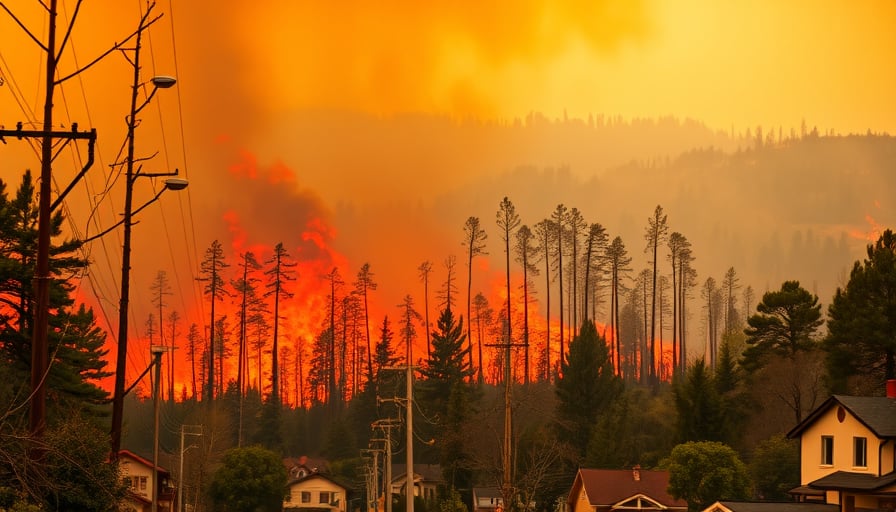
Wells Fargo’s stock has settled in the mid‑$80s after the bank disclosed a new partnership with Lockheed Martin, PG &E, and Salesforce to develop and deploy artificial‑intelligence‑powered wildfire‑response technology. The venture seeks to provide first‑responder teams with advanced detection, predictive analytics, and suppression capabilities, leveraging satellite data, drones, and edge computing. The announcement reflects a broader trend in which financial institutions are investing in technology‑enabled public‑safety solutions, recognizing the strategic importance of resilience infrastructure.
Analytical Rigor Applied to an Unfamiliar Sector
Although the wildfire‑response arena is distant from traditional banking, Wells Fargo has applied rigorous sector analysis to assess its viability. Key considerations include:
| Factor | Assessment |
|---|---|
| Market demand | The frequency and intensity of wildfires in the United States have risen markedly due to climate change, creating a consistent demand for rapid‑response solutions. |
| Competitive landscape | The space is fragmented, with a few incumbents (e.g., 3D Robotics, Planet Labs) and emerging start‑ups. Wells Fargo’s collaboration with Lockheed Martin and Salesforce provides a strong technology and data‑science backbone that differentiates it from purely commercial vendors. |
| Regulatory environment | The venture aligns with federal and state initiatives to fund disaster‑response technology, potentially opening avenues for government contracts and subsidies. |
| Revenue potential | Direct contracts with fire departments, state agencies, and private landowners could generate recurring licensing and maintenance revenue. Indirectly, the partnership could enhance Wells Fargo’s brand as a socially responsible entity, attracting ESG‑conscious investors. |
Fundamental Business Principles at Play
Wells Fargo’s move demonstrates classic strategic principles:
Diversification of Revenue Streams By venturing into a niche yet high‑growth market, the bank mitigates concentration risk in its core lending and deposit businesses.
Synergy with Core Capabilities The partnership leverages Wells Fargo’s expertise in risk assessment, underwriting, and data analytics. The bank can monetize its data infrastructure while providing risk mitigation solutions for public safety.
Long‑Term Horizon Over Short‑Term Volatility Analysts have highlighted that the bank’s performance remains solid despite short‑term stock fluctuations. The partnership, though currently in its infancy, is expected to generate value over a multi‑year horizon, aligning with Wells Fargo’s long‑term shareholder goals.
Institutional Investor Activity
The market reaction has been largely supportive, with institutional investors taking distinct positions:
| Investor Type | Action | Volume (approx.) | Interpretation |
|---|---|---|---|
| Wealth‑management firms | Buying | Thousands of shares | Confidence in strategic diversification and ESG appeal |
| Asset managers | Selling | Modest number | Tactical repositioning or liquidity needs; not a reflection of confidence in the venture |
| Hedge funds | Unspecified | — | Likely monitoring for short‑term arbitrage opportunities as the venture matures |
These moves signal that while the venture is viewed positively, investors remain cautious about short‑term execution risks.
Connection to Broader Economic Trends
The wildfire‑response initiative sits at the intersection of several macro‑economic dynamics:
Climate‑Induced Market Growth Rising wildfire incidents are catalyzing demand for advanced detection and suppression technologies, creating a sizable addressable market for the next decade.
Digital Transformation in Public Safety Government agencies are increasingly adopting AI and IoT solutions to improve operational efficiency and reduce response times, aligning with the bank’s technological offerings.
ESG Investing Momentum Climate‑risk mitigation solutions are becoming integral to ESG portfolios. Wells Fargo’s involvement positions it favorably among investors seeking sustainable exposure.
Geopolitical Stability and Infrastructure Resilience As nations prioritize resilient infrastructure, the partnership could tap into international markets, especially in regions with similar wildfire threats such as Australia and California.
Market Outlook
While the share price has maintained a steady trajectory in the near term, analysts anticipate that the bank’s long‑term fundamentals—bolstered by this innovative partnership—will support incremental upside. The venture’s success will hinge on:
- Effective Integration of AI and data analytics into operational workflows of first responders.
- Securing Government Contracts that provide a reliable revenue base.
- Managing Technical Risks associated with real‑time data processing and system reliability.
In conclusion, Wells Fargo’s entry into AI‑driven wildfire response exemplifies a strategic blend of diversification, technology synergy, and ESG positioning. The initiative aligns with broader economic shifts toward resilience and digital transformation, reinforcing the bank’s commitment to long‑term value creation amidst a dynamic market environment.