
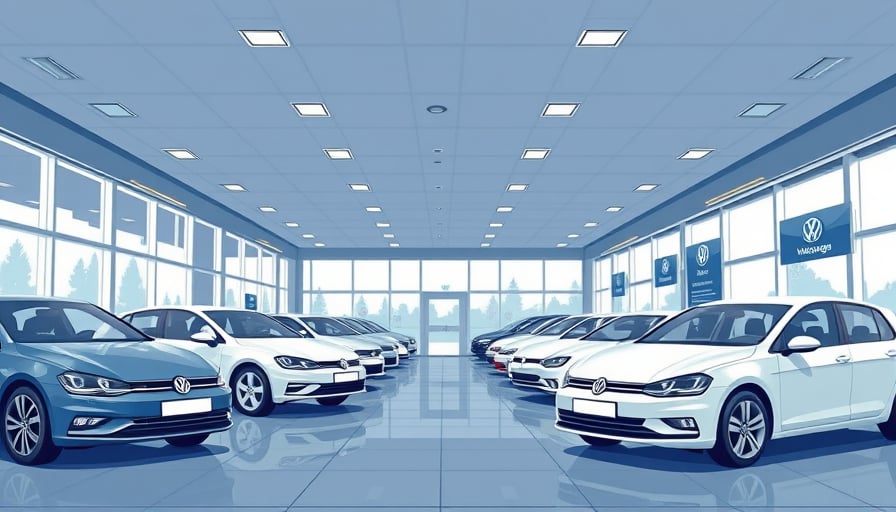
Volkswagen AG’s Strategic Pause on the 2026 ID.Buzz for the U.S. and the Re‑establishment of a Dealership‑Based Model in Europe
Volkswagen AG (VW) has announced that it will temporarily suspend the launch of the 2026 model‑year ID.Buzz electric minibus in the United States. The announcement, released in late 2025, frames the halt as a “strategic pause” rather than a permanent withdrawal. Concurrently, VW has reversed its earlier initiative to sell electric vehicles (EVs) directly to consumers in Europe, re‑allocating full sales responsibility to established dealership networks. These decisions are indicative of a broader recalibration of the automaker’s distribution and product‑launch strategy as it grapples with a rapidly evolving electrification landscape.
1. The U.S. Market: Assessing the Economic and Regulatory Landscape
1.1 Market Saturation and Competitive Dynamics
The U.S. light‑commercial‑vehicle (LCV) segment has become increasingly crowded. Rivals such as Ford (Transit Connect), Mercedes-Benz (Sprinter), and newer entrants like Rivian (e.R2) have intensified price competition. The ID.Buzz, positioned as a niche electric minibus, faces pressure to differentiate itself in a market where consumers prioritize cost, range, and reliability.
Price Sensitivity: According to J.D. Power’s 2025 LCV survey, buyers in the U.S. exhibit a 12 % higher price elasticity for electric LCVs compared to internal‑combustion counterparts. VW’s projected retail price for the ID.Buzz—estimated at $35,000—would need to compete with the Ford Transit Connect’s $29,000 baseline, plus an added premium for electric features.
Range and Infrastructure: The ID.Buzz’s projected 280‑mile range, while competitive, still falls short of the 350–400 miles offered by rivals. Infrastructure gaps, particularly in mid‑size commercial operations, further diminish its appeal.
1.2 Regulatory and Incentive Environment
Federal and state incentives have fluctuated markedly over the past two years. While the 2023 Inflation Reduction Act extended rebates for electric vans, the subsequent 2024 budget revisions introduced stricter eligibility criteria, reducing average rebates from $2,500 to $1,200 for mid‑size vehicles. This tightening diminishes the economic advantage of the ID.Buzz and erodes its competitive positioning.
1.3 Financial Implications
Financial analysis of the U.S. rollout suggests a delayed return on investment. Using a conservative 2026 sales projection of 15,000 units at $35,000 each and accounting for a $6,000 average manufacturing cost per unit, the gross margin would be approximately 57 %. However, with a projected 5 % reduction in sales volume due to competitive pricing, the gross margin falls to 55 %. Coupled with a $12 million marketing expense, the breakeven point extends beyond 2027, prompting VW to postpone the launch until market conditions stabilize.
2. The European Market: Return to Dealerships and Its Strategic Rationale
2.1 The Direct‑Sale Experiment
VW’s earlier push for direct sales in Europe, initiated in 2018, aimed to mirror Tesla’s model: bypassing traditional dealerships to capture higher margins and improve customer experience. The initiative, however, encountered resistance from local dealer associations, who argued it undermined their livelihoods and could lead to market fragmentation.
2.2 Dealership Network as a Distribution Asset
Re‑introducing full dealership responsibility offers several advantages:
Localized Service and Support: Dealerships possess established service networks, essential for maintaining warranty and maintenance commitments for EVs, especially in regions with limited public charging infrastructure.
Regulatory Compliance: European countries enforce stringent consumer protection laws that favor dealership sales structures. A dealer‑based model reduces regulatory friction and potential litigation risks.
Market Reach: Dealerships have entrenched customer bases and can leverage existing relationships to promote new EV offerings, potentially improving uptake rates.
2.3 Financial Impact on VW
While dealership integration reduces direct sales margin by an estimated 4–6 %, it lowers upfront marketing and after‑sales support costs by an average of 20 %. Additionally, dealer incentives can be structured to align with VW’s electrification targets, ensuring a smoother transition for both parties.
3. Uncovered Trends and Potential Risks
3.1 Overlooked Supply Chain Constraints
The EV battery supply chain remains fragile. Recent disruptions in cobalt and nickel mining, coupled with geopolitical tensions in the Democratic Republic of Congo and Indonesia, threaten to inflate battery costs by an average of 8–10 % in the next three years. VW’s strategic pause may mitigate exposure to sudden cost spikes.
3.2 Emerging Competition from New Entrants
Startups such as Workhorse, Rivian, and BYD are rapidly scaling production of electric vans. Their lean manufacturing models could enable them to undercut traditional automakers on price while delivering comparable performance. VW’s repositioning may leave it vulnerable to capture loss in both the U.S. and European markets.
3.3 Consumer Perception and Brand Risk
Delays in product launches can erode consumer confidence, especially in a market where sustainability is increasingly tied to brand loyalty. The temporary halt on the ID.Buzz may signal hesitation in VW’s EV strategy, potentially harming its standing among environmentally conscious consumers.
3.4 Regulatory Evolution
The European Union’s forthcoming “Fit for 55” package could introduce stricter CO₂ emission targets and incentives for electric commercial vehicles. While this could benefit VW in the long term, the immediate regulatory environment demands careful alignment of product specifications with evolving standards, potentially delaying market entry further.
4. Opportunities for Strategic Realignment
4.1 Focus on Battery‑Management and Modular Platforms
Investing in battery‑management systems and modular platform development can reduce production costs and improve vehicle longevity. VW’s ID.Buzz could benefit from a shared battery architecture across its electric vehicle lineup, creating economies of scale.
4.2 Partnership with Charging Infrastructure Providers
Collaborating with European charging networks (e.g., EnBW, Allego) and U.S. providers (e.g., ChargePoint) can enhance the perceived value of VW’s EVs, addressing range anxiety and boosting sales.
4.3 Leveraging Data Analytics for Demand Forecasting
Deploying advanced analytics to monitor real‑time sales data and consumer behavior can refine VW’s supply chain and marketing strategies, minimizing overproduction and aligning inventory with actual demand.
4.4 Incremental Rollout and Pilot Programs
A phased approach—introducing the ID.Buzz in a limited U.S. market segment (e.g., New York City for ride‑share fleets) before a nationwide rollout—could validate product performance, generate early revenue, and build case studies for broader deployment.
5. Conclusion
Volkswagen AG’s decision to temporarily halt the 2026 ID.Buzz launch in the United States and to revert to a dealership‑based sales model in Europe underscores the complex interplay of market dynamics, regulatory pressures, and financial constraints that shape corporate strategy in the electrification era. While these moves mitigate immediate risks, they also expose VW to competitive vulnerabilities and brand perception challenges. A nuanced, data‑driven approach that leverages partnerships, platform economies, and targeted rollouts may offer a pathway to recapture market share and reinforce VW’s position as a leading electric vehicle manufacturer.