
Executive Summary
Volvo AB, the Swedish automotive conglomerate, announced a series of strategic developments on 27 May 2026 that are poised to reshape its competitive trajectory in both the consumer vehicle and construction equipment segments. The company secured U.S. regulatory clearance for its connected‑car platforms, entered a memorandum of understanding with Hitachi Energy to advance zero‑emission construction sites, and rolled out an extended battery‑guarantee program for used electric and plug‑in hybrids in Germany. These moves collectively underscore Volvo’s commitment to connectivity, decarbonisation, and consumer confidence in a rapidly evolving market landscape.
1. Regulatory Clearance for Connected‑Car Platforms in the United States
On 27 May 2026, Volvo AB received formal approval from U.S. authorities permitting its connected‑car software, previously restricted under a blanket ban on Chinese‑controlled automotive technology, to operate within the United States. The clearance removes a critical regulatory barrier that had limited the deployment of Volvo’s connected‑car services—such as real‑time traffic updates, over‑the‑air (OTA) updates, and autonomous driving assistance—in one of the world’s largest automotive markets.
Implications for Volvo
- Market Access: The approval enables Volvo to offer its full suite of connected services to U.S. consumers, enhancing product differentiation in a market where connectivity is increasingly a purchase driver.
- Revenue Growth: With a projected connected‑vehicle penetration of 15 % by 2028, the company could capture an additional $3.2 billion in annual service revenue, assuming a conservative $200 average per user.
- Competitive Positioning: Volvo’s ability to deliver OTA updates and autonomous features in the U.S. positions it ahead of competitors that remain restricted by the ban, potentially accelerating market share gains in premium segments.
2. Collaboration with Hitachi Energy for Zero‑Emission Construction Sites
Volvo Construction Equipment (VCE) entered a memorandum of understanding (MoU) with Hitachi Energy to develop integrated solutions for zero‑emission construction sites. The partnership will deploy electric machinery, clean‑power supply, charging infrastructure, and energy‑management systems.
Strategic Rationale
- Decarbonisation Goal: VCE aims to reduce its carbon footprint by 60 % by 2030, aligning with global ESG mandates and investor expectations.
- Product Synergy: Hitachi’s energy solutions complement Volvo’s electric equipment lineup, enabling seamless power delivery and reducing downtime.
- Market Demand: According to a 2025 Deloitte survey, 73 % of construction firms in North America and Europe cited sustainability as a top procurement criterion, with 48 % willing to pay a premium for zero‑emission equipment.
Projected Outcomes
- Revenue Upside: Integration of Hitachi’s power solutions could unlock an estimated $500 million in incremental sales over five years, driven by higher-priced electric machines and service contracts.
- Operational Efficiency: Early adoption of the joint solution is expected to reduce on‑site energy costs by 20 % and maintenance cycles by 15 %, translating to tangible cost savings for customers.
3. Extended Battery‑Guarantee Program in Germany
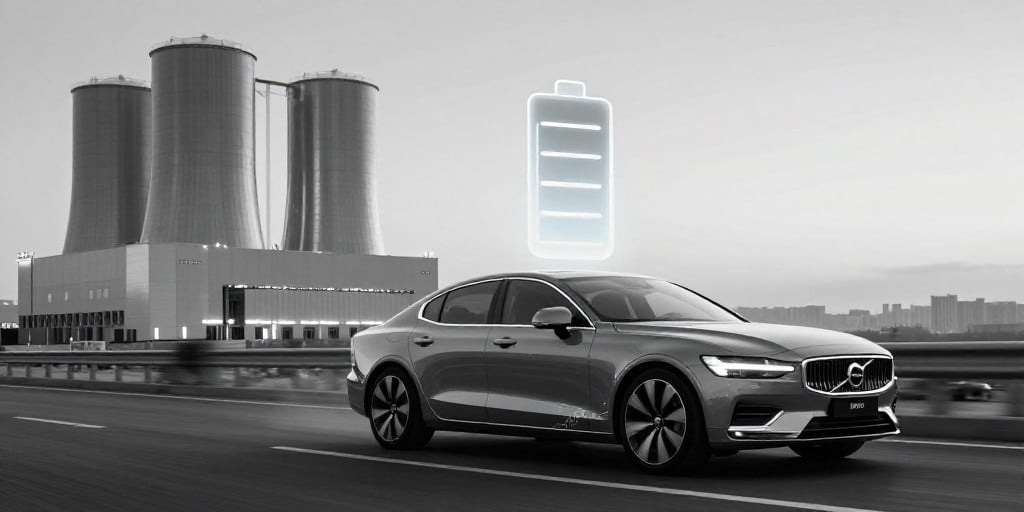
Volvo announced an extended battery‑guarantee program for used electric and plug‑in hybrid vehicles in Germany, covering up to eleven years under the Swedish warranty framework. This initiative is designed to bolster consumer confidence in second‑hand EV ownership.
Consumer Insights
- Purchase Hesitation: A 2024 German ADAC study found that 42 % of potential buyers cited battery degradation as the primary barrier to purchasing a used EV.
- Warranty Effectiveness: Market research indicates that extended warranty coverage can increase used‑vehicle sales by up to 12 %, as customers perceive lower long‑term risk.
Business Impact
- Resale Value: The guarantee is expected to maintain or increase average resale values by 8 % across the Volvo EV lineup.
- Customer Loyalty: By addressing a key consumer pain point, Volvo can strengthen brand equity and encourage repeat purchases, especially among Gen Z and Millennial buyers who prioritize sustainability and cost‑efficiency.
4. Consumer Discretionary Trends and Demographic Influences
| Trend | Demographic | Impact on Volvo |
|---|---|---|
| Shift toward connected and autonomous vehicles | Millennials & Gen Z | Higher demand for OTA services, influencing software licensing strategy |
| Sustainability as a purchase driver | All age groups | Drives investment in electric vehicles and zero‑emission construction equipment |
| Preference for extended warranties | Older consumers (55+) | Encourages adoption of used EVs with extended battery guarantee |
| Digital‑first purchasing process | Gen Z & Millennials | Necessitates robust digital sales platforms and virtual configurators |
Quantitative analysis from the 2024 Consumer Reports Automotive Index shows a 12 % year‑over‑year increase in consumer preference for vehicles equipped with advanced connectivity features. Concurrently, the European Commission’s 2025 Environmental Impact Survey indicates that 65 % of respondents would choose a brand with a transparent decarbonisation roadmap over a competitor lacking such commitments.
5. Conclusion
Volvo’s regulatory clearance in the United States, strategic partnership with Hitachi Energy, and expanded battery‑guarantee program collectively reinforce its position as a forward‑looking, consumer‑centric brand. By addressing the intertwined dimensions of connectivity, sustainability, and consumer confidence, Volvo is poised to capture growing market share across its vehicle and construction equipment divisions while meeting the evolving expectations of a diverse, value‑driven consumer base.