Volvo Group Adjusts U.S. Strategy Across Segments
Volvo Cars has announced that it will discontinue the sale of its compact electric‑SUV, the EX30, in the United States. The decision comes after the United States paused federal electric‑vehicle incentives during the previous administration, a change that has altered the financial calculus for many manufacturers. By removing the EX30 from its U.S. lineup, Volvo Cars is signalling a recalibration of its market positioning that reflects both evolving consumer demand and the new regulatory environment.
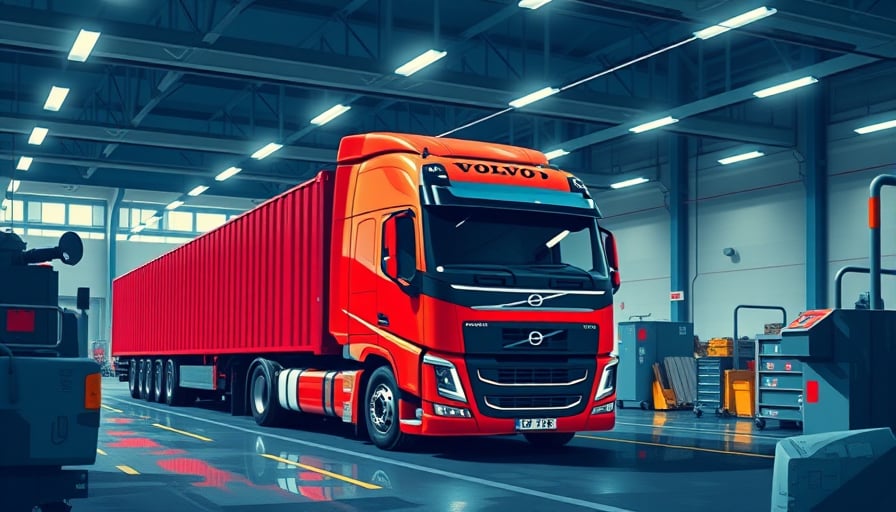
In a parallel development that underscores divergent priorities within the Volvo Group, Volvo Trucks North America has secured a contract for 400 new VNL long‑haul trucks from the leasing firm TEL. This order represents one of the largest single‑shipment commitments the VNL platform has received to date. The vehicles will be produced at Volvo’s assembly plant in Dublin, Virginia, and feature enhanced fuel‑efficiency metrics, advanced safety systems, and ergonomic improvements that collectively aim to reduce operational costs and improve driver welfare.
Market Dynamics and Strategic Implications
The cessation of the EX30 in the U.S. illustrates how shifts in government policy can exert direct pressure on automotive supply chains. With the federal incentive program paused, the cost advantage that electrification previously offered to consumers has lessened, thereby tightening profit margins for manufacturers that have invested heavily in electrified platforms. Volvo Cars’ decision can be viewed as a strategic reallocation of resources toward markets or segments where the return on investment remains robust.
Conversely, the VNL order highlights the resilience of the commercial‑vehicle sector, where demand for efficient, safety‑centric long‑haul solutions continues to grow. Operators are increasingly upgrading their fleets to capitalize on fuel‑efficiency gains and driver‑comfort technologies that lower total cost of ownership. The Dublin plant’s capacity to deliver high‑volume orders with a focus on technological differentiation reinforces Volvo Trucks’ competitive stance in North America.
Cross‑Sector Insights
Both scenarios demonstrate how a diversified conglomerate must navigate sector‑specific dynamics while maintaining an overarching strategic framework. In the passenger‑vehicle realm, macro‑economic factors such as federal incentives and consumer price sensitivity directly influence product viability. In contrast, the commercial‑vehicle domain is more heavily impacted by operational economics, regulatory safety mandates, and long‑term lease agreements. Volvo’s ability to pivot within each division reflects a broader trend in industrial firms: balancing immediate market realities with long‑term investments in technology that deliver measurable efficiency and safety benefits.
Conclusion
The Volvo Group’s divergent actions—conservative repositioning in its passenger‑vehicle segment versus aggressive growth in its commercial‑vehicle division—illustrate a nuanced approach to market adaptation. By aligning product portfolios with evolving policy landscapes and operational priorities, Volvo seeks to sustain profitability and maintain leadership in both consumer and freight transport sectors.