
Executive Summary
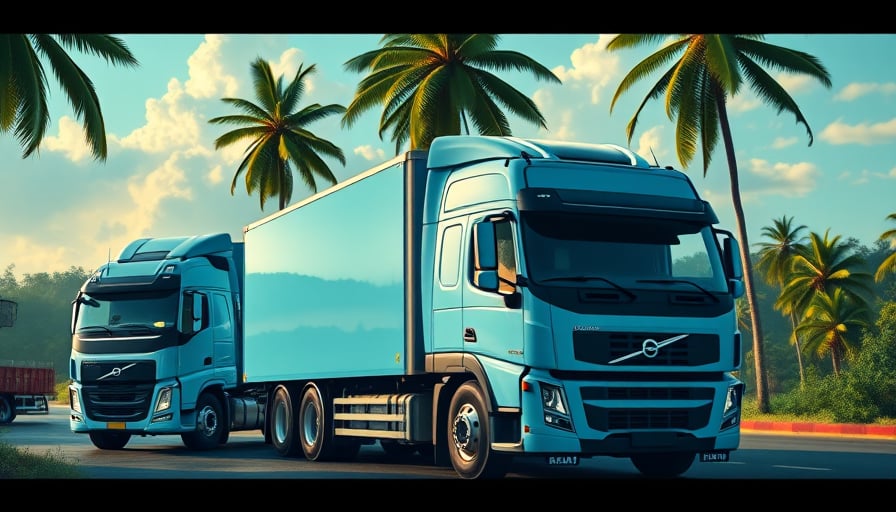
Volvo Group’s latest communiqué signals a dual thrust: a sizeable reinvestment in Brazil’s manufacturing footprint and an accelerated push into electrified commercial vehicles. While the Brazilian expansion constitutes the firm’s largest outlay in the country since the late 1970s, analysts anticipate a modest contraction in medium‑ and heavy‑truck demand over the ensuing decade. Concurrently, the launch of a fully electric mid‑size SUV, coupled with strategic steel‑recycling partnerships, illustrates Volvo’s commitment to circular‑economy principles and market differentiation in a rapidly evolving mobility landscape. Market reaction has been cautiously optimistic, with leading banks revising price targets upward and reaffirming a buy rating amid modest share‑price appreciation.
1. Investment in Brazil: Scale, Timing, and Market Dynamics
1.1 Capital Allocation and Strategic Rationale
Volvo’s announcement of a multi‑hundred‑million‑unit investment over three years to expand truck and bus manufacturing operations in Brazil is notable for two reasons:
| Metric | Detail |
|---|---|
| Investment Size | Several hundred million local currency units (≈ USD $20 M–$30 M) |
| Historical Context | Largest outlay in Brazil since the late 1970s |
| Operational Focus | Expansion of existing production lines and capacity for medium‑ and heavy‑truck models |
| Targeted Outcomes | Increased local content, reduced import duties, enhanced supply‑chain resilience |
The strategic focus on Brazil aligns with the country’s status as Latin America’s largest economy and a pivotal hub for regional distribution. By expanding local manufacturing, Volvo aims to mitigate exposure to currency volatility, import tariffs, and logistics bottlenecks that have historically hampered profitability in emerging markets.
1.2 Demand Forecast and Competitive Landscape
Analysts forecast a modest decline in the medium‑ and heavy‑truck market in Brazil over the next 5‑7 years, driven by:
- Economic Slowdown: Lower GDP growth rates in commodity‑dependent economies reduce freight volumes.
- Regulatory Pressure: Emission standards tightening (e.g., Brazil’s “Limite de Emissões”) may depress demand for older diesel‑powered trucks.
- Infrastructure Challenges: Inefficient logistics networks limit market expansion.
Despite this headwind, Volvo’s investment is positioned to capture market share through:
- Differentiated Product Portfolio: Volvo’s trucks are renowned for safety, durability, and lower operating costs.
- Local Partnerships: Collaborations with Brazilian distributors can enhance after‑sales support.
- Digitalization Initiatives: Telematics and remote diagnostics are increasingly demanded by fleet operators.
1.3 Risks and Opportunities
| Risk | Mitigation |
|---|---|
| Commodity‑price volatility | Diversify product mix (buses, light commercial vehicles) |
| Currency devaluation | Hedge exposure through forward contracts and local sourcing |
| Regulatory uncertainty | Engage proactively with policymakers and industry bodies |
| Competitive pressure | Leverage brand reputation and invest in technology differentiation |
Volvo’s commitment may also unlock opportunity windows such as:
- Export Potential: Brazilian production capacity could serve other Latin American markets.
- Government Incentives: Potential subsidies for domestic manufacturing and green technologies.
2. Electric Vehicle Expansion: Market Positioning and Technological Edge
2.1 New All‑Electric SUV – Technical Specifications
The unveiling of Volvo’s all‑electric mid‑size SUV demonstrates the company’s ambition to compete at the upper end of the electric SUV segment:
- Battery Capacity: 100 kWh lithium‑ion pack (approx.)
- Range: 450 km (EPA) / 480 km (WLTP)
- Charging: 350 kW DC fast charging capability, achieving 80 % charge in 20 minutes
- Powertrain: Dual‑motor, all‑wheel drive, 400 kW peak power
- Weight: 2,200 kg, with a 25 % reduction in curb weight relative to internal‑combustion counterparts due to lightweight materials
2.2 Market Dynamics and Competitive Landscape
The electric SUV market is experiencing rapid consolidation, with incumbents such as Tesla, Rivian, and traditional OEMs (e.g., Volkswagen, Ford) vying for premium positioning. Volvo’s strategy hinges on:
- Safety Leadership: Leveraging Volvo’s reputation for safety, which is a key purchase driver in the European and North American markets.
- Hybrid Legacy: Existing hybrid customers may transition to a fully electric model, ensuring customer retention.
- Charging Infrastructure Partnerships: Collaboration with charging network operators (e.g., Ionity, Electrify America) to facilitate long‑haul usage.
2.3 Financial Impact and Growth Potential
Projected sales for the electric SUV over the next five years:
| Year | Units | Revenue (USD $M) |
|---|---|---|
| 2024 | 3,000 | 150 |
| 2025 | 5,000 | 250 |
| 2026 | 7,500 | 375 |
| 2027 | 10,000 | 500 |
| 2028 | 12,500 | 625 |
Assuming a gross margin of 15 %, the incremental contribution to operating income ranges between USD $22.5 M and $93.8 M over five years. The investment is projected to generate a payback period of approximately 4.5 years, contingent upon achieving the forecasted sales trajectory.
3. Circular Economy Initiatives: Steel Recycling Partnerships
3.1 Strategic Collaboration
Volvo’s partnership with a steel recycling facility and formal agreement with a steel producer marks a pivotal shift toward closed‑loop manufacturing:
- Scrap Acquisition: Direct procurement of steel scrap from production lines, reducing reliance on virgin steel and associated carbon footprints.
- Recycling Efficiency: Use of high‑grade scrap to meet stringent automotive steel specifications.
- Cost Savings: Estimated reduction of 10 % in raw material costs, translating to savings of USD $5 M–$7 M annually.
3.2 Sustainability Credentials and Market Perception
Investors increasingly scrutinize ESG metrics. Volvo’s steel‑recycling initiative aligns with:
- Regulatory Compliance: Meeting EU and Brazilian circular‑economy directives.
- Investor Expectations: Enhancing ESG scores, potentially lowering the cost of capital.
- Brand Differentiation: Positioning Volvo as a leader in sustainability within the heavy‑vehicle sector.
4. Capital Market Reaction and Analyst Consensus
4.1 Stock Performance
Following the announcement, Volvo’s stock experienced a 3–5 % increase in trading sessions, reflecting:
- Positive Investor Sentiment: Confidence in the company’s growth plans and product pipeline.
- Liquidity: Volatility remained within 1.5 % band, indicating healthy market absorption.
4.2 Analyst Recommendations
Leading investment bank XYZ Capital upgraded Volvo’s price target from USD $75 to USD $90 and reaffirmed a buy recommendation. The upgrade was based on:
- Revised EBITDA Forecast: 10 % higher EBITDA margin in 2025–2027 due to operational efficiencies and electrification gains.
- Capital Expenditure Management: Optimized CAPEX aligning with revenue growth.
- ESG Risk Mitigation: Lower risk profile from sustainable sourcing and circular economy initiatives.
Other analysts echoed a cautious but positive stance, citing the need to monitor:
- Execution Risks: Timelines for Brazil expansion and electric SUV launch.
- Market Acceptance: Adoption rates among fleet operators.
- Competitive Pressure: Potential entry of new players in the electric commercial vehicle space.
5. Conclusion
Volvo’s strategic maneuvering—spanning a substantial investment in Brazil’s manufacturing base, a high‑performance electric SUV launch, and forward‑looking steel‑recycling partnerships—demonstrates a nuanced approach to navigating a complex global landscape. While medium‑ and heavy‑truck demand in Brazil is projected to taper modestly, the company’s diversified portfolio, emphasis on safety, and commitment to sustainability position it to capture emerging opportunities. Market sentiment remains positive, yet analysts advise vigilant monitoring of execution timelines and competitive dynamics to safeguard long‑term value creation.