
Corporate Analysis: Volvo’s Strategic Focus on Electrification and Software Integration
Executive Summary
Volvo Group’s recent public statements and operational initiatives reinforce its long‑term commitment to electric mobility and software‑driven solutions. Key developments include:
- Deutsche Bank’s downgrade of the company’s recommendation to “hold,” with a revised target price of 200 – 250 ₪.
- Chairman’s emphasis on accelerating the transition to electric vehicles.
- Announcement that Volvo’s central software stack will be made available to external partners.
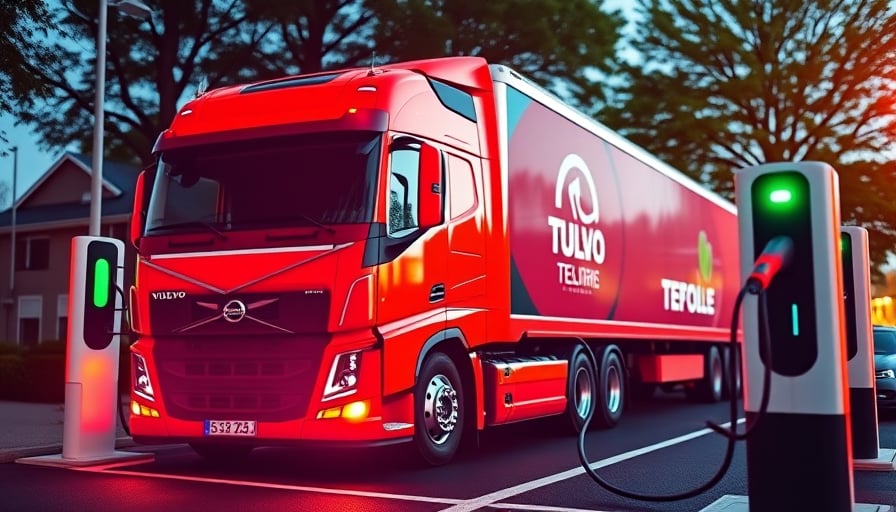
- Deployment of Volvo electric tractor units by a logistics operator, reflecting broader industry momentum toward zero‑emission freight solutions.
These moves are aligned with global macro‑economic trends toward decarbonization, digitalization, and supply‑chain resilience.
Market Context
Decarbonization Imperative – Worldwide regulatory pressure, particularly in the European Union, mandates significant reductions in greenhouse‑gas emissions for road transport. Governments are tightening limits on tailpipe pollutants, and many countries are introducing incentives for zero‑emission vehicles (ZEVs).
Digital Transformation – The rise of vehicle‑to‑everything (V2X) communication, over‑the‑air (OTA) updates, and data‑driven fleet management has become a prerequisite for maintaining competitive advantage in the automotive sector.
Economic Headwinds – Rising commodity prices, supply‑chain disruptions, and inflationary pressures compress margins for heavy‑vehicle manufacturers, making cost‑efficient electrification pathways and scalable software platforms more attractive.
Volvo’s Strategic Position
| Initiative | Strategic Rationale | Competitive Implications |
|---|---|---|
| Accelerated EV Roll‑out | Meets regulatory demands and capitalizes on consumer demand for cleaner fleets. | Positions Volvo against key rivals such as Daimler, Mercedes‑Benz, and newer entrants like Rivian. |
| Software Stack Licensing | Diversifies revenue streams and leverages existing software expertise. | Enables Volvo to become a technology platform provider, creating network effects and higher switching costs for partners. |
| Zero‑Emission Freight Units | Demonstrates end‑to‑end commitment to sustainability in logistics. | Strengthens Volvo’s brand as a pioneer in electric heavy‑equipment, potentially opening new B2B markets. |
Financial Outlook
Deutsche Bank’s “hold” recommendation and target price reflect a cautious stance amid:
- Uncertainty in Battery Costs – Volatility in lithium‑ion battery prices can erode profitability if not mitigated.
- Capital Expenditure (CapEx) Commitments – Significant investment in manufacturing retooling and software development.
- Competitive Pressure – Price competition from both legacy OEMs and disruptive start‑ups.
Despite these challenges, Volvo’s diversified portfolio—combining traditional internal‑combustion engines with EVs and software services—provides a balanced risk profile.
Cross‑Sector Synergies
The introduction of electric tractor units in the logistics sector illustrates a convergence between automotive engineering and supply‑chain solutions. Similar trends are observable in:
- Rail Transport – Electrification of freight locomotives reduces operating costs and emissions.
- Maritime Shipping – Adoption of battery‑assisted propulsion aligns with global decarbonization targets.
- Agricultural Machinery – Electric tractors are gaining traction, driven by regulatory support and technological advances in battery range.
These inter‑industry linkages underscore the importance of a holistic approach to sustainability, where advancements in one domain catalyze progress in others.
Conclusion
Volvo’s continued focus on electric mobility and software innovation is well‑aligned with macro‑economic and regulatory trajectories. While the “hold” rating by Deutsche Bank signals prudence, the company’s strategic initiatives—particularly the licensing of its software stack and deployment of zero‑emission freight units—position it to capture value in a rapidly evolving market. Stakeholders should monitor the company’s execution on these fronts, as successful integration of technology and electrification will likely determine Volvo’s long‑term competitive stance.