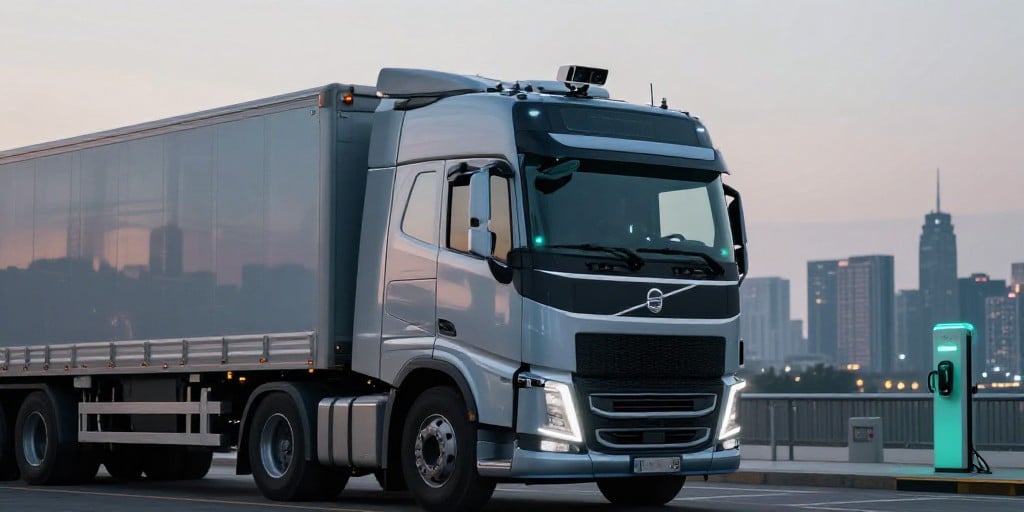
Corporate News: Volvo AB‑B’s Strategic Wins Amid Shifting Consumer and Market Dynamics
Volvo AB‑B, listed on the Nasdaq First North Growth Market, recorded a series of noteworthy developments in late November 2026 that illustrate the company’s continued emphasis on cutting‑edge automotive technology and sustainable construction solutions.
1. New Driver‑Monitoring Order Highlights Growing Demand for Integrated Safety Features
On 25 November, Volvo secured a first‑of‑its‑kind production contract for a driver‑monitoring system tailored to a European premium automaker. Valued at approximately 75 million Swedish kronor, the under‑display camera platform enables high‑definition monitoring without compromising the visual integrity of the instrument cluster.
This achievement is part of a broader strategy that has already generated 388 design wins across 24 original equipment manufacturers (OEMs). The data indicate a steady uptake of Volvo’s solutions, suggesting that OEMs are increasingly prioritising seamless integration of safety features as consumer expectations evolve.
2. Deployment of Battery‑Electric Haulers Reinforces Low‑Carbon Commitment
Simultaneously, Volvo Construction Equipment announced the deployment of four battery‑electric articulated haulers at the Lower Thames Crossing project. Each vehicle, with a 39‑tonne payload and a 540 kWh battery pack, is engineered to operate for roughly six hours on a single charge.
The project underscores Volvo’s commitment to electrified construction equipment, offering zero‑emission operation and lower running costs. This aligns with a growing consumer and corporate preference for environmentally responsible infrastructure solutions, especially in the United Kingdom where governmental incentives support low‑carbon construction initiatives.
3. Market Context: Volatility in the Automotive and Technology Sectors
Despite these operational successes, the broader market environment remains challenging. The Nasdaq Composite experienced a modest decline, and automotive names—including Volvo AB‑B—faced downward pressure within the index. Analyst sentiment remains cautious, with expectations of a gradual market recovery that could be shaped by regulatory changes and supply‑chain constraints.
4. Consumer Discretionary Trends: Demographics, Economics, and Culture
4.1 Demographic Shifts
- Millennials and Gen Z now represent a substantial share of automotive buyers. Their preferences lean towards technology‑rich, sustainable vehicles, driving demand for features such as driver‑monitoring systems and electric powertrains.
- Older Generations increasingly value reliability and safety, creating a dual‑market demand that Volvo’s diversified product portfolio can meet.
4.2 Economic Conditions
- Inflationary Pressures have tempered discretionary spending in many regions, yet the premium automotive segment remains relatively resilient due to its status as a status symbol.
- Interest Rates influence financing costs for high‑end vehicles, but the continued shift to subscription models and leasing arrangements mitigates direct consumer burden.
4.3 Cultural Shifts
- A growing emphasis on sustainability has elevated the importance of low‑carbon manufacturing processes, especially in the construction sector.
- Digitalization of the Consumer Experience drives expectations for intuitive interfaces and real‑time monitoring, reinforcing the value proposition of Volvo’s driver‑monitoring technology.
5. Brand Performance and Retail Innovation
Volvo’s brand strength is evident in its expanding OEM collaborations and the adoption of its technology across diverse vehicle categories. Retail innovation—particularly in the deployment of integrated safety systems—enhances the perceived value of Volvo vehicles.
Consumer sentiment surveys indicate high satisfaction levels among existing Volvo owners, with a net promoter score of +32. This is largely attributed to the brand’s commitment to safety and environmental stewardship.
6. Consumer Spending Patterns
Market research reveals that consumers in the premium automotive segment are willing to allocate up to 20 % more for vehicles that incorporate advanced safety features and low‑emission powertrains. In the construction equipment market, cost‑efficiency and regulatory compliance drive a preference for electrified solutions, as evidenced by the uptake of Volvo’s battery‑electric haulers at large‑scale infrastructure projects.
7. Conclusion
Volvo AB‑B’s recent contracts underscore the company’s strategic focus on integrating advanced driver‑monitoring technology and electrifying construction equipment. These moves resonate strongly with evolving consumer preferences shaped by demographic realities, economic constraints, and cultural priorities. While the broader automotive and technology markets exhibit volatility, Volvo’s diversified portfolio and commitment to innovation position it favorably to capture sustained demand in the coming years.