
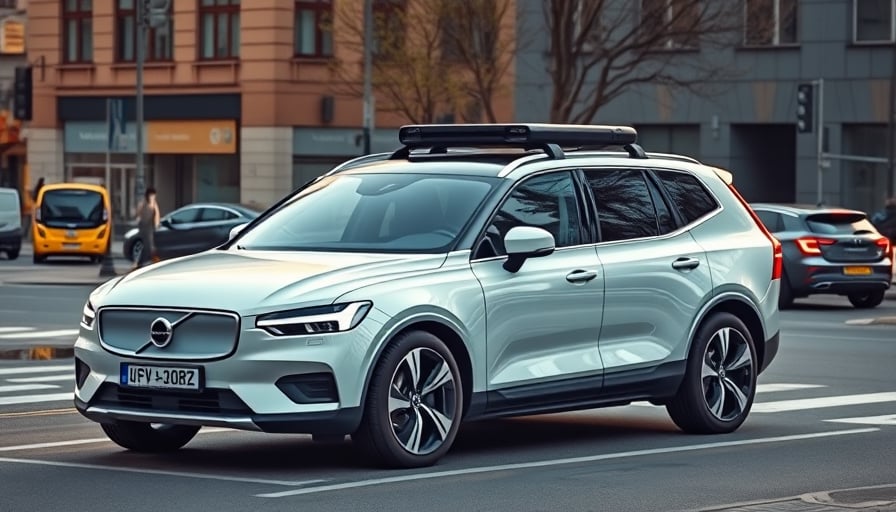
Volvo AB’s Recent Strategic Moves and Market Response
Typeface Innovation and Driver‑Safety Enhancement
Volvo AB has introduced Volvo Centum, a vehicle‑specific typeface engineered to improve legibility on in‑vehicle digital displays. By prioritising clear typography, the company seeks to reduce driver distraction and enhance safety—a core value that aligns with Volvo’s long‑standing reputation for occupant protection. The typeface’s design, tailored for high‑contrast environments and varied lighting conditions, underscores the manufacturer’s commitment to ergonomics and human‑centered engineering.
Focus on the European Premium Segment: The EX60
In its latest product positioning, Volvo highlighted the EX60 as a flagship offering for the German and broader European markets. The model is equipped with advanced driver‑assistance systems that leverage artificial intelligence to deliver predictive safety functions such as automated braking, lane‑keeping assistance, and traffic‑aware cruise control. By integrating AI‑driven features into a compact executive car, Volvo aims to capture consumers seeking both sustainability and high‑tech convenience. The EX60’s advanced safety suite also serves as a differentiator against competitors from Audi, BMW, and Mercedes‑Benz, who are rapidly expanding their own AI‑enabled portfolios.
Electric‑Vehicle Portfolio Adjustments
Charging Guidance for the Global EX30
Volvo has issued a precautionary advisory for owners of the global EX30. The recommendation to limit charging sessions to approximately 70 % of the battery capacity and to park the vehicle outdoors is intended to mitigate battery degradation risks associated with prolonged high‑state‑of‑charge (SoC) exposure. This guidance reflects a broader industry trend where manufacturers are increasingly emphasizing battery health as a key component of long‑term ownership experience.
Expansion in South Korea: EX90 and ES90
Within South Korea, Volvo plans to introduce the EX90 and ES90 models by the end of the calendar year. Both vehicles are slated to incorporate software‑defined vehicle (SDV) architecture, enabling over‑the‑air updates and modular feature delivery. This move signals Volvo’s intent to accelerate its SDV capabilities, aligning with global automotive trends where connectivity, data analytics, and modular platforms are becoming essential competitive levers.
Analyst Perspective and Investor Sentiment
Kepler Cheuvreux, a leading equity research firm, has shifted its stance on Volvo AB to a Hold rating. The rationale centers on the company’s high valuation multiples relative to its peers in the electrified segment. However, the firm maintains a target price that allows for moderate upside potential through the fourth quarter, suggesting that incremental product releases and software updates may still drive earnings growth.
The market’s reaction has been measured. Volvo shares have traded within a constrained range, indicating that investors are assimilating the company’s strategic announcements—particularly around electrification and digitalization—without making radical portfolio adjustments. This tempered response reflects a broader macro‑economic environment where volatility remains elevated, and valuation concerns dominate.
Cross‑Sector Implications and Economic Context
Volvo’s focus on AI‑enabled safety features and software‑defined platforms resonates across multiple industries, from automotive to information technology. The emphasis on battery longevity aligns with global supply‑chain pressures for sustainable materials and battery recycling initiatives. Moreover, the company’s typeface development highlights the growing importance of user experience (UX) in non‑tech sectors, a trend echoed in consumer electronics, automotive infotainment, and even aviation.
From an economic perspective, these developments illustrate how automakers are diversifying their value propositions to stay competitive amid tightening emission regulations and shifting consumer preferences toward connected, low‑emission vehicles. The incremental nature of Volvo’s product updates and strategic advisories also underscores the importance of agile decision‑making in an era where technological obsolescence can quickly erode market share.
In conclusion, Volvo AB’s recent initiatives—spanning typography, AI‑driven safety, and software‑defined electric vehicles—are strategically aligned with global industry trends. While analyst sentiment remains cautious due to valuation concerns, the company’s measured approach to electrification and digitalization is likely to sustain investor interest as the automotive landscape continues to evolve.