
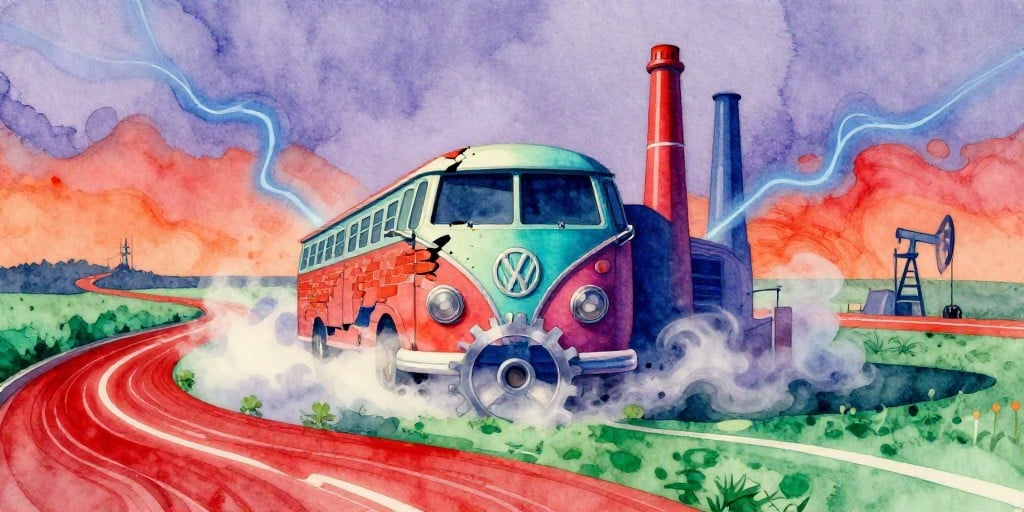
Volkswagen AG Navigates a Volatile Week Amid Strategic Restructuring
Volkswagen AG experienced a mixed week in the financial markets, underscoring the broader headwinds facing the automotive sector and the company’s ambitious internal restructuring agenda. In Frankfurt, the DAX registered modest gains during early trading, while the MDAX and EuroStoxx 50 delivered smaller upticks. The market performance, however, was tempered by persistent uncertainty over international trade developments and a cautious outlook on the global economy. Analysts highlighted that the German market remains highly sensitive to energy‑price volatility and geopolitical risks, which continue to influence investor sentiment.
Market Context
The European equity market’s muted reaction reflects a delicate balance between optimism and risk aversion. While the DAX’s short‑term gains signal a degree of resilience within Germany’s blue‑chip firms, the broader sentiment is shaped by a confluence of factors:
- Energy Price Volatility – Fluctuations in crude oil and natural gas prices continue to strain operating margins across the automotive supply chain, affecting cost structures and pricing strategies.
- Geopolitical Tensions – Ongoing trade disputes, especially between the United States and China, introduce uncertainty around tariff regimes and supply‑chain logistics, with direct implications for vehicle exports.
- Economic Outlook – Global growth forecasts remain subdued, prompting investors to weigh potential earnings pressures against opportunities for consolidation and efficiency gains.
Volkswagen’s Internal Dynamics
In Berlin, the controlling stakeholder, Porsche SE, reiterated pressure on Volkswagen’s leadership to accelerate cost‑cutting and capacity rationalisation. Porsche SE’s half‑year results revealed a decline in adjusted earnings after tax, raising concerns about the financial impact of the planned restructuring. The restructuring plan may involve significant job cuts and the closure of several German plants, a scenario that will require careful negotiation with labour representatives and compliance with state‑level regulatory frameworks.
Chief Executive Officer Oliver Blume has pledged a sweeping overhaul aimed at addressing rising costs, tariff burdens, and competition from Chinese automakers. Nevertheless, the plan is still pending approval from labour unions and relevant governmental authorities, which introduces an element of operational uncertainty.
Broader Industry Implications
Volkswagen’s restructuring discussion aligns with a broader trend of consolidation and efficiency drives across the European automotive industry. Key dynamics include:
- Capacity Rationalisation – Manufacturers are scaling back production capacities to match declining demand for internal combustion engine (ICE) vehicles, while investing in electrification and autonomous technologies.
- Cost‑Structure Optimisation – Companies are implementing lean manufacturing practices, supply‑chain rationalisation, and strategic outsourcing to reduce fixed costs and improve margin resilience.
- Competitive Positioning – The rise of Chinese automakers, particularly in electrified vehicles, forces legacy OEMs to accelerate innovation cycles and diversify product portfolios to maintain market share.
These sector‑specific strategies echo broader economic trends. The shift toward digitalisation and sustainability not only redefines competitive dynamics but also aligns with macro‑economic policy incentives such as carbon‑pricing mechanisms, green‑financing frameworks, and EU regulatory mandates.
Conclusion
Volkswagen AG’s recent market performance and internal restructuring initiatives reflect a broader narrative of transition within the automotive industry. While the company demonstrates resilience through short‑term market gains, its long‑term competitiveness hinges on successfully executing cost reductions, capacity optimisation, and strategic investment in emerging mobility technologies. The unfolding approval process with labour and state bodies will be pivotal in determining the pace and scope of this transformation, influencing both shareholder value and the wider European automotive landscape.