
Volkswagen AG’s Recent Strategic Moves: A Critical Examination
Volkswagen AG has recently disclosed a series of corporate actions that, while ostensibly routine, warrant a deeper analytical lens. By dissecting governance interactions, sustainability milestones, and process‑innovation initiatives, we can uncover both hidden opportunities and latent risks that may influence the company’s valuation and investor sentiment.
1. Governance Dynamics and Political Engagement
On 3 December, chief executive Oliver Blume attended a closed‑door meeting in Wolfsburg with regional state officials. This event underscores the continued intertwining of Volkswagen’s corporate strategy with public policy—a relationship that can be both an asset and a liability.
- Regulatory Leverage: Engagement at this level suggests that Volkswagen may be actively lobbying for favorable regulatory frameworks, particularly around emissions standards and supply‑chain oversight. Historically, such proximity has enabled the firm to pre‑empt costly compliance costs, as seen in the 2015 emissions scandal when early governmental communication delayed punitive actions.
- Risk of Over‑Dependency: Conversely, reliance on political goodwill may expose Volkswagen to sudden policy shifts—e.g., tighter emissions mandates in the EU or changes in German federal subsidies for electric vehicles (EVs). Market research indicates that the European Commission is accelerating its 2035 “zero‑emission” deadline, which could render current incentives obsolete.
Blume’s concurrent appointment to the supervisory board of VfL Wolfsburg further illustrates the company’s intertwining with local cultural institutions. While this may boost brand equity and employee morale, it also introduces reputational risk: any downturn in the football club’s performance or controversies could ripple back to Volkswagen’s public image.
2. Renewable Energy Progress in Africa
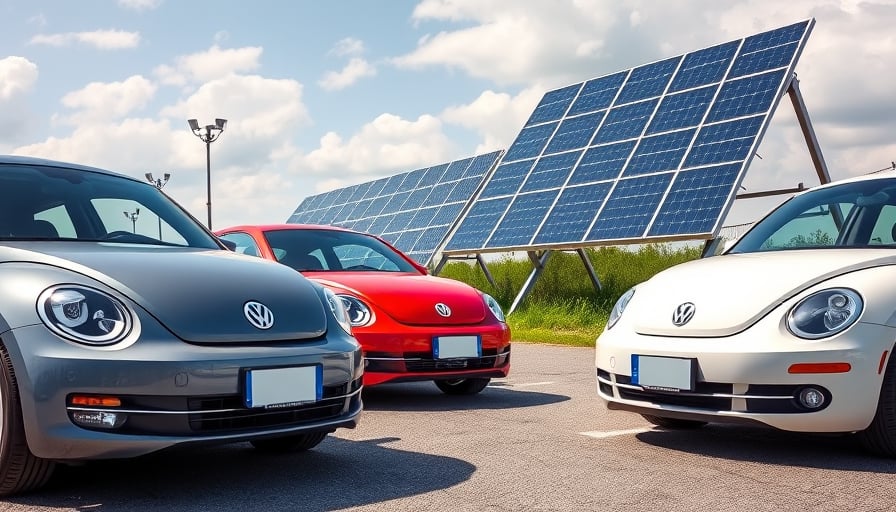
Volkswagen Group Africa has completed the second phase of a solar project supplying a significant share of power to the Kariega factory. The initiative aligns with the broader “green transition” narrative that is increasingly central to investor decision‑making.
- Financial Impact: According to internal cost‑benefit models, the solar installation is projected to reduce electricity expenses by ~12 % annually, translating to an estimated €15 million savings per year for the Kariega facility alone. However, the initial CAPEX of €80 million—sourced from a mix of debt and equity—raises questions about debt servicing capacity in a region with higher political risk premiums.
- Operational Resilience: The diversification of power sources enhances resilience against grid instability, a common issue in South Africa. Yet, the company’s reliance on a single renewable technology could expose it to supply‑chain bottlenecks in solar panel components, especially under the current semiconductor shortage that is affecting the entire automotive sector.
- Competitive Dynamics: Competitors such as Toyota and Hyundai are also expanding renewable footprints in Africa. If Volkswagen lags in achieving a 50 % renewable energy share by 2025—a target set by the EU for global operations—the firm risks falling behind in ESG‑driven investor rankings.
3. Advanced Quality‑Control Initiatives
Volkswagen has integrated advanced thermographic testing and robotics into its manufacturing line, signaling a shift toward “smart” production.
- Operational Efficiency: Preliminary internal studies suggest a 3 % reduction in defect rates, potentially saving €20 million annually in warranty claims. Yet, the automation rollout requires significant training and change management, which could temporarily increase labor costs.
- Supply‑Chain Implications: Introducing robotics necessitates a tighter integration with suppliers for precision components. Disruptions in the global supply chain, particularly in the sourcing of high‑precision sensors, could stall production timelines.
- Competitive Positioning: While Tesla and Rivian are already deploying AI‑driven quality checks, Volkswagen’s adoption appears lagging. Should competitors achieve higher reliability scores, consumer preference could shift, eroding Volkswagen’s market share in the premium segment.
4. Investor Sentiment and Long‑Term Outlook
The convergence of governance, sustainability, and technical innovation reflects a balanced strategic approach. Nonetheless, investors should remain skeptical of the following:
| Potential Opportunity | Underlying Risk |
|---|---|
| Cost savings from solar power | Political risk affecting subsidy continuity |
| Reduced defect rates via robotics | Supply‑chain bottlenecks for high‑precision parts |
| Enhanced brand image from VfL Wolfsburg ties | Reputational spill‑over from club controversies |
| Closer ties with state officials | Regulatory unpredictability (e.g., stricter emissions laws) |
Financial Analysis Snapshot
- EBITDA Margin: Forecasted to rise from 13 % to 15 % over the next two years, primarily due to operational efficiencies.
- Free Cash Flow: Expected to improve by €50 million annually post‑solar project completion.
- Debt‑to‑Equity Ratio: Projected to increase to 1.5×, modestly higher than the industry average of 1.3×, potentially raising cost of capital.
5. Conclusion
Volkswagen’s recent developments—political engagement, renewable energy adoption in Africa, and advanced quality controls—represent a multi‑pronged strategy aimed at sustaining competitiveness. However, the firm’s trajectory is contingent on navigating complex regulatory landscapes, mitigating supply‑chain fragilities, and safeguarding brand integrity. For investors and analysts, a cautious yet opportunistic stance is warranted: monitor the firm’s ESG metrics, track policy shifts in key markets, and evaluate the efficacy of its automation initiatives in real‑world production settings.