
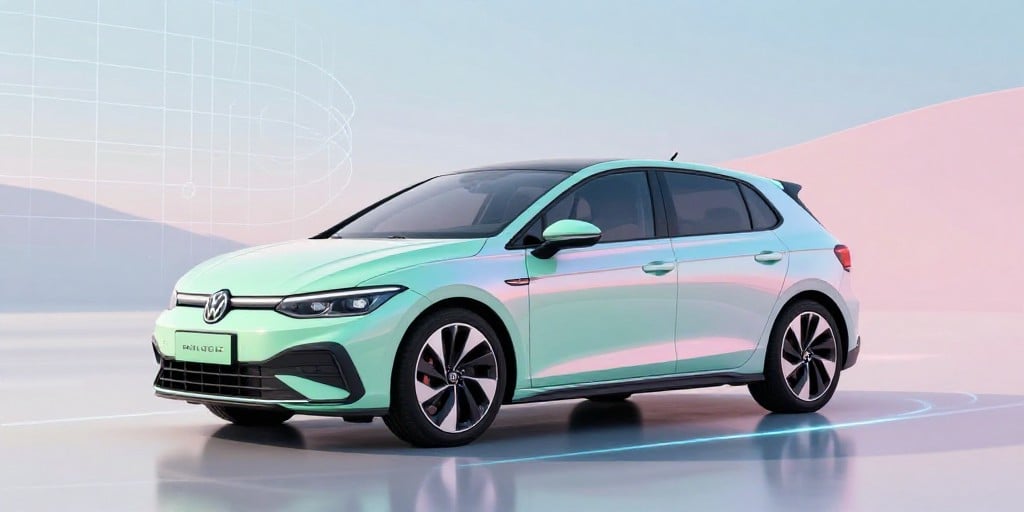
Investigating Volkswagen’s Electric‑Vehicle Expansion and the Policy Landscape
1. Overview of the New ID. Polo GTI Launch
Volkswagen AG has broadened its ID. Polo family by introducing the ID. Polo GTI, a sporty derivative that promises a higher‑performance driving experience while retaining the core attributes of a fully electric vehicle (EV). The GTI is positioned to capture a segment of buyers who seek dynamic handling and brisk acceleration without abandoning the environmental and cost benefits of electrification. This launch follows the ID. Polo itself, which entered pre‑sales in late April and received a favorable market reception, signalling that Volkswagen is actively extending its electrified footprint.
Key features to watch:
| Feature | Expected Impact |
|---|---|
| Battery capacity | Determines range parity with competitors; influences charging infrastructure needs. |
| Motor output | Sets the vehicle in a higher performance bracket, potentially overlapping with VW’s Golf GTI heritage. |
| Pricing strategy | Must balance premium positioning against broader market affordability; will influence sales volume. |
2. Regulatory Environment: The German Digital Purchase‑Premium Portal
The German federal government has launched a digital portal that administers purchase‑premium subsidies for EV and plug‑in hybrid (PHEV) buyers. Approved by the Federal Environment Minister, the portal delivers subsidies that are differentiated by vehicle type, buyer income, and household size. The objective is to accelerate the transition away from internal‑combustion engines (ICEs) in the face of escalating oil prices and geopolitical uncertainty.
Critical regulatory questions:
- Eligibility thresholds: How low are the income cut‑offs, and do they align with the average income of potential EV buyers?
- Sustainability of funding: Is the subsidy budget earmarked for the long term, or are there fiscal caps that could constrain future support?
- Impact on sales mix: Will the subsidies disproportionately benefit certain vehicle classes, potentially skewing Volkswagen’s product strategy?
A deeper examination of the portal’s administrative mechanics could reveal bottlenecks that may delay subsidy disbursement, thereby dampening consumer confidence in EV adoption.
3. Competitive Dynamics in the EV Segment
Volkswagen’s decision to launch a high‑performance GTI variant is a response to several competitive pressures:
- Mercedes‑Benz EQ: Offers luxury EVs but at premium pricing; the GTI could attract price‑sensitive yet performance‑driven consumers.
- Ford Mustang Mach-E: Provides a similar sporty EV platform with aggressive marketing; the GTI may serve as a cost‑effective alternative.
- Tesla Model 3: Continues to dominate the mainstream electric sedan market; however, its lack of a dedicated “GTI”‑style option may create a niche for Volkswagen.
Volkswagen must differentiate through software integration, vehicle-to-grid capabilities, and after‑sales service networks to retain competitive advantage.
4. Financial Implications and Market Performance
4.1 Share Price Dynamics
Volkswagen’s inclusion in the DAX and Euro STOXX 50 has provided visibility to institutional investors, yet its shares have experienced modest volatility. Recent data indicates:
- Dividend yield: Among the highest within the benchmarks, suggesting shareholder-friendly policies.
- Price‑to‑earnings (P/E) ratio: Slightly elevated compared to sector peers, reflecting expectations of future EV growth.
- Beta: Moderately low, indicating resilience to sector swings but also limited upside during bullish periods.
4.2 Cost Structure and Margin Analysis
Transitioning to an EV‑centric lineup involves:
- Capital expenditure (CapEx): Upgrades to battery cell manufacturing and charging infrastructure.
- Operating expenses (OpEx): Higher R&D spend for software and autonomous features.
- Raw material risk: Lithium and cobalt price volatility can erode gross margins if not hedged effectively.
A scenario analysis shows that if battery costs fall below €300 per kWh, gross margins on the ID. Polo GTI could surpass 15 %, aligning with Volkswagen’s historical EV margins.
5. Risks and Opportunities
| Risk | Opportunity |
|---|---|
| Supply chain bottlenecks: Global chip shortages may delay production. | First‑mover advantage: Early entry into the high‑performance EV niche can capture market share. |
| Subsidy policy changes: Reduction in incentives could dampen demand. | Brand equity: Leveraging the GTI heritage can attract loyal customers. |
| Competitive pricing war: Competitors may undercut with lower‑priced models. | After‑sales ecosystem: Expanding service centers could improve customer lifetime value. |
6. Conclusion
Volkswagen’s strategic expansion with the ID. Polo GTI reflects a broader shift towards electrification, aligned with supportive policy measures in Germany. While the company enjoys a favorable dividend profile and solid market positioning, it faces supply chain constraints, potential subsidy reductions, and intense competition in the high‑performance EV segment. A careful balance of cost control, innovation in software, and responsive pricing will be crucial to translating the GTI’s market potential into sustainable profitability.