Volkswagen AG to Present 2025 Financial Statements on March 10
Volkswagen AG has scheduled the release of its 2025 financial statements for a press conference in Wolfsburg on 10 March. The event will feature Chief Executive Officer Oliver Blume and Chief Financial Officer Arno Antlitz, who will discuss the company’s recent performance and outline the outlook for 2026.
Context and Recent Developments
The announcement follows the publication of preliminary quarterly figures, in which analysts projected modest earnings per share for the year‑ending quarter. While the numbers indicate resilience, they also reflect the broader challenges that the automotive sector is currently facing, notably the uneven recovery of electric‑vehicle (EV) demand worldwide.
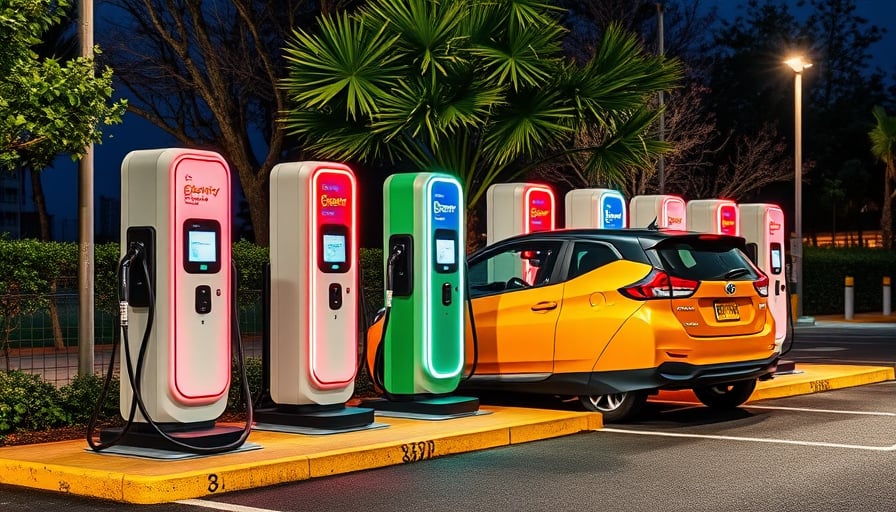
In response, Volkswagen is expanding its battery strategy beyond the confines of passenger‑vehicle production. The company is now venturing into large‑scale energy storage and energy trading, positioning itself to capitalize on the growing need for grid‑level storage solutions and to create new revenue streams outside of traditional vehicle sales. This shift is a direct reaction to slower-than‑expected global EV demand, illustrating the firm’s adaptive approach to market dynamics.
Governance and Labor Relations
Corporate governance will also be a focal point of the conference. The works council election is in progress, with long‑time chairwoman Daniela Cavallo expected to maintain a prominent role. Her continued leadership is seen as a stabilizing factor as Volkswagen navigates both internal and external pressures.
Analytical Perspective
From a strategic standpoint, Volkswagen’s dual focus on financial disclosure and battery diversification demonstrates a blend of fundamental business principles and competitive positioning. By extending its battery capabilities into energy storage, the company taps into a sector that is increasingly interconnected with renewable energy, infrastructure development, and national energy security—trends that are reshaping multiple industries beyond automotive.
Economically, the shift underscores the importance of adaptability in corporate strategy. Firms that can pivot resources toward emerging demand centers, such as grid storage and trading, are better positioned to mitigate sector-specific downturns. Volkswagen’s approach aligns with broader industry patterns where legacy manufacturers are redefining their value propositions in the face of accelerating electrification and digitalization.
Conclusion
The forthcoming financial disclosure, combined with Volkswagen’s strategic expansion into energy storage, is expected to provide a clearer picture of the company’s financial health and its capacity to adapt to evolving market conditions. Stakeholders will be keen to assess how these initiatives influence Volkswagen’s competitive standing and its long‑term contribution to the global transition toward sustainable mobility and energy systems.