Corporate News: Volkswagen AG Announces Sale and Repurposing of Osnabrück Plant
Overview
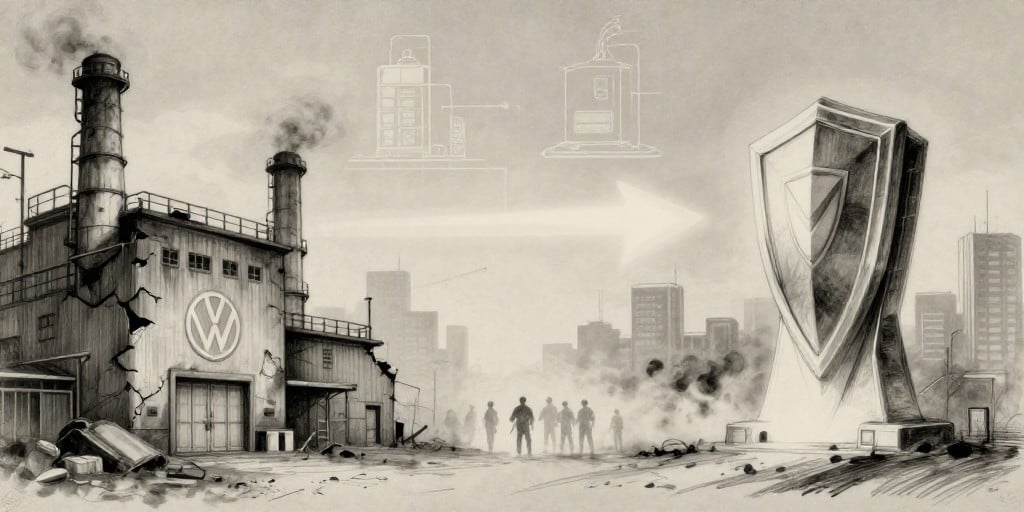
Volkswagen AG has confirmed that its Osnabrück manufacturing facility will be sold to Aurelius Capital, a Swiss investment company, and the German state of Lower Saxony. The transaction is expected to be finalized in the near term, and the site will subsequently be converted into a hub for security and defence projects following the cessation of automotive production in 2027. This move aligns with Volkswagen’s broader objective of cutting its global workforce by approximately 50,000 employees by 2030 and re‑evaluating the operational viability of four German plants.
Strategic Context
The decision to divest the Osnabrück plant reflects the increasingly competitive landscape of the European automotive market. Chinese manufacturers such as BYD, NIO, and XPeng are gaining market share through aggressive pricing strategies and the rapid introduction of feature‑rich electric vehicles. As a result, German automakers face pressure to streamline operations, reduce costs, and accelerate their transition to electrification and digitalisation.
Volkswagen’s restructuring strategy at Osnabrück provides a potential blueprint for other plants that are struggling with similar challenges. By transferring the site to a joint venture with a state partner, the company preserves industrial capacity while redirecting resources toward high‑growth sectors. The planned conversion to a security and defence center is consistent with the German government’s focus on modernising its defence industry and fostering innovation in cyber‑security and autonomous systems.
Economic and Competitive Implications
- Cost Efficiency: The sale and subsequent shutdown of the plant reduce overhead associated with labour, utilities, and plant maintenance. This aligns with Volkswagen’s aim to improve margin resilience in a tightening global automotive market.
- Capital Allocation: Divestment frees capital that can be re‑invested in electrification, autonomous driving, and digital services—areas where competition is intensifying and long‑term profitability is expected.
- Workforce Management: The reduction of 50,000 jobs worldwide underscores the company’s commitment to workforce optimisation. While this has short‑term social implications, it positions Volkswagen to allocate human resources to high‑value activities such as R&D and production of battery‑electric vehicles.
- Geopolitical Alignment: Repurposing the site for defence projects strengthens ties with the German state and the European Union’s strategic initiatives to bolster cybersecurity and defence technology. This may also provide a stabilising revenue stream independent of the automotive sector’s cyclical nature.
Market Reactions
Financial markets have responded favourably to Volkswagen’s restructuring plan. Stock indices tracking the automotive sector have noted a modest uptick following the announcement, reflecting investor confidence in the company’s long‑term sustainability strategy. Analysts point to the move as a positive signal that Volkswagen is actively managing its asset portfolio to mitigate exposure to declining traditional internal‑combustion engine production.
Conclusion
Volkswagen AG’s decision to sell the Osnabrück plant and shift its focus toward security and defence projects exemplifies the company’s adaptive approach to the evolving automotive environment. By realigning its resources, Volkswagen positions itself to maintain competitive advantage amid intensifying global competition, especially from emerging Chinese manufacturers. The strategic divestment, coupled with workforce optimisation and capital re‑allocation, is likely to serve as a reference model for other automotive firms seeking resilience in an uncertain industry landscape.