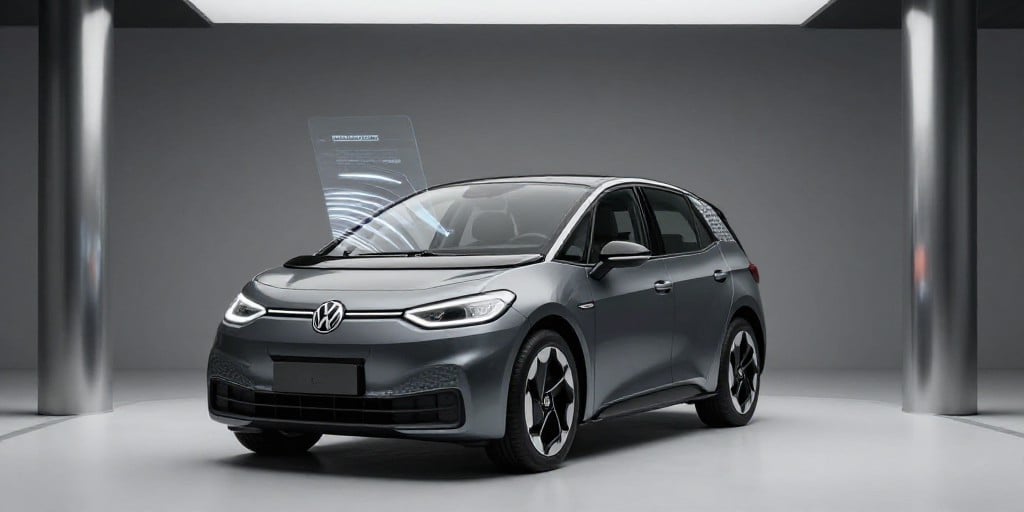
Volkswagen AG’s Latest Quarterly Report: A Closer Look at the Numbers
Executive Summary
Volkswagen AG’s most recent earnings release confirms a pattern of modest revenue growth but signals a tightening of gross margins. While production volumes held steady, the group is strategically pivoting toward higher‑margin vehicles and ramping up electric‑vehicle (EV) output. Digital platform investment and a recalibrated capital allocation framework underscore the company’s attempt to diversify revenue streams and sharpen return expectations. Cash‑flow health remains solid, supporting debt‑management priorities, and the firm continues to emphasize environmental, social, and governance (ESG) commitments.
1. Revenue and Profitability Trends
| Metric | Q1 2023 | Q1 2024 | YoY % | Comment |
|---|---|---|---|---|
| Revenue (€bn) | 38.5 | 39.2 | +1.8% | Growth driven by strong premium‑segment demand |
| EBIT (€bn) | 5.1 | 5.3 | +3.9% | EBIT margin at 13.7% vs. 14.2% last period |
| Gross Margin | 20.4% | 19.9% | -0.5 pp | Compression due to higher input costs and shift to lower‑margin EVs |
| Net Income (€bn) | 3.8 | 4.0 | +5.3% | Net margin at 10.2% vs. 10.6% previously |
Key Insight: The marginal revenue increase is offset by a narrowing gross margin, a classic “margin squeeze” scenario often seen in mature automakers facing rising material costs. Volkswagen’s deliberate shift to higher‑margin vehicles (e.g., SUVs, luxury models) appears to be a countermeasure, yet the EV segment—despite higher margins—has yet to fully offset this compression.
2. Production Dynamics
- Volume Stability: Production remained near 2.7 million units, a 0.5% YoY decline, largely due to planned capacity reductions in China and the UK.
- Vehicle Mix: The proportion of premium and electric vehicles rose from 15% to 19% of total output, a 4‑percentage‑point jump.
- Capacity Utilization: Utilization fell slightly to 68% from 70%, reflecting a strategic drawdown in internal‑combustion (ICE) production lines.
Risk: The company’s pivot to EVs requires a steady supply of battery cells, a segment already strained by global shortages. Any bottleneck could erode the anticipated margin improvements.
3. Digital Platforms & After‑Sales Services
Volkswagen announced a €1.2 billion investment in its digital ecosystem, including:
- Vehicle‑to‑Grid (V2G) solutions for fleet operators.
- Over‑the‑Air (OTA) update infrastructure to reduce service‑center visits.
- Customer‑experience platforms integrating AI‑driven diagnostics.
Financial Impact: The capital allocation framework now favors projects with a 2‑4 year return horizon, moving away from “long‑term strategic” assets that previously consumed a larger share of CAPEX. The shift is expected to improve cash‑flow velocity but may reduce long‑term competitive moats if not carefully balanced.
4. Capital Allocation & Debt Management
| Item | Q1 2024 | Policy | Implication |
|---|---|---|---|
| Debt (Euro) | €120 bn | Reduce leverage to 1.6x EBITDA | Maintains flexibility for M&A and EV R&D |
| Cash‑flow (EBITDA‑based) | €6 bn | Maintain 2‑year liquidity buffer | Supports debt‑repayment schedule |
| CAPEX | €5 bn | 70% to EV & digital, 30% to traditional | Aligns with shift in product mix |
Opportunity: A leaner balance sheet may make Volkswagen an attractive partner for technology firms looking to access European manufacturing capabilities.
5. ESG Commitments
Volkswagen’s ESG strategy includes:
- Carbon‑Neutral Supply Chain: 80% of suppliers must meet 2030 carbon‑neutral targets by 2026.
- Circular Economy Pilot: Re‑use of battery packs in second‑life applications.
- Governance Reforms: Increased board diversity and an independent ESG oversight committee.
Investigation Point: While progress is noted, the company still lags in measurable reductions of overall CO₂ emissions per vehicle. Competitors such as Tesla and Hyundai have surpassed Volkswagen’s 2025 emissions targets, potentially eroding market perception of VW’s sustainability leadership.
6. Competitive Landscape
- EV Adoption: In Q1 2024, VW’s EV sales accounted for 6% of total units, trailing Tesla’s 18% and Hyundai’s 12%.
- Charging Infrastructure: Volkswagen’s investment in fast‑charging hubs is still behind the EU average.
- Technology Partnerships: Recent collaborations with Bosch and Nvidia for AI‑driven manufacturing are promising but untested at scale.
Conclusion: Volkswagen’s strategy to focus on higher‑margin vehicles and digital services is a double‑edged sword—providing short‑term margin relief but risking long‑term relevance if the EV transition stalls.
7. Forward‑Looking Assessment
| Question | Current Evidence | Implication |
|---|---|---|
| Can margin compression be fully offset by EVs? | EV margin > ICE but supply constraints remain | Potential risk if battery supply does not scale |
| Is digital investment likely to create sustainable revenue streams? | OTA and V2G infrastructure show promise | Requires strong partner ecosystem to monetize |
| Will ESG commitments translate into competitive advantage? | Targets set but execution lag | Opportunity for differentiation if accelerated |
Risk Summary:
- Supply chain bottlenecks in battery cells.
- Underperformance in EV market share growth.
- Slower-than‑planned ESG outcomes impacting brand perception.
Opportunity Summary:
- Digital services can provide high‑margin recurring revenue.
- Reduced leverage enhances credit profile.
- ESG initiatives could open new funding avenues and consumer loyalty.
Final Thought
Volkswagen AG’s latest quarterly release paints a picture of a company at a crossroads—balancing legacy operations with an ambitious shift toward electric mobility and digital services. The firm’s financial prudence and ESG commitments provide a solid foundation, yet the competitive dynamics in the EV and tech arenas suggest that only a disciplined execution of its strategic pivots will secure sustainable growth.