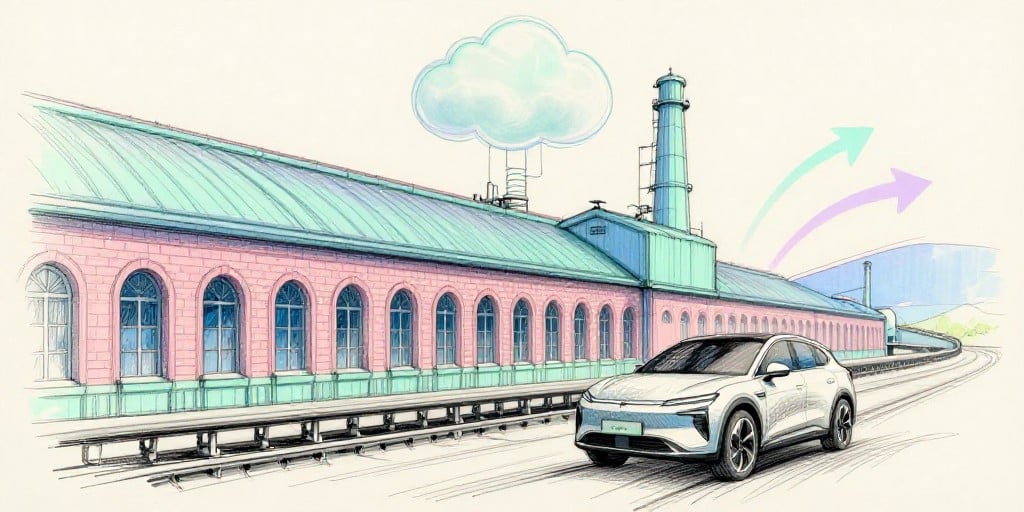
Volkswagen AG Announces the Launch of the ID. Tiguan
Volkswagen AG has disclosed a significant evolution in its electric‑vehicle (EV) portfolio with the introduction of the ID. Tiguan, slated to replace the ID. 4 and ID. 5 from 2027. This change follows the group’s decision to abandon numeric identifiers in its electric lineup—a practice that began with the ID. Polo— and to instead adopt a more conventional SUV nomenclature. The new model will be produced at the Emden plant in Germany, where the company intends to deploy three distinct electric drivetrains that may support a range of up to 600 kilometres on a single charge, according to internal design specifications.
Strategic Context
Volkswagen’s move to introduce a high‑volume SUV in the EV segment aligns with broader industry dynamics. Demand for battery‑powered vehicles is accelerating across Europe and worldwide, driven by tightening emissions regulations, advances in battery chemistry, and growing consumer acceptance. The ID. Tiguan is expected to strengthen Volkswagen’s position in a segment where it already enjoys robust sales, thereby improving the company’s volume performance in a market that remains highly competitive.
At the same time, the shift toward electrification has intensified cost pressures. Battery‑powered models typically deliver lower profitability than internal‑combustion vehicles due to higher component costs, supply‑chain constraints, and capital expenditure requirements. Volkswagen’s management has underscored the need to balance the rapid rollout of new EV offerings with stringent cost containment and operational efficiency improvements.
Production Cost Profile
Analytical scrutiny of Volkswagen’s manufacturing footprint highlights significant disparities in production costs across its global facilities. Data comparing the Emden (Germany), Palmela (Portugal), and Tianjin (China) plants reveal that vehicle manufacturing costs per unit are markedly higher in Germany. The primary drivers of this cost premium are elevated energy prices and labour rates. While the Emden plant benefits from superior engineering capabilities and proximity to the European market, the cost differential poses a challenge for the group’s competitiveness, particularly in key European markets where the brand’s market share has been eroding.
Chinese and other non‑European competitors are gaining traction in these territories, leveraging lower production costs and localized supply chains. Volkswagen’s leadership has signalled a commitment to improving its competitive position through tighter manufacturing controls and more integrated EV supply‑chain management. However, observers caution that sustained gains will require a comprehensive strategy that addresses cost structure, supply‑chain resilience, and economies of scale.
Economic and Competitive Implications
The introduction of the ID. Tiguan exemplifies a convergence of product strategy and market economics that transcends sector boundaries. By entering the high‑volume SUV segment with an electrified offering, Volkswagen seeks to capture a share of the rapidly expanding global EV market while maintaining its legacy product lineup in gasoline, diesel, and hybrid configurations. This dual‑track approach reflects a broader industry trend toward portfolio diversification, where automakers balance short‑term profitability with long‑term electrification ambitions.
From a macroeconomic perspective, the shift toward electrified vehicles is driven by regulatory frameworks aimed at reducing greenhouse gas emissions, consumer incentives that lower the cost of battery ownership, and technological breakthroughs that extend driving range and reduce battery cost per kilowatt‑hour. These dynamics create both opportunities and challenges for manufacturers: while electrification promises new revenue streams, it also necessitates significant capital investment in battery production, charging infrastructure, and digital services.
In sum, Volkswagen’s strategic decision to launch the ID. Tiguan demonstrates a measured approach to electrification, emphasizing product relevance, cost discipline, and supply‑chain integration. The outcome of this initiative will likely hinge on the company’s ability to align its production capabilities with the evolving demands of the global EV market and to navigate the competitive pressures that accompany the transition to battery‑powered mobility.