
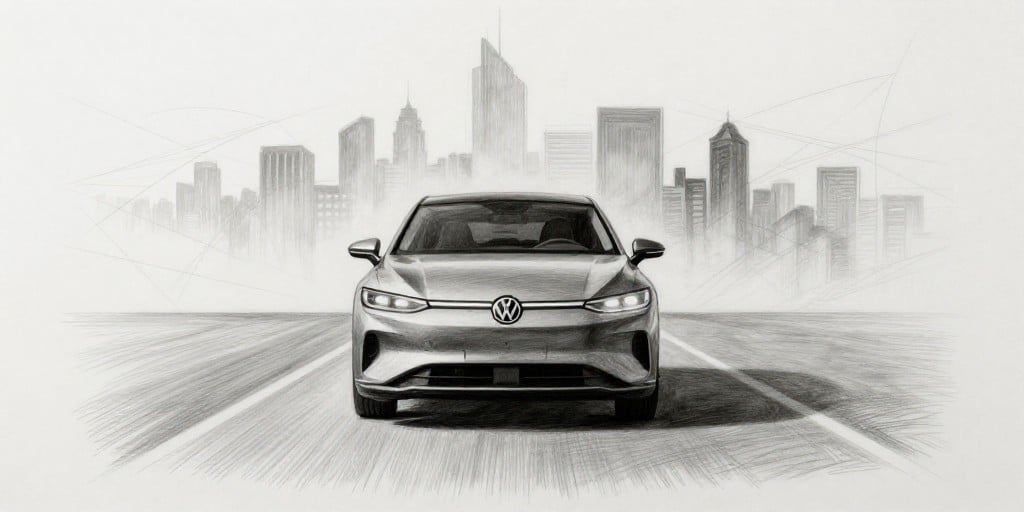
Volkswagen AG Maintains Steady Position Amid Broader Market Volatility
Volkswagen AG’s recent trading performance underscores a broader narrative of cautious equilibrium within European equity markets. While the German automaker’s share price moved only modestly, its role as a stable contributor to the Euro STOXX 50 and the DAX indices illustrates both the resilience of legacy automotive players and the nuanced dynamics that shape investor sentiment across multiple sectors.
1. Market Performance in Context
On the day in question, the Euro STOXX 50 closed down by a fraction of a percent, with Volkswagen’s inclusion exerting virtually no drag on the index’s performance. In the German benchmark, the DAX recorded a slight dip at closing, yet the automaker’s position within the index remained unchanged. These results are indicative of a broader pattern of muted volatility for large-cap, dividend‑heavy companies as market participants weigh macroeconomic uncertainties such as interest‑rate policy, supply‑chain constraints, and geopolitical tensions.
2. Valuation and Dividend Appeal
Volkswagen’s valuation metrics—most notably its price‑to‑earnings (P/E) ratio—remain comparatively low against peers in the automotive and industrial sectors. This relative undervaluation, coupled with a high dividend yield, positions the company as an attractive vehicle for income‑focused investors seeking stability in an environment of tightening monetary conditions. The firm’s consistent dividend policy reflects disciplined capital allocation and a long‑term commitment to shareholder value, traits that resonate across a spectrum of sectors from industrial manufacturing to technology.
3. Competitive Positioning within Automotive and Beyond
Within the automotive industry, Volkswagen competes alongside giants such as Daimler AG, BMW AG, and emerging electric‑vehicle (EV) challengers like Tesla, Inc. The group’s diversified portfolio—spanning passenger vehicles, commercial trucks, and commercial logistics—offers a hedge against sector‑specific downturns. Furthermore, Volkswagen’s strategic investments in electrification, autonomous driving, and mobility services align it with broader industrial trends toward digitalization and decarbonization. These initiatives create cross‑sector linkages, particularly with the energy sector’s shift toward renewable fuels and battery technologies.
4. Macro‑Economic Forces and Cross‑Sector Dynamics
The modest decline in the Euro STOXX 50 and DAX can be partially attributed to rising inflation expectations, dovish but uncertain central‑bank policies, and supply‑chain bottlenecks that affect manufacturing output across Europe. Volkswagen’s resilient performance amid these pressures demonstrates the importance of robust supply-chain management, diversified market presence, and strategic financial stewardship. Moreover, the company’s emphasis on cost discipline and efficiency improvement mirrors best practices seen in the consumer goods and technology sectors, where lean operating models are essential for sustaining profitability.
5. Implications for Investors and the Broader Market
- Income Focused Investors: The high dividend yield, coupled with low volatility, makes Volkswagen an appealing allocation for portfolios seeking regular income without excessive risk exposure.
- Portfolio Diversification: Inclusion in major European indices offers natural diversification benefits, particularly in the face of sector‑specific downturns.
- Sector Synergies: Volkswagen’s electrification strategy fosters synergies with the renewable energy sector, battery manufacturing, and software development, reinforcing its long‑term growth prospects.
6. Conclusion
Volkswagen AG’s stable share performance amid a generally cautious market environment reflects its strong competitive positioning, disciplined valuation, and strategic alignment with macro‑economic and cross‑sector trends. While the company remains a relatively modest contributor to the recent declines in the Euro STOXX 50 and DAX indices, its steady investor confidence underscores the broader appeal of well‑managed legacy firms that are actively adapting to the evolving landscape of automotive technology and sustainability.