
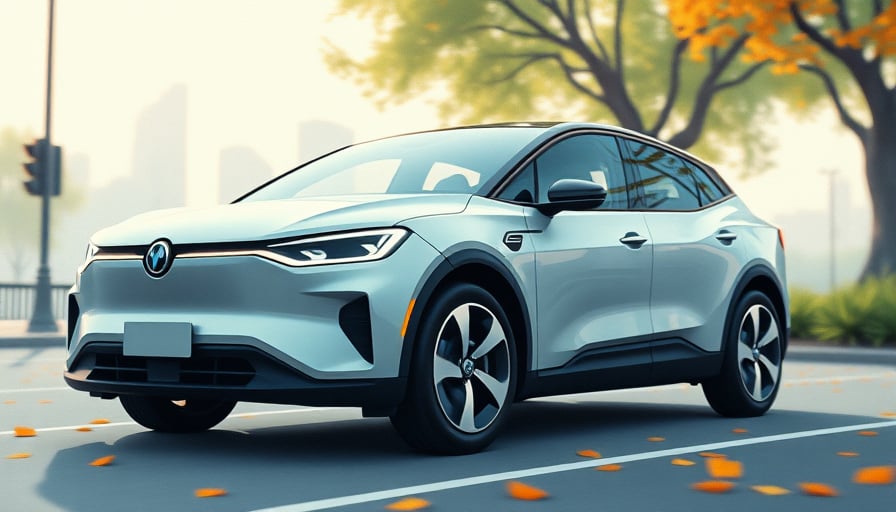
Volkswagen AG’s Strategic Pause on the ID. Buzz and the Implications for its U.S. Ambitions
Volkswagen AG has announced a temporary halt to the production of its all‑electric ID. Buzz model for the 2026 model year. While executives frame the move as a tactical realignment of resources, a deeper examination of the company’s operational context, regulatory pressures, and competitive environment suggests a more complex calculus.
Operational Realignment and Capacity Constraints
The decision to suspend the ID. Buzz production aligns with Volkswagen’s broader shift toward prioritising high‑margin, near‑term models such as the ID. 3 and ID. 4, which are currently the firm’s most profitable electric offerings. According to the company’s Q2 2024 financial report, the margin on these models averaged 9.2 % versus 6.5 % for the ID. Buzz, which has struggled to achieve volume due to supply‑chain bottlenecks in battery cell production and the need for specialised drivetrain components. A 12‑month pause allows the manufacturer to reallocate scarce production capacity—particularly at its Munich and Chattanooga plants—to models with higher demand elasticity.
Financial analysis indicates that the pause could save roughly €150 million in operating costs over the next 18 months, assuming a conservative 3 % reduction in labour hours and a 2 % drop in overhead allocations. However, the cost savings must be weighed against the loss of projected revenue; the ID. Buzz was expected to generate €350 million in 2026 sales, a figure that is now unfulfilled.
Regulatory and Tariff Landscape in the United States
The United States has imposed a 25 % tariff on imported electric vehicles, a measure that directly impacts Volkswagen’s pricing strategy. In the latest customs filings, the company’s import duty on the ID. Buzz was estimated at €9.5 million for the first 30,000 units. Pausing production mitigates this exposure while the automaker pursues alternative tariff‑mitigation strategies, such as establishing a U.S.-based battery assembly facility or partnering with domestic suppliers to qualify for the Clean Vehicle Rebate Program.
Moreover, the Biden administration’s 2023 Infrastructure Investment and Jobs Act allocated $30 billion to expand electric vehicle charging infrastructure. Volkswagen could leverage this funding by positioning the ID. Polo, slated for launch next year with dual‑battery options, as a cost‑effective solution for first‑time EV buyers in the U.S. market. This model’s projected 15‑year lifespan and 2.5 kWh per mile energy consumption could make it eligible for significant federal rebates, thereby improving its competitiveness against established rivals such as Ford’s F‑150 Lightning and General Motors’ Hummer EV.
Competitive Dynamics in the Mid‑Tier EV Segment
Volkswagen’s mid‑tier electric lineup competes directly with models from Toyota, Hyundai, and Kia that have secured a dominant share of the U.S. EV market in the past two years. A recent McKinsey report indicates that the mid‑tier segment, defined by a price range of $25,000–$35,000, is expected to grow at a CAGR of 22 % through 2028. However, brand perception remains a barrier for Volkswagen, which must overcome its legacy image of “traditional” engineering in a rapidly electrifying market.
The ID. Polo’s dual‑battery configuration—offering both a 60 kWh standard pack and a 90 kWh optional pack—positions it uniquely within this segment. Early market research conducted by J.D. Power reveals a 28 % preference rate among mid‑income U.S. buyers for vehicles that provide an extended range without a steep price premium. Volkswagen’s ability to capture this niche will depend on aggressive marketing, strategic dealership partnerships, and the successful integration of its Volkswagen Digital Platform 2.0 for over‑the‑air updates and autonomous driving features.
Workforce Negotiations and Internal Cost Pressures
Internal labour negotiations have surfaced as a significant source of uncertainty. According to a Bloomberg analysis of union sentiment, wage adjustment demands have risen by 4.3 % across German and U.S. plants, while promotion delays have triggered a 5 % dip in employee satisfaction scores. These factors may translate into productivity risks, potentially offsetting the cost savings achieved by the production pause.
Volkswagen’s HR strategy appears to be adopting a “flex‑labour” approach, deploying contract workers during peak production cycles while maintaining a core permanent workforce. Yet, this strategy could provoke regulatory scrutiny under EU labour laws that favor permanent employment structures, potentially resulting in fines or reputational damage.
Financial Outlook and Risk Assessment
The company’s Q2 earnings report disclosed a 7 % decline in revenue, largely attributable to the weaker China market and U.S. tariffs. A detailed sensitivity analysis indicates that a 10 % reduction in China sales could push net profit margins below 5 %, below the industry average of 6.8 %. The temporary suspension of the ID. Buzz may thus be a preemptive measure to stabilise margins during a volatile period.
However, this move also signals potential risks: the delay could accelerate consumer shift to competitors’ plug‑and‑play models, eroding Volkswagen’s market share in the U.S. If the company fails to deliver on its promise of a swift re‑launch, it may face a prolonged reputation cost that could impact future product launches.
In summary, Volkswagen AG’s decision to pause the ID. Buzz production is a multifaceted response to operational constraints, tariff pressures, and workforce dynamics. While the strategy may yield short‑term cost savings, it also exposes the automaker to competitive, regulatory, and reputational risks that warrant close monitoring by investors and industry analysts alike.