Volkswagen AG Faces a Confluence of Labor, Valuation, and Technological Challenges
Volkswagen AG (VW) has been in the spotlight this week as a series of events converge on the German automaker’s financial health, operational strategy, and future competitiveness. The company’s wage negotiations, valuation profile, and latest vehicle‑to‑grid (V2G) initiative all raise questions about the sustainability of its current business model and the broader trajectory of the European automotive sector.
1. Labor Disputes: A Symptom of Cost‑Pressure and Workforce Restructuring
The first round of wage talks in Emden ended without an agreement, underscoring the friction between VW’s workforce and its management. With roughly 120,000 employees involved, the negotiations reflect a deeper strategy: the company plans to cut around 12,000 jobs in Germany to streamline operations and reduce costs. Analysts note that this move is in line with a broader industry trend of rationalizing production footprints in the face of declining diesel demand and increased regulatory pressure on emissions.
Key points:
| Issue | Management’s Position | Union’s Position |
|---|---|---|
| Cost reductions | Need for swift settlement to stay competitive | Concern about clarity on commitments |
| Workforce adjustments | 12,000 job cuts to improve efficiency | Fear of long‑term job insecurity |
| Future working conditions | Unclear but implies tighter labor costs | Demands for transparent contracts |
The union’s criticism that VW has not provided sufficient clarity on its long‑term commitments is not trivial. In an industry where labor costs account for 12–15 % of total operating expenses, uncertainty can erode employee morale, potentially affecting productivity and turnover. Should the negotiations break down, a protracted stalemate could further erode confidence among shareholders and suppliers alike.
2. Valuation Pressures: VW’s Modest P/E Multiples in Context
Volkswagen’s German trading name, VW vz, continues to trade at relatively low price‑to‑earnings multiples compared to its European peers. The current P/E ratio hovers around 9x, well below the industry average of 12–13x, suggesting that investors are pricing in significant headwinds. Several factors contribute to this valuation compression:
- Supply Chain Tightness: Semi‑conductor shortages and component scarcity have forced VW to defer production, reducing quarterly earnings.
- Electrification Costs: Rapid shift to EV platforms requires substantial capital expenditures, pushing depreciation and R&D costs higher.
- Competitive Pressure: Chinese EV entrants such as BYD and NIO are expanding aggressively in Europe, threatening VW’s market share in both premium and mass‑market segments.
Financial analysts have projected that VW’s earnings per share (EPS) could contract by 4–6 % in 2025 if cost‑cutting measures are insufficient, further suppressing the P/E ratio. Investors will be closely monitoring how effectively VW can balance the dual imperative of scaling EV production while managing legacy costs.
3. Technological Expansion: V2G Initiative as a Double‑Edged Sword
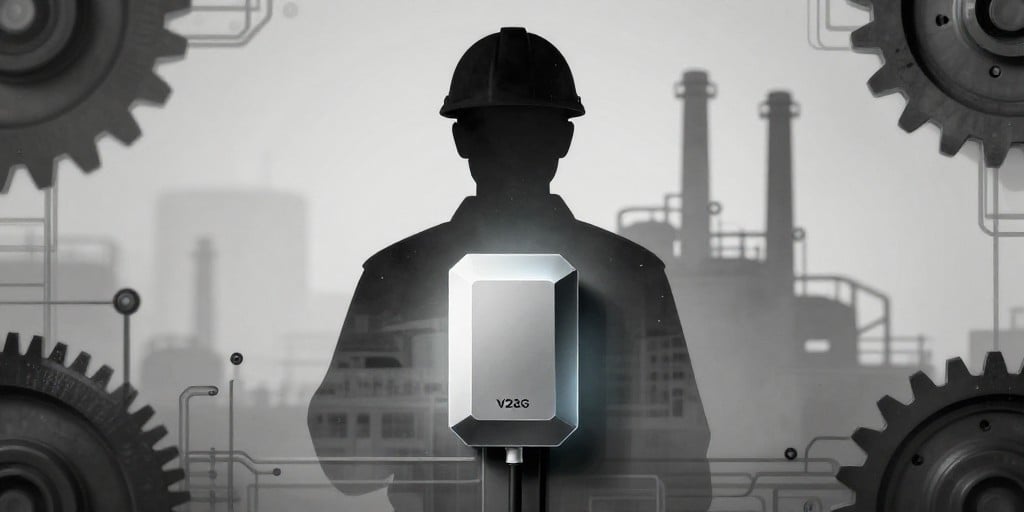
Volkswagen’s partnership with its energy subsidiary, Elli, culminated in a dual‑mode wallbox slated for launch in December 2026. Priced at approximately €2,000, this device is positioned to enable EV owners to feed excess battery capacity back into the grid, thereby participating in grid balancing services.
Opportunities:
- Revenue Diversification: V2G can create a new service line for VW, potentially generating recurring income from utility contracts.
- Competitive Differentiation: By integrating EVs into the grid, VW may carve a niche in the emerging “smart mobility” ecosystem, attracting tech‑savvy consumers and enterprise clients.
Risks:
- Market Adoption: The high upfront cost may limit uptake among average consumers, especially when compared to traditional home charging solutions priced below €1,000.
- Regulatory Hurdles: European grid operators and regulators may impose stringent technical and safety standards, potentially delaying market entry.
- Infrastructure Dependency: Success hinges on the availability of supportive grid infrastructure, which varies widely across EU member states.
From a financial standpoint, the wallbox’s introduction is projected to add €150 million in incremental revenue by 2028, assuming a penetration rate of 2 % of VW’s global EV fleet. However, the initial R&D and marketing outlays of €200 million will temporarily pressure EBIT margins. Investors should assess whether the long‑term value proposition outweighs the short‑term dilution.
4. Competitive Dynamics and Regulatory Landscape
VW’s strategy must be viewed against the backdrop of intensifying competition in the EV arena. German rivals such as BMW and Mercedes-Benz are investing heavily in battery technology and supply chain resilience. Meanwhile, Chinese manufacturers are leveraging aggressive pricing strategies and rapid production scaling to capture market share. Regulatory developments, including the European Union’s stricter CO₂ emissions targets and the upcoming Digital Euro framework, will also shape VW’s operating environment.
5. Investor Implications
The convergence of labor unrest, valuation compression, and a nascent V2G strategy paints a mixed picture for investors:
- Short‑term Volatility: Unresolved wage negotiations could trigger share price swings as market sentiment fluctuates.
- Mid‑term Earnings Pressure: Cost‑cutting measures may provide only limited relief if supply chain issues persist.
- Long‑term Growth Potential: Successful execution of the V2G strategy could unlock new revenue streams and reinforce VW’s position as a holistic mobility provider.
In conclusion, Volkswagen AG stands at a pivotal juncture. While the company faces immediate operational challenges and market skepticism, it also has the opportunity to redefine its value proposition through technology and strategic restructuring. Investors who scrutinize the underlying fundamentals—labor dynamics, regulatory pressures, and technology adoption—will be better positioned to navigate the uncertainties ahead.