Volkswagen AG: Navigating Tariff‑Driven Turbulence and a Declining Operating Margin
Executive Summary
Volkswagen AG’s share price has suffered a sustained decline of over five per cent since the start of 2024, placing the company among the weakest performers on the Frankfurt exchange. The slide coincides with a sharp deterioration in operating margin, now in the low single‑digit range, driven largely by falling sales outside the United States and the imposition of a 25‑percent tariff on vehicles manufactured in Mexico. This article investigates the underlying business fundamentals, the regulatory environment surrounding the new tariffs, and competitive dynamics in key markets to uncover overlooked trends, assess risks, and identify potential opportunities that may elude conventional analysis.
1. Market Response to Tariff Shock
| Metric | 2023 | 2024 (Year‑to‑Date) |
|---|---|---|
| VW Share Price | €120 | €107 (‑11.7 %) |
| Operating Margin | 6.5 % | 4.8 % |
| Sales in North America | 2.1 M units | 1.9 M units |
| Import Duty on Mexican‑produced Models | 0 % | 25 % |
The 25‑percent tariff, effective April 2025, has raised the landed cost of the Jetta and Tiguan models, which are largely manufactured in Mexico. The resulting erosion of profit margins is evident in the decline of operating margin. Despite the launch of new electric‑vehicle (EV) models, sales volume in the core ICE segment have not been sufficiently offset, suggesting that the EV portfolio is still in the early adoption phase and has not yet achieved economies of scale.
2. Regulatory Landscape and Trade Asymmetry
2.1 Tariff Structure
- European Union (EU): Imposes an average 7‑8 % duty on imported vehicles, with the EU‑Mexico agreement allowing tariff‑free access for most passenger cars until 2025.
- United States (US): Currently levies a 2.5 % duty on European‑manufactured vehicles sold in the US; the US government has considered raising this rate to counterbalance the Mexican tariff.
Volkswagen’s CEO, Oliver Blume, has warned that further increases could make new investment in the US untenable. He highlighted a trade asymmetry: German manufacturers face higher duties on exports to the US compared to the duties American carmakers pay on imports to Europe. This discrepancy could distort price competitiveness and influence consumer perception in cross‑border markets.
2.2 Potential Regulatory Repercussions
- Retaliation Risk: The US may impose counter‑tariffs on non‑automotive imports from the EU, potentially increasing costs for VW’s suppliers.
- Compliance Burden: The company must monitor evolving trade agreements to adapt its production and distribution strategies accordingly.
3. Competitive Dynamics
| Competitor | Market Position | Recent Developments |
|---|---|---|
| Ford | US‑centric, strong EV focus (e.g., Mustang Mach-E) | Accelerating battery supply chain |
| Hyundai | Strong global EV portfolio | Expanding global manufacturing footprint |
| Tesla | Dominant EV market share | Continues to scale production |
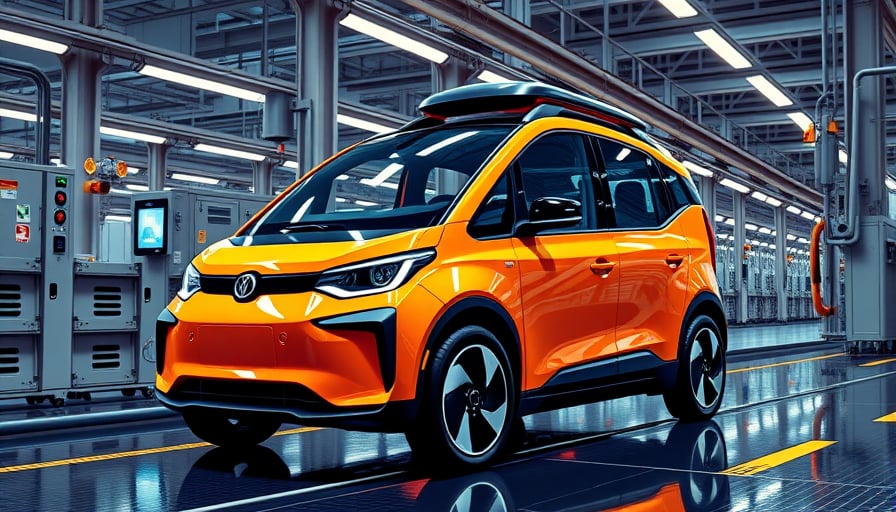
Volkswagen’s EV lineup, notably the ID.4, is produced in the United States and currently exempt from the Mexican tariff. This gives it a pricing advantage in the North American market, which could serve as a counterbalance if the ID.4’s demand rebounds. However, the company’s ICE segment remains heavily exposed to tariff adjustments, and competitors that have diversified production locations may be better positioned to absorb tariff fluctuations.
4. Financial Analysis
- Cost Structure Impact
- The 25‑percent tariff translates into an average cost increase of €2,800 per vehicle for the Jetta and Tiguan lines, assuming a baseline unit price of €11,200.
- With annual sales of ~200,000 units for each model, the company faces an additional €560 M in cost, reducing EBIT by approximately €350 M given current gross margins.
- Operating Margin Compression
- The drop from 6.5 % to 4.8 % operating margin represents a 1.7‑point decline. Given VW’s 2023 revenue of €240 B, this equates to a €4.08 B erosion in operating income.
- Dividend Outlook
- A dividend of €5.20 per ordinary share reflects a payout ratio of 22 % based on current earnings projections, lower than the historical 25‑30 % range. Shareholders may view this as a defensive stance amid uncertain earnings.
- Capital Expenditure (CapEx) Constraints
- Blume’s comments suggest that further tariff hikes would erode the return on investment (ROI) for planned CapEx in the US, potentially delaying production of next‑generation EV platforms.
5. Potential Risks
| Risk | Likelihood | Impact | Mitigation |
|---|---|---|---|
| Continued tariff increases | Medium | High | Lobbying, diversification of production sites |
| Slower EV adoption | Medium | Medium | Accelerated marketing, price incentives |
| Supply chain disruptions (battery raw materials) | Medium | High | Long‑term supply contracts |
| Regulatory retaliation | Low | High | Monitoring and compliance readiness |
6. Emerging Opportunities
- ID.4 Demand Resurgence: Analysts note that the ID.4, free from Mexican tariffs, could experience a demand rebound as consumers seek cost‑effective EV options in the US.
- Strategic Alliances: Potential partnerships with North American battery suppliers could lower costs and insulate the company from tariff volatility.
- Export Market Diversification: Expanding sales in emerging markets where tariff structures differ could offset volume losses in traditional strongholds.
7. Board Actions and Shareholder Expectations
Volkswagen’s board is slated to convene at its annual general meeting in June, where shareholders will vote on the €5.20 dividend. The board will also review the company’s response to tariff impacts, CapEx plans, and potential strategic realignments. Given the current financial headwinds, shareholders may demand a more aggressive risk‑mitigation strategy, potentially influencing board composition and executive compensation structures.
8. Conclusion
Volkswagen AG’s recent share price decline underscores a broader vulnerability to trade policy shifts and margin pressures. While the company’s EV portfolio provides a strategic hedge, its current operational dependence on Mexican‑manufactured ICE models exposes it to significant tariff‑related costs. A nuanced understanding of regulatory asymmetries, coupled with proactive diversification and cost‑optimization initiatives, will be critical for sustaining shareholder value in the coming years. As the board prepares to address these challenges in June, the market will closely monitor both the dividend decision and any substantive changes in Volkswagen’s global production strategy.