
Volkswagen AG Expands Battery Production While Re‑evaluating Global Strategy
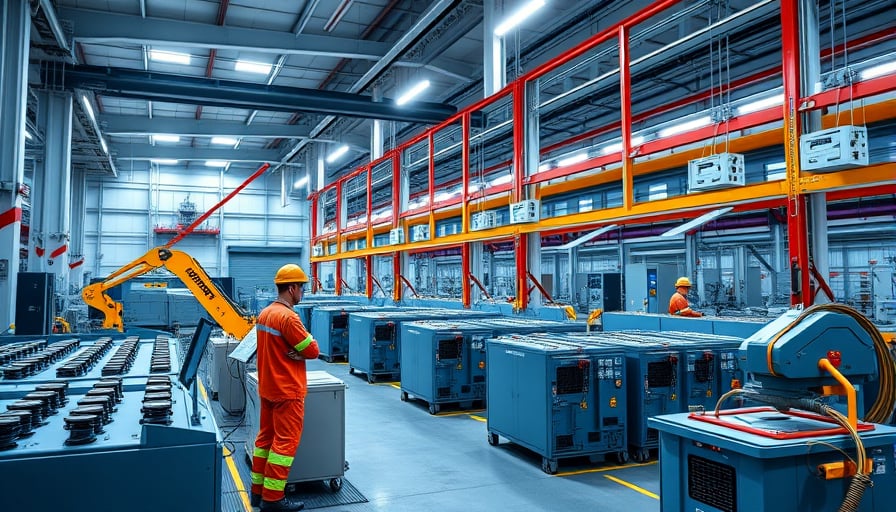
Volkswagen AG has inaugurated a new battery assembly facility in Spain, reinforcing its commitment to electrification. The plant, strategically located near key European suppliers, is expected to enhance production capacity for the group’s forthcoming battery‑cell modules and support the rollout of the ID‑series and other upcoming electric models.
Battery‑Cost Dynamics and Market Positioning
Despite a measurable uptick in electric‑vehicle (EV) sales this calendar year, analysts caution that Volkswagen’s overall market position has yet to achieve the levels projected at the group’s 2023 strategic roadmap. The primary obstacle remains the cost premium of lithium‑ion batteries. According to recent cost‑of‑goods analyses, battery packs for Volkswagen’s mid‑range EVs still command a 15 %‑to‑20 % premium over internal‑combustion‑engine (ICE) counterparts, largely due to raw‑material volatility, limited scale, and the company’s continued preference for high‑energy‑density chemistries.
- Cost‑Structure Insight: A comparative review of the cost breakdown for the ID.4 versus a comparable ICE vehicle shows battery cost accounting for roughly 30 % of the total vehicle cost, versus 10 % for ICE powertrains. Even with the new Spanish plant, economies of scale have yet to fully materialise, as production volumes are capped at 100,000 units annually in the first phase.
- Risk Assessment: Continued price erosion in battery raw materials—cobalt, nickel, and lithium—could erode margins further unless Volkswagen accelerates its own cell‑manufacturing or secures long‑term supply contracts.
Aggressive Investment in China and Emerging Markets
Parallel to its European push, Volkswagen is channeling several billion euros into model development tailored specifically for Chinese consumers. Preliminary reports suggest that these vehicles will feature:
- Higher‑capacity battery packs to meet the country’s premium charging infrastructure.
- In‑car infotainment systems compatible with local connectivity standards (e.g., 5G, WeChat integration).
- Segment‑specific body styles reflecting the higher demand for SUVs and MPVs in the region.
This strategic pivot is not limited to China; the company is also preparing to launch a comparable platform in the Middle East and Southeast Asia. Market research indicates a projected CAGR of 12 % for EVs in these regions over the next five years, driven by both government incentives and rising disposable income.
Dresden Facility Closure and Supply‑Chain Re‑configuration
Volkswagen’s decision to shut down its Dresden plant—a historic hub for engine and transmission production—signals a broader realignment of manufacturing priorities. The closure removes a key component‑assembly node that previously served both European and global supply chains. Industry observers interpret this move as a symbolic blow to the company’s legacy reputation for mechanical engineering excellence.
Simultaneously, the group is navigating a complex supply‑chain environment. The largest Chinese supplier of critical electronic control units, which had previously held a 30 % stake in a key VW subsidiary, is expected to acquire the remaining assets following its insolvency filing. This consolidation raises several questions:
- Integration Risk: How will the newly acquired assets be harmonised with Volkswagen’s quality and safety standards?
- Supply‑Chain Exposure: Does this acquisition centralise critical component production in a single geopolitical region, potentially heightening vulnerability to trade disputes or regional disruptions?
- Opportunity: The acquisition could provide Volkswagen with greater control over key electronics, a segment that is increasingly integral to autonomous driving and vehicle‑to‑everything (V2X) communication.
Strategic Outlook: Balancing Electrification, Cost, and Global Presence
Volkswagen AG’s overarching strategic focus remains the expansion of its EV portfolio and the reclamation of market share in fiercely competitive regions, notably China. However, the company’s trajectory is punctuated by significant challenges:
| Factor | Current Status | Potential Impact |
|---|---|---|
| Battery Cost | High, ~30 % of vehicle cost | Margin compression; price sensitivity |
| Production Scale | Spanish plant at 100k units/yr | Limited immediate impact; long‑term economies |
| China Investment | Multi‑billion euro allocation | Market capture, brand localisation |
| Supply‑Chain Consolidation | Acquisition of Chinese supplier | Integration risk, geopolitical exposure |
| Legacy Plant Closure | Dresden shutdown | Brand perception, skill drain |
Investors should monitor how Volkswagen balances the short‑term financial implications of battery‑cost pressure with the long‑term benefits of strategic localisation and manufacturing flexibility. While the company’s new Spanish battery plant and Chinese model development signal proactive adaptation, the true test will lie in achieving sustainable margin expansion and maintaining resilience in an increasingly fragmented global automotive ecosystem.