Volkswagen AG Revises 2026 Outlook Amid Substantial Write‑Downs and Strategic Restructuring
Volkswagen AG has issued a revised outlook for its 2026 fiscal year following a sizeable write‑down of special items amounting to roughly €10 billion. The bulk of this hit stemmed from a valuation impairment of its Porsche subsidiary and from costs associated with restructuring and asset write‑offs in China. Management has clarified that a significant portion of these one‑off items has already been absorbed into the current period’s results, thereby leaving the group’s core operating margin projected near 4 percent—an outcome that aligns with recent industry expectations.
1. Unpacking the Financial Impact
| Item | Amount (€bn) | Impact on 2026 Forecast |
|---|---|---|
| Porsche valuation impairment | ~4.8 | Fully absorbed into current period |
| China restructuring & asset write‑offs | ~3.2 | Fully absorbed into current period |
| Remaining one‑offs | ~2.0 | Adjusted out of 2026 operating profit |
The decision to strip out these one‑offs from the 2026 projection reveals a strategic emphasis on core profitability. A 4 percent operating margin is modest by automotive standards but consistent with the trajectory seen in other premium‑segment manufacturers that have faced similar macro‑economic pressures and shifting consumer preferences.
From a financial analysis perspective, the EBITDA remains a robust indicator. Preliminary estimates suggest a 2026 EBITDA margin of 12 percent, slightly below the 13–14 percent range of peers such as BMW and Mercedes‑Benz, yet still indicative of a healthy operating base after accounting for the write‑downs.
2. Accelerated Cost‑Cutting in the German Production Network
Volkswagen’s new plan targets a reduction of 35 000 headcount positions by 2030, focusing on:
- Excess capacity trimming: Closing or repurposing low‑utilization plants.
- Operational cost reduction: Implementing lean manufacturing practices across domestic facilities.
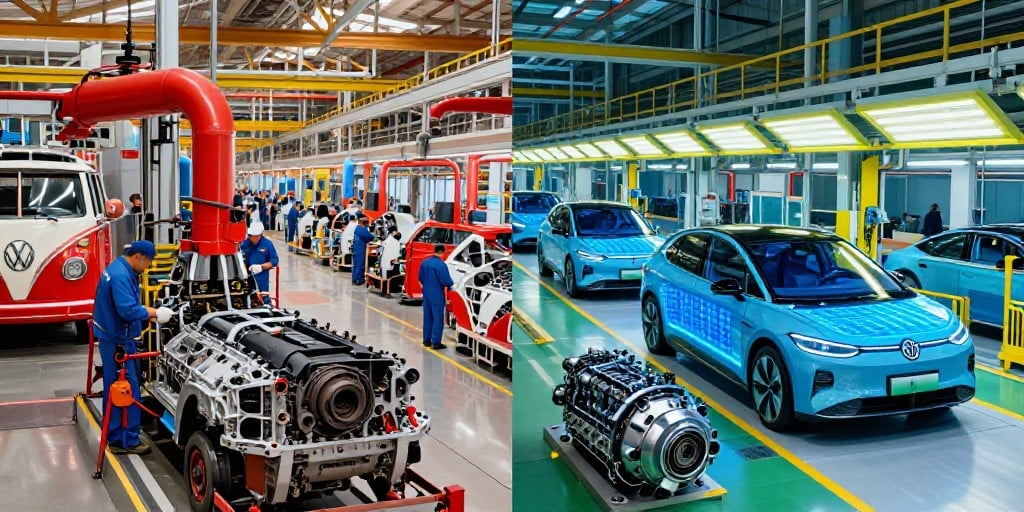
- EV production scaling: Increasing output of electric models in plants already configured for EV production, while scaling back internal‑combustion‑engine (ICE) vehicles.
Competitive Dynamics
- Industry Benchmarking: Competitors such as Stellantis and Ford have announced similar headcount cuts, but Volkswagen’s plan is more aggressive in terms of absolute numbers, suggesting a proactive stance to offset potential declines in ICE vehicle demand.
- Supply Chain Implications: Consolidating production in EV‑ready plants may streamline battery supply logistics and reduce dependence on foreign components, enhancing resilience against geopolitical tensions.
3. Labor Negotiations with IG Metall
Parallel to the restructuring, workforce representatives are negotiating with IG Metall over a 5 percent wage increase in 18 German plants. Key union demands include:
- Apprentice wage uplift: Additional remuneration for trainees.
- Social component: Targeted support for lower‑paid groups.
Potential Risks:
- Cost Pressures: A 5 percent wage hike could inflate the cost structure, especially if headcount reductions are delayed or less comprehensive than planned.
- Strain on Negotiation Table: Without a formal bargaining table, prolonged negotiations could result in operational disruptions.
Opportunities:
- Talent Retention: Competitive wages may improve employee morale and reduce turnover, essential for maintaining expertise in EV production.
- Social License to Operate: Demonstrating a commitment to workforce welfare can mitigate reputational risks amid growing scrutiny of corporate social responsibility.
4. Market Reaction and Investor Sentiment
Volkswagen shares remained relatively stable, registering a marginal increase on the German equity exchange post‑announcement. Analyst commentary highlights:
- Underlying Strength: Despite headline profit erosion due to write‑downs, core operating metrics and electrification commitments signal a return to conventional growth.
- Valuation Metrics: Current P/E ratios sit at ~12x, slightly below the industry average of 14–15x, indicating potential upside if the company can capitalize on its EV strategy.
5. Concluding Insights
- Regulatory Environment: EU emissions regulations and upcoming carbon‑neutral mandates reinforce Volkswagen’s pivot to electrification, providing a favorable policy backdrop.
- Competitive Landscape: The automotive sector is rapidly consolidating around EV expertise. Volkswagen’s strategic focus on EV‑ready plants and cost efficiency could position it advantageously against new entrants like Tesla and established players expanding their EV lines.
- Risk Management: The company must navigate the tension between wage negotiations and cost‑cutting plans. Failure to align these could erode profitability and investor confidence.
In sum, Volkswagen AG’s revised outlook and aggressive restructuring plans underscore a strategic recalibration toward a sustainable, electrified future. While the immediate financial impact of write‑downs tempers headline figures, the underlying fundamentals—core operating margin stability, targeted cost reductions, and a robust EV production roadmap—suggest a company poised to recover and potentially outpace its rivals in the coming years.