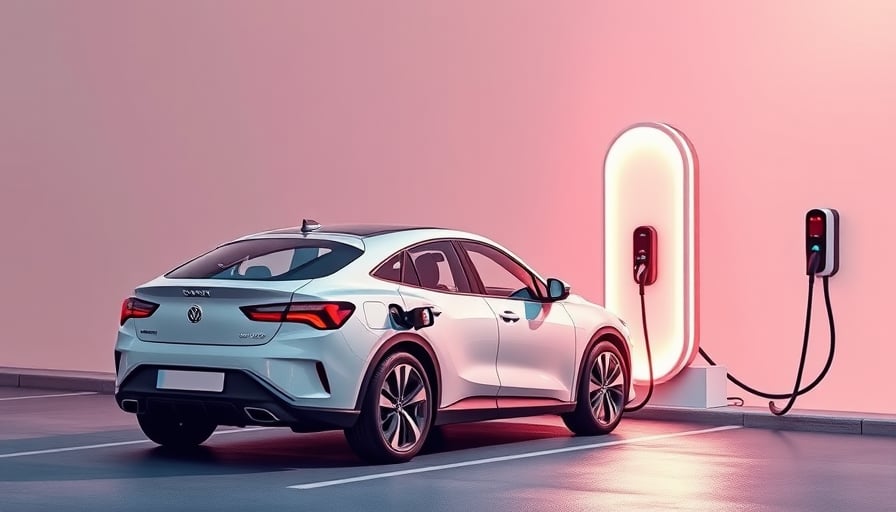
Volkswagen AG Navigates a Complex Landscape in the Current Financial Year
Strategic Positioning Around Emerging Technologies
Volkswagen AG has continued to demonstrate a disciplined approach to the rapidly evolving automotive sector. Recent reports indicate that multiple private‑equity firms have expressed interest in acquiring its diesel‑engine subsidiary, Everllence. The focus on a division that appears resilient to the accelerating integration of artificial‑intelligence (AI) technologies underscores the group’s intent to balance legacy competencies with forward‑looking investments. By preserving Everllence’s operational autonomy, Volkswagen signals confidence that traditional internal‑combustion components may retain strategic value in niche markets or as transitional technologies.
Electrification Milestone and Market Impact
A key metric for the German automaker’s electric‑vehicle (EV) strategy is the cumulative sales volume of its branded EV lineup. The company has surpassed the two‑million‑unit benchmark this year, a testament to its sustained commitment to electrification. This achievement reinforces Volkswagen’s competitive positioning within the domestic and European markets, where consumer demand for zero‑emission vehicles continues to rise. The milestone also aligns with broader EU decarbonisation goals, potentially affording the group preferential regulatory treatment and access to incentives.
Battery Production Capacity Expansion
Operationally, Volkswagen has inaugurated a high‑technology battery‑pack facility at the Skoda plant near Mladá Boleslav. This expansion is a critical component of the group’s strategy to secure in‑house battery production and to meet the escalating demand for EVs. By integrating battery manufacturing within its existing plant network, Volkswagen reduces dependency on external suppliers, mitigates supply‑chain disruptions, and can exercise tighter control over cost, quality, and innovation cycles. The facility’s proximity to established manufacturing infrastructure also enhances logistical efficiency and supports scalable production.
Pricing Strategy in Response to Sales Volatility
Despite the overall strength of its EV portfolio, the company has identified weak sales figures for a flagship electric model. To preserve market share on the world’s largest automotive market, Volkswagen is evaluating price adjustments. This approach reflects a pragmatic response to competitive pressures from other OEMs that are aggressively positioning their EV offerings. By recalibrating pricing, Volkswagen aims to sustain volume while protecting profitability margins.
Share Price Dynamics and Investor Sentiment
Financially, Volkswagen’s share price has exhibited modest volatility. A slight decline in February followed a year‑to‑date dip, yet market observations reveal a reduction in short interest. The latter trend may indicate a shift in investor sentiment, suggesting that market participants are reallocating positions in anticipation of the company’s strategic initiatives. The overall price movement reflects the broader volatility inherent in the automotive sector amid macro‑economic uncertainties and the transition to electric mobility.
Legal and Regulatory Challenges
The company is concurrently engaged in multiple legal proceedings concerning former executives and contractual disputes. These matters are being addressed in German labor courts and could have implications for governance, executive compensation, and contractual risk management. While the litigation remains ongoing, the group maintains its focus on compliance and corporate governance best practices.
Conclusion
Volkswagen AG’s current trajectory exemplifies a balanced strategy: bolstering EV and battery production, reassessing pricing in competitive markets, and navigating legacy asset restructuring. The company’s actions resonate with broader industry trends, including the shift toward electrification, the importance of vertical integration in battery supply chains, and the necessity of agile pricing strategies in a highly competitive global landscape. As Volkswagen continues to navigate these dynamics, its ability to adapt to regulatory shifts, market demands, and technological advances will remain critical to sustaining long‑term competitiveness across its global operations.