NXP Semiconductors’ Strategic Alignment with Volkswagen Signals a Shift Toward Software‑Centric Automobiles
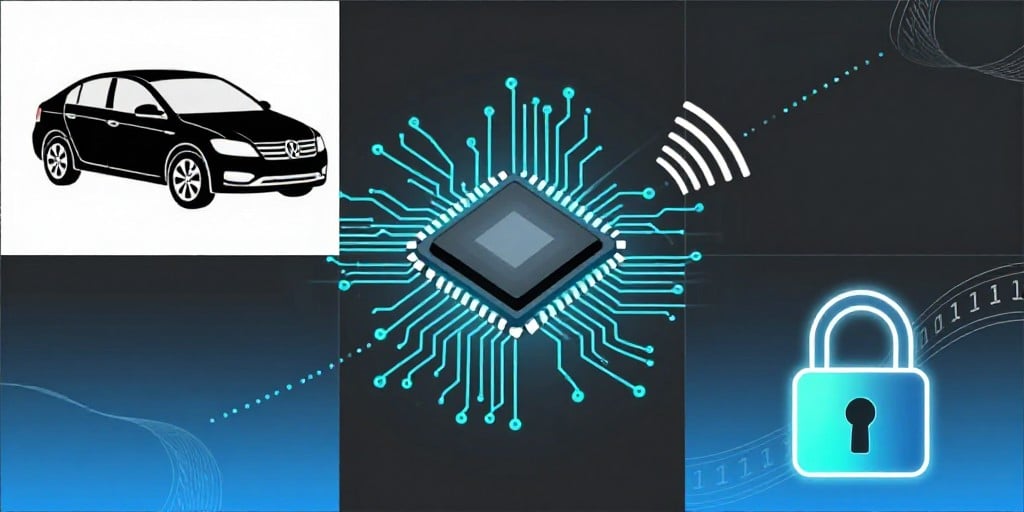
On Thursday, NXP Semiconductors disclosed that its S32K5 family of microcontrollers will power Volkswagen’s forthcoming software‑defined vehicle architecture. The collaboration, announced a few days earlier, centers on consolidating multiple vehicle functions into a single zonal controller, thereby trimming hardware complexity across Volkswagen’s portfolio. The first vehicles to adopt the new architecture are slated for market entry in 2027, a move that dovetails with Volkswagen’s broader strategy to lock in a resilient supply of critical semiconductor components.
A Technical Overview of the S32K5 Integration
The S32K5 microcontrollers are built on a 32‑bit ARM Cortex‑M4 core, engineered for safety‑critical automotive applications. By unifying functions such as infotainment, advanced driver‑assist systems (ADAS), and powertrain control within a single zonal controller, Volkswagen aims to reduce the number of distinct chips on each vehicle’s electronic control unit (ECU) board. This consolidation offers several technical benefits:
- Lower production costs – Fewer printed circuit board (PCB) layers and reduced component count translate directly into lower manufacturing expenses.
- Simplified software stack – A unified hardware platform streamlines the development of over‑the‑air (OTA) updates, as a single firmware bundle can propagate updates across multiple vehicle subsystems.
- Enhanced reliability – Consolidation reduces inter‑ECU communication latency and the risk of failure points inherent in a multi‑chip architecture.
However, the shift also introduces new risks. Concentrating many functions in a single chip raises the stakes for cybersecurity; a vulnerability in the S32K5 could compromise multiple vehicle systems simultaneously. Moreover, the single‑point‑of‑failure model necessitates robust redundancy at the system level, a non‑trivial engineering challenge.
Broader Implications for the Automotive Industry
Volkswagen’s partnership with NXP exemplifies a wider industry trend toward software‑centric design. Traditional automotive architecture has long relied on a plethora of specialized chips for each subsystem. The move to a zonal controller is a deliberate effort to reverse that trend, mirroring similar initiatives from other OEMs such as Mercedes-Benz’s “Single‑Chip” strategy and Ford’s “Software‑Defined Vehicle” roadmap.
From a societal perspective, software‑centric vehicles promise:
- Greater flexibility in feature deployment – OTA updates can introduce new safety features or entertainment options without requiring a physical service visit.
- Potential improvements in safety – A unified software stack facilitates more consistent real‑time data sharing between subsystems, which could enhance collision avoidance systems.
- Increased data privacy concerns – Aggregated data flows through fewer points, heightening the importance of robust encryption and data governance frameworks.
Financial Momentum Ahead of Q3 Results
NXP’s upcoming third‑quarter earnings, scheduled for release on October 27, are expected to outperform analyst forecasts. Historical data show a consistent year‑over‑year revenue uplift, driven primarily by automotive microcontrollers. Analysts project a steady rise in earnings per share (EPS) and overall revenue for the fiscal year, reflecting sustained demand for NXP’s products and an expanding footprint in automotive electronics.
The announcement of the Volkswagen partnership has already bolstered NXP’s stock performance, with the company ranking among the Nasdaq 100’s top performers that day. Investors view the partnership as a validation of NXP’s strategic positioning in the automotive sector, especially as the industry pivots toward more software‑driven architectures. This positive sentiment is reinforced by the broader semiconductor market’s resilience in the face of supply‑chain disruptions, a trend that continues to influence investor confidence.
Risks and Mitigations
While the partnership offers clear upside, several risks merit scrutiny:
- Supply‑chain dependencies – Concentrating on a single OEM (Volkswagen) could expose NXP to volume fluctuations if the automaker adjusts its production targets. Diversification across OEMs remains a prudent strategy.
- Regulatory scrutiny – As vehicles become more software‑centric, regulators may impose stricter safety and cybersecurity standards. NXP must maintain compliance with ISO 26262 and emerging cybersecurity frameworks like ISO/SAE 21434.
- Cybersecurity threats – A compromised zonal controller could affect multiple vehicle functions. Implementing hardware‑based root‑of‑trust mechanisms and secure boot processes will be critical.
Conclusion
NXP Semiconductors’ partnership with Volkswagen represents a microcosm of the automotive industry’s shift toward consolidated, software‑driven architectures. By integrating the S32K5 microcontrollers into a single zonal controller, Volkswagen aims to reduce hardware complexity, lower costs, and enable more agile software updates. The collaboration, coupled with strong financial forecasts, has already reinforced investor confidence in NXP’s growth trajectory.
Yet, as the industry embraces this paradigm, stakeholders must remain vigilant about the attendant cybersecurity, privacy, and supply‑chain risks. The balance between technological efficiency and human‑centric safety will ultimately dictate the long‑term success of software‑centric vehicles on our roads.