
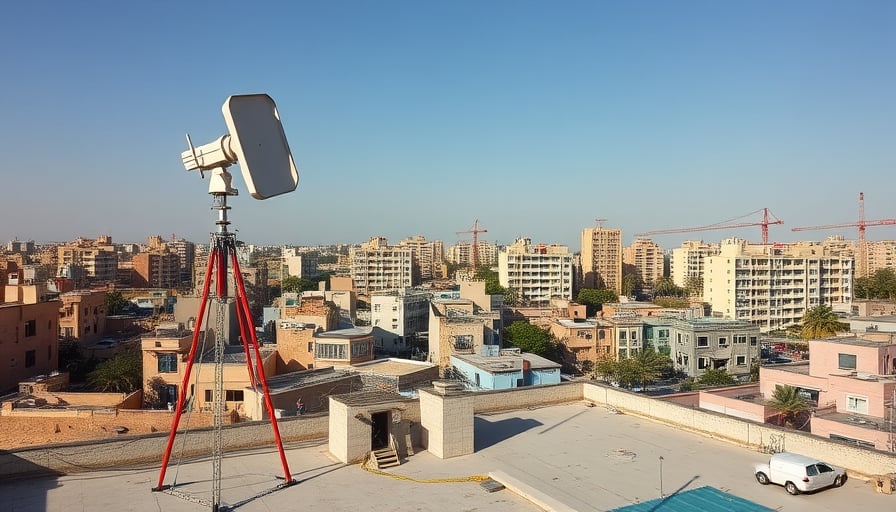
Vodafone Group PLC Expands Network Capacity in Egypt
Vodafone Group PLC, a global leader in wireless communications, has announced a strategic operational enhancement within its African footprint. The company’s subsidiary, Vodacom Group Limited, disclosed that its Egyptian arm, Vodafone Egypt, has secured additional spectrum bandwidth in the 1,800‑MHz band. This acquisition, structured as a multi‑year payment schedule, is expected to strengthen data connectivity and accommodate the escalating demand for mobile services in the region.
Operational Context and Strategic Intent
The 1,800‑MHz spectrum is widely regarded as a critical asset for mobile operators, offering a balance between coverage depth and capacity that is particularly well‑suited to densely populated areas. By augmenting its holdings in this band, Vodafone Egypt aims to:
- Improve Network Capacity: The additional bandwidth allows for higher throughput, reducing congestion during peak usage periods and supporting advanced services such as 5G and enhanced mobile broadband.
- Enhance Coverage Quality: The mid‑frequency range provides a favorable propagation profile, enabling more reliable indoor and rural coverage without the need for extensive infrastructure investment.
- Accelerate Digital Inclusion: Strengthened network performance can facilitate the rollout of data‑centric services—telehealth, e‑education, and digital commerce—contributing to broader socio‑economic development goals in Egypt.
Vodafone Group’s broader strategy in Africa has consistently focused on network expansion and service quality improvement. This spectrum acquisition aligns with the company’s long‑term objective of delivering a seamless, high‑performance mobile experience across its international markets.
Market Dynamics and Competitive Landscape
The telecommunications landscape in Egypt is characterized by a highly competitive environment, dominated by Vodafone Egypt, Orange Egypt, and Etisalat Misr. Each operator is pursuing aggressive network densification and spectrum acquisition to gain a competitive edge. The addition of 1,800‑MHz spectrum positions Vodafone Egypt favorably in several respects:
- Differentiation on Quality: Enhanced capacity can lead to superior customer experiences, potentially translating into higher market share.
- Regulatory Alignment: The Egyptian spectrum allocation regime encourages operators to invest in infrastructure that meets national broadband targets. This acquisition may also facilitate compliance with forthcoming regulatory mandates on 5G deployment.
- Economies of Scale: By leveraging shared infrastructure and common technology platforms across its African operations, Vodafone can achieve cost efficiencies that reduce the unit cost of service delivery.
In the broader African context, operators are increasingly focusing on data services, with mobile‑data revenue growing at double‑digit rates. Vodafone’s capacity expansion in Egypt supports its objective to capture a larger portion of the burgeoning data market.
Economic Implications
From an economic perspective, the investment in spectrum bandwidth reflects a strategic commitment to sustaining growth in emerging markets. Key implications include:
- Stimulus for Digital Economy: Improved network quality can lower digital barriers, fostering entrepreneurship, remote working, and e‑commerce. This aligns with global development agendas that emphasize digital infrastructure as a catalyst for inclusive growth.
- Attraction of Foreign Direct Investment (FDI): Robust telecommunications infrastructure enhances Egypt’s attractiveness to foreign investors, especially in technology and logistics sectors that rely heavily on data connectivity.
- Employment Generation: Expanding network capacity entails construction, maintenance, and support operations, contributing to job creation across the telecommunications value chain.
Furthermore, the multi‑year payment structure mitigates upfront financial burden, enabling Vodafone Egypt to balance capital expenditure with operational cash flows. This fiscal prudence is essential in a market where telecom operators face fluctuating revenue streams due to seasonal demand and regulatory changes.
Cross‑Sector Synergies
Vodafone’s expansion in Egypt demonstrates how telecommunications infrastructure can create synergies across diverse industries:
- Health Care: Enhanced connectivity supports telemedicine platforms, expanding access to remote diagnostics and monitoring.
- Education: Reliable broadband enables scalable e‑learning solutions, addressing educational disparities.
- Financial Services: Mobile banking and digital payment systems become more robust, promoting financial inclusion.
These cross‑sector benefits underscore the broader economic impact of strategic investments in network capacity beyond the telecommunications domain.
Conclusion
Vodafone Group PLC’s decision to secure additional 1,800‑MHz spectrum bandwidth for Vodafone Egypt exemplifies a targeted effort to strengthen network performance and accommodate the rapidly growing mobile data market in Africa. The move aligns with Vodafone’s global strategy of enhancing capacity, improving service quality, and delivering value across its international operations. By investing in critical spectrum assets, Vodafone positions itself to capture market share, support economic development, and foster cross‑sector digital transformation in Egypt and beyond.