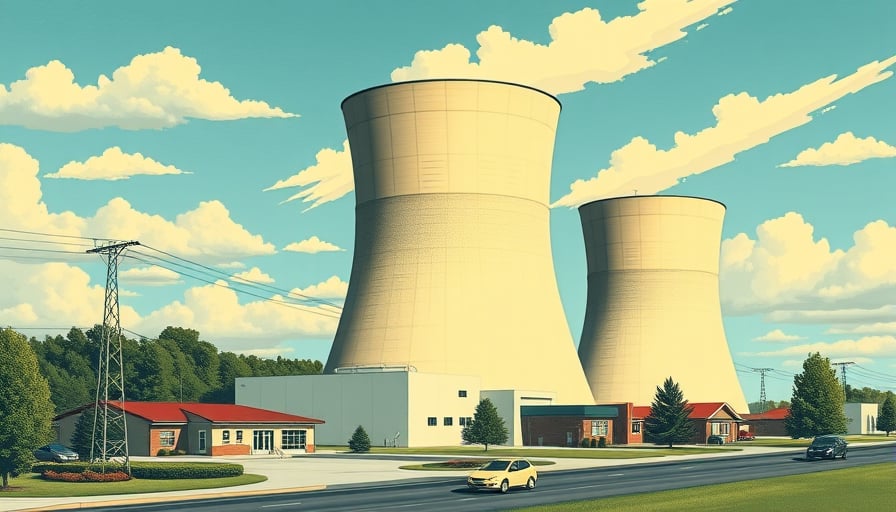
Vistra Corp Secures Long‑Term Power Purchase Agreements with Leading Technology Firms
Vistra Corp has announced a series of multi‑year power purchase agreements (PPAs) with prominent technology companies—including Meta, Amazon, and Microsoft—solidifying its position as a key supplier of baseload power to the world’s largest data‑center operations. These contracts, spanning over a decade, demonstrate the confidence hyperscalers place in Vistra’s capacity to deliver reliable, low‑carbon electricity in the face of escalating demand for continuous, high‑density computing.
Grid Stability and the Role of Baseline Generation
The reliability requirements of modern data‑centers necessitate a power system that can sustain high load levels with minimal interruption. Vistra’s portfolio, which increasingly relies on nuclear and other low‑emission generation, offers a stable, dispatchable baseload that complements intermittent renewable resources. From an engineering standpoint, baseload plants provide a predictable output that stabilizes voltage profiles and frequency regulation across the transmission network, thereby reducing the need for costly ancillary services.
The integration of AI workloads and massive data‑center clusters amplifies the importance of maintaining grid inertia. Vistra’s nuclear plants contribute significant synchronous inertia, which helps damp frequency excursions during sudden load changes—a critical attribute as the proportion of renewable energy—characterized by lower inertia—grows in the mix.
Renewable Energy Integration Challenges
While the renewable penetration in Vistra’s service territory continues to rise, the intermittency of wind and solar introduces volatility that can compromise grid stability if not managed effectively. The company’s strategy of pairing baseload nuclear with renewable generation necessitates advanced forecasting algorithms, flexible operating reserves, and robust interconnection standards.
Grid operators must also address the “duck curve” phenomenon, where solar output peaks during midday, leaving a steep ramp‑up requirement in the evening to meet load. Vistra’s commitment to long‑term PPAs with data‑center operators provides a predictable demand curve that can be leveraged to schedule flexible generation or storage deployments, thus smoothing load variations and facilitating higher renewable penetration.
Infrastructure Investment Requirements
To support the projected growth in data‑center demand and the integration of new nuclear facilities, Vistra is earmarked for substantial capital investment in transmission and sub‑station upgrades. Recent studies estimate that a 30‑year horizon for renewable integration will require an additional $15–20 billion in grid reinforcement across the United States.
The company’s collaboration with Constellation Energy to restart the Three Mile Island facility exemplifies the need for retrofitting legacy nuclear assets. Modernized control systems, updated safety protocols, and enhanced thermal management are essential to bring legacy reactors up to current reliability and safety standards, thereby extending their operational lifespan and reducing the need for costly new builds.
Regulatory Frameworks and Rate Structures
Vistra operates within a regulatory environment that balances investor returns with public interest in clean energy. The Federal Energy Regulatory Commission (FERC) and state Public Utility Commissions (PUCs) oversee rate design, ensuring that cost allocation for infrastructure upgrades reflects the benefits to both utilities and consumers. The upcoming implementation of “transmission-oriented” rate structures—where rates are linked to grid capacity rather than generation output—will likely incentivize investments in high‑capacity corridors essential for delivering power to remote data‑center locations.
In addition, the Clean Power Plan and subsequent policy initiatives encourage utilities to reduce carbon intensity, which aligns with Vistra’s low‑emission portfolio. However, the transition to a carbon‑free grid introduces cost uncertainties, as renewable projects face higher upfront capital expenditures and the need for sophisticated energy storage solutions.
Economic Impacts and Consumer Costs
The economic implications of Vistra’s expanded nuclear footprint are multifaceted. On one hand, nuclear plants provide a stable, low‑variable-cost source of electricity that can lower wholesale prices, benefiting consumers indirectly. On the other hand, the capital intensity of nuclear projects may be reflected in higher consumer rates unless mitigated by favorable regulatory mechanisms such as “recovery of capital” or “rate-of-return” structures.
Data‑center operators, which often negotiate PPAs that include provisions for price caps or market‑linked pricing, can benefit from the predictability of nuclear‑based baseload power. This predictability translates into lower operating costs and reduced exposure to volatile fuel markets, thereby enhancing the overall economic resilience of technology firms.
Conclusion
Vistra Corp’s recent long‑term PPAs with Meta, Amazon, and Microsoft underscore a broader industry trend: technology giants are increasingly seeking dependable, low‑emission power sources to sustain the energy‑intensive demands of AI and data‑center operations. Vistra’s strategic emphasis on nuclear and low‑carbon generation, coupled with its partnership to revitalize legacy reactors, positions it at a critical juncture between infrastructure development and the evolving energy landscape.
The company’s upward‑revised earnings outlook reflects confidence in the scalability of its portfolio, yet it also highlights the necessity for continued investment in grid reinforcement, regulatory alignment, and advanced control technologies. As the energy transition advances, Vistra’s ability to harmonize grid stability, renewable integration, and economic feasibility will determine its long‑term competitiveness and its contribution to a resilient, low‑carbon power system.