
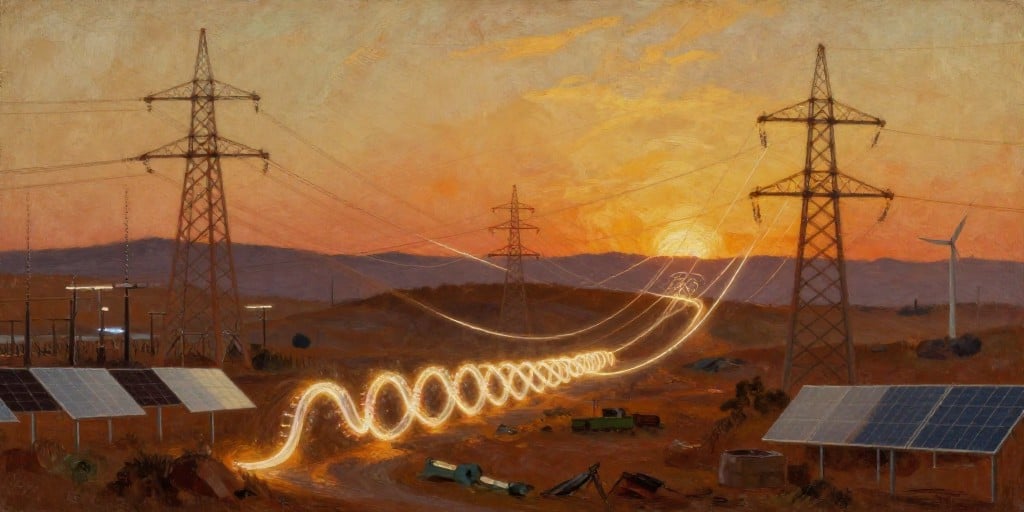
Corporate News Analysis: Vistra Corp. Insider Transactions and Their Implications for Power System Modernization
Overview of Insider Purchases
Vistra Corp. has filed several Form 4 disclosures with the U.S. Securities and Exchange Commission, detailing recent acquisitions of common stock by a group of directors and officers. The transactions, all executed on a single date in mid‑May, increased the individual holdings of the following insiders:
| Insider | Post‑Transaction Holding |
|---|---|
| Sult, John R. | |
| Pitesa, John William | |
| Helms, Scott B. | |
| Acosta, Arcilia | |
| Ackermann, Hilary E. | |
| Walters, Robert Charles | |
| Lagacy, Julie A. |
(Exact share counts are provided in the SEC filings; no significant volume changes outside these acquisitions were reported. No divestitures or other material actions that would alter the overall shareholder structure were disclosed.)
These filings represent routine insider compliance reporting. While the transactions themselves are modest relative to the company’s total equity base, they may signal heightened confidence among senior leadership in Vistra’s long‑term strategy, particularly as the company continues to invest in grid‑stability technologies and renewable integration.
Context: Vistra’s Role in Power Generation, Transmission, and Distribution
Vistra Corp. operates a diversified portfolio of power assets spanning coal, natural gas, nuclear, and, increasingly, renewable generation. The company’s assets are connected to a vast transmission network that feeds into multiple distribution systems across the United States. As grid operators grapple with the intermittent nature of solar and wind resources, companies like Vistra are under pressure to deploy advanced control systems, energy storage, and flexible generation to maintain reliability.
Key technical challenges include:
Grid Stability and Frequency Regulation With a higher penetration of inverter‑based resources, inertia in the system is reduced. Vistra’s investment in synthetic inertia solutions and fast‑acting frequency response services helps mitigate voltage dips and frequency oscillations.
Renewable Energy Integration The variability of wind and solar necessitates real‑time forecasting, adaptive dispatch, and coordinated curtailment strategies. Vistra’s control center leverages machine‑learning models to predict generation output and adjust plant output accordingly, maintaining power balance across the grid.
Infrastructure Modernization Aging transmission lines and substations require upgrades to support bi‑directional power flows, accommodate distributed energy resources, and implement advanced protection schemes. Vistra’s capital allocation includes high‑voltage direct current (HVDC) links and upgraded transformers to enhance transmission efficiency.
Regulatory and Rate‑Setting Implications
The Department of Energy and state public utility commissions are revising tariff structures to incentivize renewable integration and penalize curtailment. Key developments affecting Vistra include:
Time‑of‑Use (TOU) Pricing: Consumers pay higher rates during peak demand, encouraging load shifting. Vistra’s flexibility services can reduce peak demand, translating into revenue through demand‑side management contracts.
Capacity Markets: To ensure adequate reserve margin, utilities are paying for capacity that may not be dispatched. Vistra’s hybrid renewable‑gas plants are positioned to win capacity payments due to their dispatchability and low operating costs.
Renewable Portfolio Standards (RPS): States mandate increasing shares of renewable generation. Vistra’s ongoing investments in solar and wind are structured to meet or exceed state RPS requirements, reducing compliance costs.
Economic Impact on Consumer Costs
While infrastructure investment is capital intensive, its benefits translate into more stable grid operations and lower outage risks, which can reduce long‑term costs for consumers. Moreover, the integration of renewables can lower marginal generation costs, potentially flattening wholesale price spikes. However, the transition phase may see temporary rate increases to fund the necessary upgrades. Vistra’s disclosures of insider purchases suggest confidence that these investments will pay off through enhanced reliability and market opportunities.
Engineering Insight: Power System Dynamics
Inertia Reduction: The loss of synchronous generators decreases the system’s natural frequency response. Synthetic inertia from battery storage or turbine‑governor controls compensates for this deficit, ensuring the frequency remains within safe bounds (±0.05 Hz).
Voltage Stability: With fewer large‑reactive‑power plants, voltage levels can sag during transient events. Vistra’s deployment of static synchronous compensators (STATCOMs) provides dynamic reactive support, stabilizing voltage across the network.
Contingency Analysis: The loss of a major transmission line requires rapid re‑dispatch of neighboring plants. Vistra’s advanced SCADA system monitors line loadings in real time, allowing operators to execute automated load‑shedding protocols within milliseconds.
Conclusion
The recent insider acquisitions reported by Vistra Corp. are a routine element of corporate governance but carry broader implications for the company’s trajectory in grid modernization. As the firm continues to deploy sophisticated control systems, integrate renewable resources, and upgrade aging infrastructure, these actions will shape the stability of the power network, influence regulatory tariff structures, and ultimately impact consumer electricity costs. The technical and economic dimensions highlighted above underscore the complex interplay between corporate strategy and the evolving electricity system.