
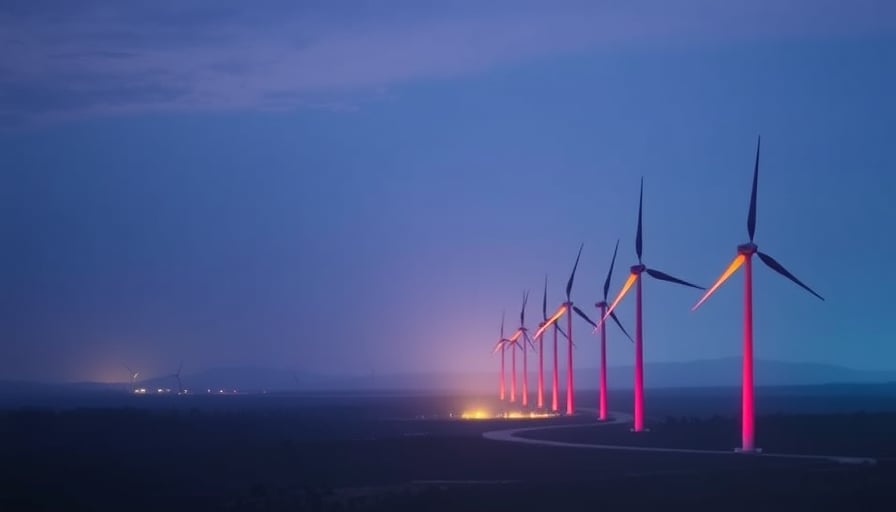
Vistra Corp. Affirms Operational Resilience and Continued Investment in Renewable Capacity
Vistra Corp., the U.S. utility listed on the New York Stock Exchange, released a series of operational updates on the evening of December 23. The company reaffirmed that its power‑generation portfolio remains compliant with all regulatory and performance benchmarks and underscored a sustained commitment to expanding renewable‑energy assets. Executives highlighted that the latest quarterly financial results demonstrate steady revenue growth, driven by reliable demand for electricity within Vistra’s service territories. The company emphasized its disciplined capital‑allocation strategy and reiterated its focus on delivering long‑term value to shareholders, while indicating no material changes to strategic plans or year‑end guidance.
Grid Stability and the Role of Conventional Assets
Vistra’s generation mix still contains a substantial share of dispatchable, natural‑gas–fired plants. These assets provide the firm’s ability to maintain system frequency and voltage within permissible limits during peak periods or when renewable output dips. From an engineering perspective, the firm’s operating reserves—encompassing both spinning and non‑spinning capabilities—are calibrated to meet the North American Electric Reliability Corporation (NERC) reliability standards. By ensuring sufficient margin above forecasted peak loads, Vistra can counteract the inherent intermittency of wind and solar resources.
The utility’s transmission network is designed with multiple high‑voltage corridors that interconnect regional markets. This topology affords rapid re‑routing of power flows in response to contingencies, thereby mitigating the risk of cascading outages. Advanced substation automation, coupled with real‑time SCADA monitoring, further enhances the reliability of voltage regulation and fault isolation across the network.
Renewable Energy Integration Challenges
While the company continues to invest in wind and solar projects, several technical challenges persist:
| Challenge | Impact | Mitigation Strategy |
|---|---|---|
| Intermittency | Variable generation leads to supply‑demand mismatches | Energy storage, demand‑response programs, and dynamic scheduling |
| Grid Congestion | High renewable penetration can saturate local corridors | Reinforcement of transmission lines, deployment of FACTS devices |
| Voltage Regulation | Rapid output changes affect voltage stability | Static VAR compensators, smart inverters with reactive power support |
| Protective Relaying | Differentiating faults from renewable sources | Adaptive protection schemes and fault‑location algorithms |
Vistra’s approach blends continued upgrades to its high‑voltage infrastructure with the adoption of power‑electronics‑based controls. For instance, the utility is testing grid‑parity inverters that provide synthetic inertia, improving frequency response without the need for additional conventional generation.
Infrastructure Investment Requirements
The transition toward a cleaner energy mix demands substantial capital outlays. Vistra has earmarked approximately $1.8 billion over the next five years for:
- Transmission corridor upgrades: Expanding line ratings and adding parallel conductors to accommodate increased wind and solar output.
- Substation automation: Implementing open‑architecture control systems to allow for flexible integration of distributed energy resources (DERs).
- Energy storage deployments: Installing 300 MW/1,200 MWh battery systems across strategic nodes to provide frequency regulation and peak shaving.
- Grid‑wide monitoring: Deploying phasor measurement units (PMUs) to enhance situational awareness and improve preventive maintenance.
The capital intensity of these projects is reflected in the company’s balanced capital structure, wherein debt and equity are allocated to maintain credit ratings and support long‑term growth objectives.
Regulatory Frameworks and Rate Structures
Vistra operates under the regulatory oversight of multiple state public utility commissions, each with distinct rate‑setting mechanisms. In the context of renewable integration:
- Cost‑of‑Service (COS) Regulation: Allows the utility to recover incremental costs associated with new renewable capacity and related infrastructure.
- Performance‑Based Regulation (PBR): Incentivizes the utility to achieve higher reliability metrics and lower marginal costs, potentially translating into lower rates for consumers.
- Renewable Portfolio Standards (RPS): Mandate a minimum share of renewable generation; failure to meet RPS targets can result in penalties that impact rate filings.
The company’s current rate filings demonstrate a conservative approach, with incremental increases projected to align with projected investment costs and the anticipated decline in natural‑gas prices. However, the utility’s management indicates that the pace of renewable deployment may necessitate periodic reassessment of rate structures to ensure equitable cost allocation among consumers.
Economic Impacts of Utility Modernization
The modernization of grid infrastructure, while capital intensive, yields measurable economic benefits:
- Reduced Transmission Losses: Upgraded lines and voltage optimization can lower losses by up to 5%, translating to cost savings for the utility and consumers.
- Enhanced Reliability: Fewer outage incidents improve productivity across the economy, especially in critical sectors such as manufacturing and data centers.
- Job Creation: Large‑scale infrastructure projects generate both short‑term construction jobs and long‑term operational positions.
- Lower Energy Prices: Efficient integration of renewables reduces dependency on costly peaking plants, potentially lowering wholesale prices.
Vistra’s management projects that the combined effect of these benefits will offset a portion of the investment cost over a 10‑ to 15‑year horizon, thereby sustaining shareholder value while supporting the broader energy transition.
Conclusion
Vistra Corp.’s recent operational update reaffirms its capacity to maintain grid stability through robust conventional generation while simultaneously advancing renewable‑energy integration. The firm’s disciplined investment plan, coupled with adherence to regulatory frameworks and forward‑looking rate structures, positions it to navigate the technical and economic complexities of the evolving power sector. By balancing capital structure prudence with strategic modernization, Vistra aims to deliver sustained value to shareholders and reliable, affordable power to its customers.