
Vistra Corp’s Recent Market Movements Amidst Growing Focus on Grid Modernization
Vistra Corp, the New York Stock Exchange‑listed independent power and renewable electricity producer, has drawn a modest uptick in investor sentiment following a series of institutional trades. On February 9, the company’s shares advanced by a narrow margin, reflecting a slight lift in market perception. Subsequently, a large‑cap growth fund increased its stake in Vistra, while a global strategy fund trimmed its position. A few days later, a major investment bank disclosed a purchase of several thousand shares, underscoring sustained institutional interest.
Corporate Outlook in the Context of Grid Dynamics
As analysts prepare to release quarterly results for the period ending December 31, 2025, expectations point to earnings per share that will surpass the previous year, while revenue is forecast to decline moderately. These financial projections must be interpreted against the backdrop of Vistra’s pivotal role in power generation, transmission, and distribution systems—a sector that is experiencing a seismic shift toward renewable energy integration and grid resilience.
Grid Stability and Renewable Integration
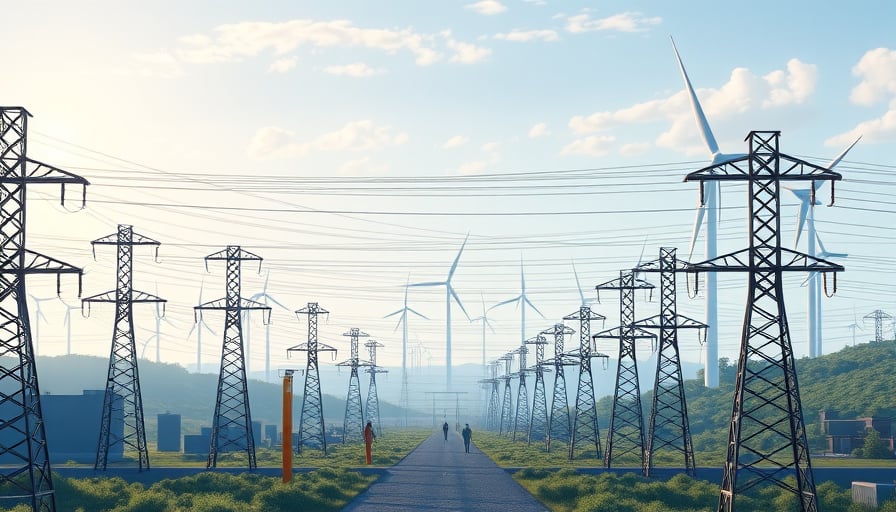
The integration of variable renewable resources (wind, solar) challenges traditional grid stability mechanisms. Vistra’s portfolio, which includes significant wind and solar assets, relies on sophisticated real‑time balancing algorithms to mitigate frequency and voltage excursions. Advanced inverter controls, energy storage, and demand‑response programs are employed to maintain system inertia and dampen oscillations. The company’s investment in high‑capacity FACTS (Flexible AC Transmission Systems) devices further enhances reactive power support, enabling smoother operation of long‑haul transmission corridors that connect remote renewable sites to load centers.
Transmission and Distribution Infrastructure
Vistra’s transmission assets traverse interstate corridors that are often at capacity limits, especially during peak generation periods in the Southwest United States. Upgrades such as 500 kV corridor reinforcements and the deployment of HVDC (High‑Voltage Direct Current) lines are under consideration to improve line‑loss efficiency and expand capacity. On the distribution side, the integration of distributed energy resources (DERs) requires smart‑grid upgrades, including automated reclosers and advanced SCADA systems, to ensure seamless bi‑directional power flow and to protect grid assets from fault conditions.
Regulatory Frameworks and Rate Structures
Regulatory bodies such as the Public Utility Commission (PUC) and the Federal Energy Regulatory Commission (FERC) are actively revising rate structures to incentivize renewable integration while ensuring cost‑recovery for essential transmission upgrades. Time‑of‑use (TOU) pricing, demand‑based tariffs, and capacity‑market mechanisms are increasingly adopted to align consumer costs with grid reliability needs. Vistra’s rate design strategy incorporates performance‑based incentives that reward low‑carbon generation and penalize curtailment, thereby aligning financial outcomes with environmental objectives.
Economic Implications of Utility Modernization
Modernization of the electric grid demands capital investments that often exceed the conventional utility cost base. Vistra’s planned capital allocation includes:
- Transmission Upgrades: Estimated at $2.5 billion over the next five years to extend corridor capacity and reduce congestion.
- Distributed Energy Resources (DER) Integration: Approximately $500 million to deploy advanced DER management platforms.
- Grid‑Modernization Infrastructure: An additional $800 million for SCADA upgrades and cybersecurity enhancements.
These expenditures translate into higher capital costs, which are typically reflected in adjusted levelized cost of electricity (LCOE). However, by deploying smart‑grid technologies and storage, Vistra can achieve higher revenue reliability and potentially lower long‑run operating costs, mitigating the impact on consumer rates.
Engineering Insights into Power System Dynamics
- Frequency Regulation: Vistra’s wind farms employ synthetic inertia through power‑curve adjustments, providing frequency support without sacrificing renewable output.
- Voltage Control: Static VAR compensators (SVCs) and STATCOMs installed across critical nodes enhance voltage stability, particularly during high penetration of photovoltaic generation.
- Contingency Analysis: N‑1 reliability standards are maintained through rigorous contingency simulations, ensuring that the loss of any single asset does not compromise system reliability.
These technical measures illustrate how engineering solutions can be leveraged to address the inherent intermittency of renewable resources while safeguarding grid stability.
Conclusion
While Vistra Corp’s recent trading activity signals a cautious yet engaged market stance, the company’s strategic focus on grid modernization, renewable integration, and regulatory compliance positions it well for the evolving energy landscape. The anticipated quarterly results will likely reflect the delicate balance between maintaining financial performance and investing in the infrastructure required to support a reliable, low‑carbon electricity system.