
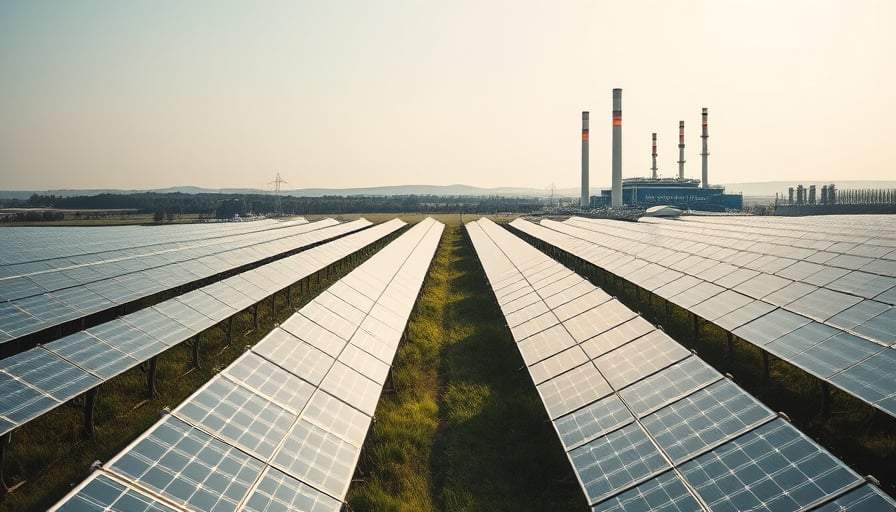
Vistra Corp’s Earnings Report Highlights Strategic Growth Amidst a Complex Power‑Sector Landscape
Executive Summary
Vistra Corp (NYSE: VTRA), a leading independent power producer, has recently released its fiscal‑quarter earnings, prompting renewed analyst attention. KeyBanc Securities upgraded Vistra to an overweight rating, citing the company’s sizeable asset base and robust cash‑flow generation as pivotal to its value proposition. The firm’s strategic focus remains on expanding its gas‑fired generation portfolio while maintaining a disciplined capital‑return policy. In contrast, Constellation Energy’s earnings profile emphasizes a portfolio concentrated on nuclear and high‑purity renewable assets, underscoring divergent risk–return profiles within the utility sector.
1. Power Generation, Transmission, and Distribution Dynamics
1.1 Gas‑Fueled Generation as a Flexible Grid Asset
Vistra’s acquisition strategy targets mid‑range and peaking gas plants, which provide rapid ramp‑up capabilities essential for balancing intermittent renewables. Engineering studies show that gas turbines can adjust output in under five minutes, a critical attribute for mitigating wind or solar curtailment events. By integrating these assets into its existing transmission network, Vistra enhances the grid’s frequency and voltage stability, reducing the likelihood of cascading outages.
1.2 Renewable Integration Challenges
The increasing penetration of wind and solar PV imposes stochastic variability on the grid. Load‑forecasting algorithms must now incorporate weather‑driven generation profiles, necessitating advanced real‑time monitoring systems. Vistra’s strategy to acquire gas‑fired plants serves as a counter‑balance, enabling synthetic inertia provision and maintaining system synchronism. The company’s investment in energy‑storage projects—though not yet fully disclosed—could further smooth these fluctuations and improve overall grid resilience.
1.3 Distribution Modernization and Smart Grid Deployment
At the distribution level, Vistra is reportedly upgrading its substations to support higher voltage levels and integrating advanced distribution management systems (ADMS). These upgrades facilitate re‑active power control and fault‑locating diagnostics, critical for maintaining service reliability during extreme weather events. The deployment of phased‑array transformers and micro‑grids positions the company to capitalize on local generation sources while ensuring compliance with the latest grid codes and NERC standards.
2. Regulatory Frameworks and Rate Structures
2.1 Transmission and Distribution (T&D) Regulation
Vistra operates across several regulatory jurisdictions, each imposing distinct Tariff and Reimbursement models. In most states, transmission tariffs are regulated based on cost‑of‑service principles, while distribution tariffs increasingly reflect performance‑based metrics. These frameworks incentivize investments in grid reliability, yet they also impose a price‑cap on capital‑expenditure returns, requiring meticulous financial engineering to secure rate‑payer approvals.
2.2 Renewable Portfolio Standards (RPS) and Clean Energy Credits
The company’s portfolio of renewable assets is subject to RPS mandates, which necessitate the acquisition or generation of renewable energy credits (RECs). Vistra’s mix of gas and renewable generation allows for credit arbitrage, where surplus RECs can be sold to other utilities or leveraged to meet state RPS requirements, thereby generating ancillary revenue streams.
2.3 Rate Structures and Consumer Impact
KeyBanc’s analysis indicates that Vistra’s capital‑return strategy—coupled with its focus on high‑margin gas plants—may moderate long‑term rate increases for consumers. However, the integration of renewables and associated infrastructure upgrades could trigger rate‑pacing mechanisms, spreading capital costs over extended periods. The net consumer impact will therefore hinge on the balance between generation cost savings from gas plants and capital expenditures for grid upgrades.
3. Infrastructure Investment Requirements
3.1 Capital Allocation for Grid Modernization
Projected investment in distribution upgrades is estimated at $2.1 billion over the next five years. This capital will fund smart‑meter rollouts, grid‑automation devices, and reinforcement of aging transmission corridors. Vistra’s cash‑flow profile—highlighted by the quarterly earnings—provides a solid base for these outlays while preserving a return on equity that satisfies shareholder expectations.
3.2 Financing Mechanisms and Debt Management
The company’s debt maturity structure is balanced, with a mix of senior secured bonds and subordinated notes. KeyBanc notes that the current interest‑rate environment is favorable, allowing for debt refinancing at lower yields. This strategy supports the financing of both generation acquisitions and grid modernization, preserving a debt‑to‑EBITDA ratio within industry norms.
3.3 Synergies with Renewable Deployment
Investments in interconnect infrastructure, such as high‑voltage DC links, facilitate the integration of offshore wind farms and large‑scale solar projects. By leveraging existing transmission assets, Vistra can reduce interconnection lead times and achieve economies of scale in renewable projects, thereby improving project lifetime cost metrics.
4. Economic Impacts of Utility Modernization
4.1 Job Creation and Regional Development
Infrastructure projects generate direct and indirect employment opportunities. Estimates suggest that a $2.1 billion investment could create up to 15,000 construction and engineering jobs over five years, boosting regional economies where Vistra operates.
4.2 Long‑Term Consumer Costs
While modernization requires upfront capital, the deployment of efficient gas turbines and smart grid technologies can reduce system losses (currently averaging 6–7%) and lower operational costs. These savings, in turn, may translate into rate stabilization or even modest rate reductions for end‑users, mitigating the impact of rising energy prices.
4.3 Environmental and Health Externalities
The company’s shift toward gas‑fired generation—while cleaner than coal—still emits NOx, SO₂, and CO₂. However, by pairing these assets with renewable projects and energy‑storage solutions, Vistra can offset a significant portion of its carbon footprint. This integrated approach aligns with state emissions regulations and enhances the company’s environmental, social, and governance (ESG) credentials, potentially attracting impact investors.
5. Comparative Analysis: Vistra vs. Constellation Energy
| Attribute | Vistra Corp | Constellation Energy |
|---|---|---|
| Core Generation Mix | Gas‑fired + diversified renewables | Nuclear + high‑purity renewables |
| Growth Strategy | Acquisition of mid‑range gas plants | Development of nuclear & clean‑energy assets |
| Capital Allocation | Focus on transmission upgrades & storage | Emphasis on nuclear R&D & renewable integration |
| Risk Profile | Moderate: fossil‑fuel exposure balanced by gas flexibility | Higher: nuclear regulatory risk but lower emissions |
| Analyst Outlook | Overweight; strong cash‑flow & shareholder returns | Stable; premium asset focus but higher capital intensity |
Vistra’s model offers a distinct risk–return profile in today’s energy‑sector environment. The company’s robust cash‑flow and disciplined capital‑return policy provide a cushion against regulatory or market volatility, while its strategic investments in gas and grid modernization position it to benefit from the continued growth of renewable energy.
6. Conclusion
Vistra Corp’s latest earnings report underscores a strategic focus that marries growth through gas‑fired generation acquisitions with a commitment to returning capital to shareholders. By integrating advanced grid technologies and pursuing targeted infrastructure investments, the company is poised to navigate the complexities of renewable integration, regulatory compliance, and rate‑payer impact. Comparative analysis with Constellation Energy highlights divergent approaches within the industry, offering investors nuanced choices aligned with their risk tolerance and ESG considerations. The company’s engineering‑driven strategy, supported by a solid financial foundation, positions it to deliver sustained value amid the evolving energy transition.