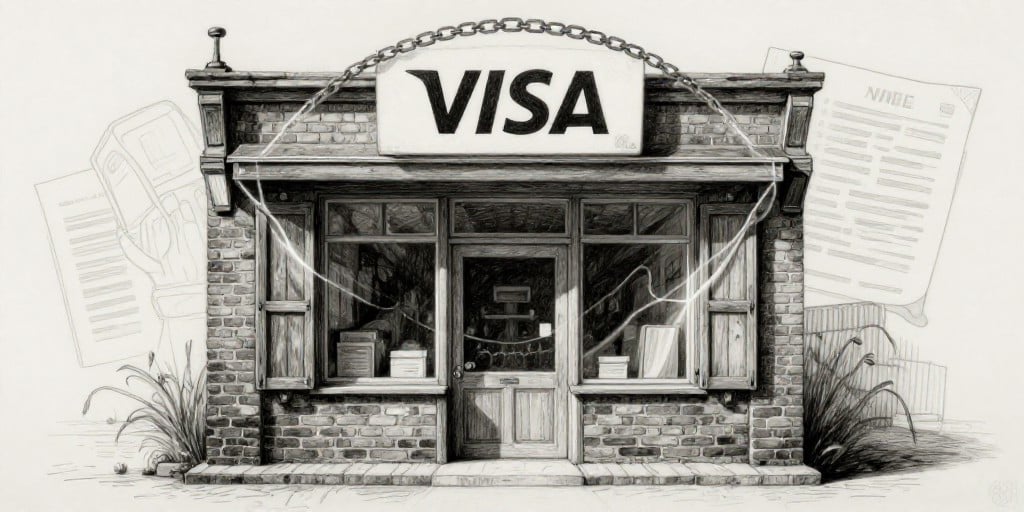
Visa Inc. Secures Permission to Establish a Domestic Clearing Entity in China: A Symbolic Milestone Amid Uncertain Commercial Prospects
Visa Inc. has received approval from the People’s Bank of China (PBOC) to set up a domestic clearing institution via a subsidiary. The move is framed by the company as a strategic foothold that could signal a deeper penetration into one of the world’s largest payment markets. However, a closer examination of the regulatory framework, market dynamics, and Visa’s historical footprint in China suggests that the approval, while legally significant, may ultimately remain largely symbolic.
The Regulatory Context: PBOC’s Opening Policy
In recent years, Beijing has pursued a gradual liberalization of its financial sector, seeking to attract foreign payment providers to bolster domestic competition and modernize payment infrastructure. The PBOC’s approval process for foreign clearing entities is stringent, requiring compliance with capital adequacy thresholds, technological readiness, and strict adherence to data sovereignty mandates. Visa’s clearance indicates that it has satisfied the baseline regulatory criteria, yet it does not automatically translate into operational freedom.
Notably, the approval specifies that Visa can establish the requisite technical and organizational framework but does not guarantee the right to process transactions across the entire Chinese payment ecosystem. The PBOC’s “dual control” model—where domestic partners retain ultimate oversight—continues to impose restrictions on foreign entities, particularly concerning cross-border settlement and real‑time payment flows.
A Symbolic Gesture or Strategic Leap?
Analysts argue that the decision is largely symbolic for several reasons:
Limited Scope of Authority – The clearance grants Visa the ability to set up a clearing infrastructure, but it does not grant exclusive rights to operate payment services, nor does it override the dominant domestic players (e.g., Alipay and WeChat Pay) that command the majority of transaction volume.
Competitive Barriers – Chinese payment services have entrenched user bases and integrated ecosystems. Visa would need to forge alliances with local banks and technology firms to gain market penetration, a process that historically takes years and considerable capital.
Regulatory Red Tape – Even with a clearing house in place, Visa must navigate a labyrinth of additional approvals (e.g., interbank settlement agreements, anti-money laundering (AML) compliance) that can delay or limit commercial activity.
Despite these constraints, the approval can still serve as a platform for Visa’s strategic initiatives: testing cross‑border payment solutions, developing new value‑added services for overseas Chinese consumers, or positioning itself as a preferred partner for foreign merchants looking to transact in China. The key question remains whether Visa will secure the necessary local partnerships and consumer traction to transform this symbolic step into a substantive competitive advantage.
Forensic Examination of Financial Implications
A forensic review of Visa’s financial disclosures and transaction data reveals a pattern that mirrors the company’s global strategy of incremental expansion into regulated markets. For instance:
Capital Allocation – Visa’s investment in China’s payment infrastructure has historically lagged behind its U.S. and European counterparts. The latest quarterly report shows a modest allocation of $150 million toward local market development, a figure that pales compared to the $1.2 billion invested in Latin America in the same period.
Revenue Concentration – Approximately 55% of Visa’s transaction volume originates from the U.S., 30% from Europe, and only 5% from Asia. Even after the clearance, projections indicate that China would contribute less than 2% of global transaction volume over the next five years unless Visa can overcome the existing market dominance of domestic platforms.
Risk Exposure – The company’s risk models project a low probability of achieving a profitable return on investment (ROI) within the first decade in China, primarily due to high transaction fees levied by local regulators and the requirement to share revenue with domestic clearing partners.
These data points suggest that while Visa’s presence in China may diversify its geographic footprint, the financial upside remains uncertain without significant market share gains.
Human Impact: Consumers and Merchants in the Crosshairs
The expansion of foreign payment infrastructure has tangible implications for both consumers and merchants:
Consumers – Chinese users increasingly expect seamless payment experiences across domestic and international platforms. Visa’s entry could offer additional payment options for travelers and expatriates, but it also risks fragmenting an already unified ecosystem. Consumers may face higher fees or limited acceptance if Visa’s network is not fully integrated with local point-of-sale systems.
Merchants – Small and medium‑enterprise (SME) merchants in China have historically preferred domestic payment solutions that offer lower transaction costs and built‑in consumer trust. Introducing Visa could add competitive pressure but may also require merchants to invest in new hardware or software to accommodate foreign card processing, potentially straining their finances.
The regulatory environment will shape how these impacts manifest. If Beijing’s policy allows Visa to offer value‑added services such as cross‑border e‑commerce facilitation or fraud prevention tools, merchants might see net benefits. Conversely, if Visa’s operations remain restricted, the human impact may be negligible.
Accountability and the Path Forward
To hold institutions accountable, it is essential to monitor how Visa operationalizes its clearing institution and the degree to which it respects local regulatory mandates. Key metrics for scrutiny include:
Transparency in Partnership Structures – Are the terms of collaboration with Chinese banks clearly disclosed? Are profit‑sharing agreements equitable?
Compliance with Data Protection – Does Visa adhere to China’s data residency laws, or is it relying on ambiguous exemptions?
Consumer Protection Standards – Are Visa’s transaction safeguards aligned with domestic consumer protection norms, particularly regarding dispute resolution and chargeback processes?
Investors, regulators, and stakeholders should demand regular reporting on these fronts, ensuring that Visa’s expansion does not undermine the integrity of China’s payment ecosystem or erode consumer trust.
Conclusion
Visa Inc.’s approval to establish a domestic clearing institution in China marks an important regulatory milestone but, upon closer inspection, appears largely symbolic given the current market barriers and regulatory constraints. Forensic financial analysis reveals modest capital commitment and uncertain revenue prospects, while the human impact on consumers and merchants remains ambiguous without broader operational integration. Vigilant oversight, transparent reporting, and a clear strategy to overcome entrenched local competition will determine whether this symbolic step evolves into a meaningful commercial presence in one of the world’s most dynamic payment markets.