
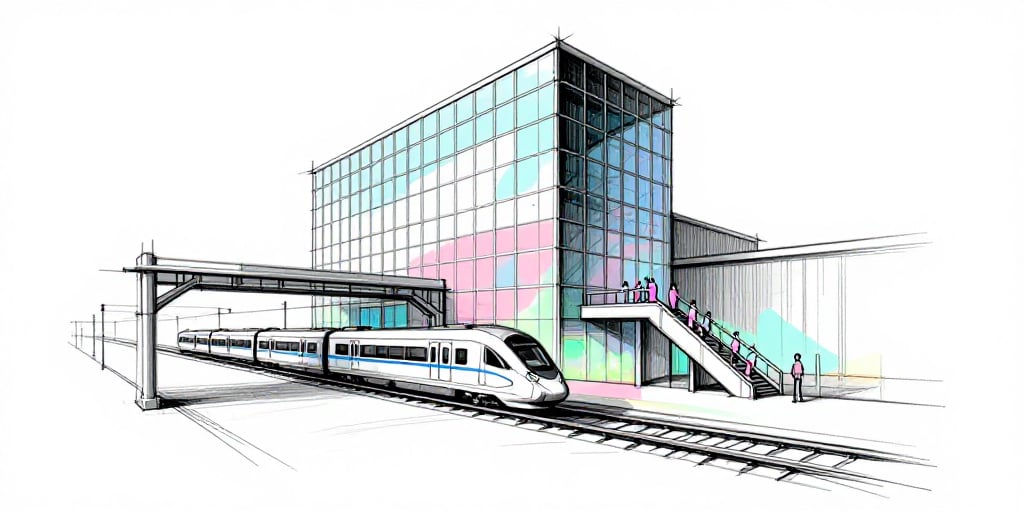
Overview of the Transaction
On 13 May 2026, the French construction and infrastructure conglomerate Vinci secured a high‑value contract in the United Kingdom. The agreement, awarded by HS2 Ltd., authorises Vinci, through its joint‑venture partner Taylor Woodrow, to design, construct, test and commission a critical maintenance facility and operational control centre for the forthcoming high‑speed rail corridor between West London and Birmingham.
The venture is a 50‑50 partnership between Vinci and Taylor Woodrow, a joint‑venture in which Vinci holds a 50 % equity stake. The project will be executed entirely by the joint venture, which brings together Vinci’s global experience in large‑scale infrastructure delivery and Taylor Woodrow’s strong local presence in the UK construction market.
Project Description
Facility Components
- Maintenance Building – Provides comprehensive maintenance services for HS2 rolling stock.
- Train‑Washing Plant – Automated cleaning system designed for high throughput and minimal water consumption.
- Automated Inspection Building – Equipped with advanced diagnostic tools for rapid fault detection.
- Stabling Tracks – Dedicated parking space for locomotives and carriages.
- Test Track – Dedicated line for speed and safety testing of new equipment.
- Network Integrated Control Centre (NICC) – Central hub that will oversee operations across the entire HS2 network.
The facility will be constructed on a former industrial site adjacent to Birmingham, thereby contributing to local urban regeneration. Projected employment figures include approximately 1,000 permanent jobs and several hundred construction‑phase positions.
Sustainability Credentials
The design incorporates low‑carbon construction techniques and energy‑efficient systems, aligning with the UK government’s Net Zero strategy and HS2’s own sustainability objectives. Features such as on‑site renewable generation, high‑performance insulation, and water‑recycling infrastructure have been integrated to minimise the facility’s environmental footprint.
Financial Details
- Contract Value – €900 million (≈ £850 million)
- Revenue Recognition – Expected to be recognised over the construction and commissioning period, consistent with standard industry practice for large‑scale infrastructure contracts.
- Profitability – Vinci’s historical gross margin on comparable projects averages 12‑15 %; the joint venture’s risk profile is mitigated by the long‑term service contracts associated with the HS2 operation.
Strategic Context
Vinci’s Position in Europe
Vinci’s participation in the HS2 project underscores its continued leadership in European infrastructure, particularly in the rail sector. The company’s track record includes the Channel Tunnel, Paris‑Orly Airport, and the Lyon‑Saint‑Exupéry Airport expansions. By securing this contract, Vinci reinforces its reputation for delivering complex, technology‑intensive rail facilities on time and within budget.
UK Infrastructure Landscape
The UK’s focus on high‑speed rail represents a significant shift from traditional road‑and‑rail projects, with a projected investment of over £100 billion. Vinci’s involvement signals confidence in the UK’s post‑Brexit regulatory environment and its ability to secure large contracts despite the economic uncertainties of 2026.
Competitive Landscape
Key competitors for such contracts include Balfour Beatty, Laing Group, and Skanska. Vinci’s edge lies in its integrated design–build approach, enabling streamlined communication between engineering, procurement, and construction disciplines. The joint‑venture structure also mitigates local market risks, providing a blend of global expertise and domestic knowledge.
Cross‑Sector Implications
The HS2 contract demonstrates how construction firms are increasingly engaging in technology‑driven projects that blur the lines between civil engineering and digital infrastructure. The integration of an automated inspection building and a high‑capacity control centre foreshadows a future where construction companies must possess capabilities in software, data analytics, and cyber‑physical systems management.
Economic Impact
The project is expected to inject significant capital into the local economy. Beyond direct job creation, ancillary benefits include:
- Supply Chain Activation – Local suppliers will engage in procurement of specialized materials and services, boosting regional manufacturing activity.
- Skills Development – Training programmes associated with the facility’s advanced systems will raise the skill level of the UK construction workforce.
- Urban Regeneration – The redeveloped site will act as a catalyst for further investment in Birmingham’s transport and commercial infrastructure.
Media Coverage and Market Reaction
The announcement was reported by several reputable business outlets, including Dow Jones and specialized finance portals. Market analysts noted that Vinci’s expansion into the UK high‑speed rail sector could enhance the firm’s valuation through increased revenue diversification and exposure to a growing market segment. Investor sentiment generally reflects confidence in Vinci’s project execution capabilities and the long‑term profitability of infrastructure assets.
Conclusion
Vinci’s new contract for the HS2 maintenance facility and control centre exemplifies the strategic convergence of construction expertise, technology integration, and sustainable development. The project’s scale, complexity, and economic ramifications position Vinci as a key player in the evolving landscape of high‑speed rail infrastructure, both within Europe and across the broader global market.