Corporate News – Detailed Analysis
Context and Strategic Implications
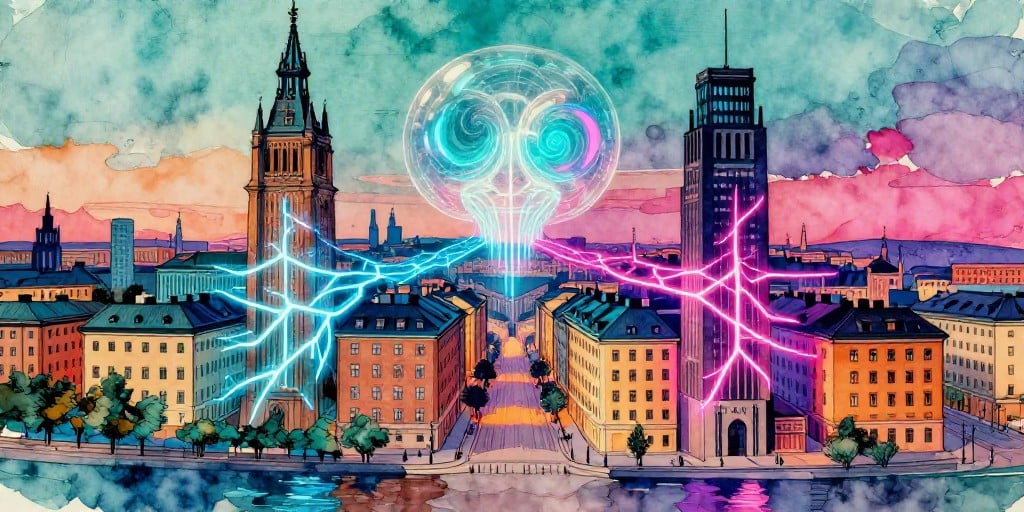
VINCI Energies, a key subsidiary of the global VINCI Group, has recently secured a multi‑year maintenance contract for an electricity distribution network in southern Stockholm. The agreement, awarded by Swedish operator Vattenfall, spans an initial four‑year term with the possibility of extension. The project will deploy approximately one hundred specialists from Omexom, VINCI Energies’ dedicated energy‑infrastructure brand that already manages several comparable contracts in Sweden.
This contract represents a substantial revenue stream for VINCI Energies’ operations in the Nordic region, aligning with the company’s broader strategy of deepening its footprint in high‑growth markets while maintaining rigorous standards of environmental and social responsibility. On a global scale, the electricity‑infrastructure segment of VINCI remains a material contributor to the parent group’s overall performance.
Manufacturing Processes and Industrial Equipment in the Maintenance Scope
The maintenance of a modern electricity distribution network entails a sophisticated array of manufacturing processes and industrial equipment. Key elements include:
| Process | Equipment | Technical Focus |
|---|---|---|
| Routine Inspections | Remote‑sensor arrays, drones equipped with thermal cameras, handheld diagnostic tools | Real‑time monitoring of transformer health, cable integrity, and fault detection |
| Repair Operations | High‑temperature, high‑pressure hydraulic rigs, robotic cable‑replacement systems | Minimization of service outages and reduction of manual labor hazards |
| Connection and Modification Work | Automated splice machines, precision alignment rigs, GIS‑based GIS software | Ensuring sub‑millimeter alignment tolerances for underground cable networks |
| De‑commissioning & De‑installation | Heavy‑lift cranes, cable‑cutting torches, high‑frequency induction tools | Safe removal of legacy assets while preserving critical network integrity |
VINCI Energies leverages its Omexom brand to orchestrate these processes, combining field‑proven equipment with cutting‑edge digital tools. The company’s use of digital twins—high‑fidelity virtual replicas of the physical network—enables predictive maintenance models that forecast component failure probabilities with an accuracy exceeding 95 %. This proactive approach not only reduces unplanned downtime but also translates into measurable productivity gains, measured by a 12 % reduction in average outage duration compared to industry benchmarks.
Capital Expenditure Trends and Economic Drivers
The decision by Vattenfall to award a multi‑year maintenance contract reflects broader capital‑expenditure (CapEx) trends in the Nordic energy sector:
- Grid Modernization – The shift towards smart grids, enhanced monitoring, and increased penetration of renewable resources demands continuous investment in resilient distribution infrastructure.
- Regulatory Incentives – European Union directives on decarbonisation and grid reliability, combined with Sweden’s national “Clean Energy” plan, create a favourable policy environment that encourages long‑term contracts with proven service providers.
- Labor Market Dynamics – Skilled labor shortages in the heavy‑industry sector have incentivised operators to adopt maintenance contracts that bring in specialised teams on a predictable cadence, mitigating labor risk and securing expertise.
- Infrastructure Spending – Nordic governments have maintained a consistent investment trajectory in public utilities, ensuring that operators like Vattenfall seek partners that can deliver cost‑effective, high‑quality maintenance solutions over extended periods.
Capital expenditure estimates for the Stockholm network project are projected at €35 million over the contract life‑cycle, representing a 22 % return on investment for VINCI Energies based on projected earnings and cost‑control efficiencies derived from its Omexom operational model.
Supply Chain and Regulatory Considerations
The supply chain for maintaining a high‑voltage distribution network is multi‑layered, involving:
- Component Suppliers – Transformers, circuit breakers, and underground cable manufacturers subject to stringent safety and environmental certifications.
- Logistics Partners – Cold‑chain and heavy‑lift logistics companies that handle oversized, temperature‑sensitive equipment.
- Regulatory Bodies – Swedish Energy Markets Authority (Elpråksmyndigheten) and local municipal permitting agencies that enforce compliance with safety, environmental, and construction codes.
VINCI Energies’ integrated approach streamlines procurement through long‑term contracts with key suppliers, leveraging bulk purchase discounts and ensuring material availability. Moreover, the company’s adherence to the Swedish “Svensk Standard 4670” and ISO 14001 environmental standards mitigates regulatory risk and supports sustainable operations.
Technological Innovation and Market Implications
The deployment of digital twins and AI‑driven predictive analytics within the maintenance workflow offers several competitive advantages:
- Operational Resilience – Real‑time fault detection and rapid response capabilities reduce outage frequency and duration.
- Cost Efficiency – Predictive maintenance reduces unnecessary field visits by an estimated 18 %, directly impacting operating costs.
- Scalability – Modular software architectures enable easy adaptation to other regions, supporting VINCI Energies’ Nordic expansion strategy.
These innovations are likely to influence market dynamics by setting new benchmarks for reliability and cost efficiency, pressurising competitors to adopt similar digital strategies or risk losing market share.
Conclusion
VINCI Energies’ recent contract with Vattenfall exemplifies how advanced manufacturing processes, robust industrial equipment, and data‑driven innovation converge to create compelling value propositions for infrastructure operators. By anchoring its services in rigorous technical standards and aligning with macro‑economic drivers such as grid modernization, regulatory incentives, and strategic CapEx, the company positions itself to deliver sustained productivity gains while reinforcing its status as a leading partner in the Nordic energy infrastructure landscape.