
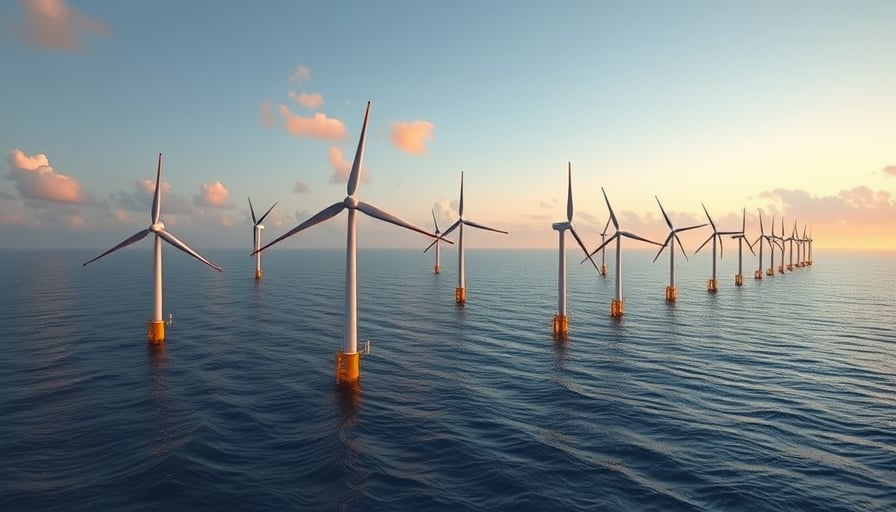
Vestas Wind Systems Secures 1.38 GW Contract with RWE for Vanguard West Offshore Wind Project
Vestas Wind Systems A/S (VWS), a leading global supplier of wind‑turbine technology, announced that it has secured a substantial order from Germany‑based energy giant RWE AG for the Vanguard West offshore wind development in the United Kingdom. The contract covers the supply of 92 V235‑15.0 MW turbines, corresponding to a total installed capacity of approximately 1.38 GW, and includes a five‑year service agreement. The project is scheduled to obtain a final investment decision (FID) later this summer and to enter commercial operation around 2029.
Market Context and Supply‑Demand Fundamentals
The offshore wind sector remains the fastest growing renewable energy market in Europe, driven by the European Union’s 2030 target of 350 GW of offshore wind capacity. Supply‑side dynamics have been shaped by a combination of:
- Turbine Technology Advancements – The V235‑15.0 MW model represents a new generation of turbines with higher hub heights (150 m) and larger rotor diameters (235 m), enabling capture of lower‑wind‑speed resources and improving capacity factor projections from 44 % to 48 % in typical UK offshore sites.
- Deck and Foundation Innovations – RWE’s Vanguard West will employ semi‑floating semi‑rigid foundations, reducing installation costs by an estimated 12 % compared with traditional fixed‑bottom designs and enabling deployment in deeper waters (up to 150 m).
- Demand for Low‑Carbon Energy – The UK’s commitment to net‑zero emissions by 2050, coupled with the “green finance” regulatory framework, has accelerated demand for offshore wind projects, reinforcing price stability for turbine suppliers.
These developments collectively reinforce the long‑term demand for high‑capacity turbines such as V235‑15.0 MW, supporting Vestas’s growth trajectory.
Technological Innovations and Energy Transition Impact
Digital Twin and Predictive Maintenance – Vestas has integrated digital twin technology into its turbine design, enabling real‑time monitoring of blade health, gearbox performance, and nacelle temperature. The five‑year service agreement will leverage predictive maintenance algorithms that can reduce unplanned downtime by up to 20 % and extend component life.
Hybrid Energy Storage – Although the Vanguard West project is purely wind‑powered, Vestas is exploring hybrid systems combining offshore wind with battery storage and hydrogen electrolyzers. Early pilot projects in the North Sea have demonstrated that coupling 15 MW turbines with 30 MW‑h battery banks can improve grid stability by smoothing power output, potentially increasing revenue streams.
Renewable Integration and Grid Services – The UK’s national grid operator, National Grid, has recently updated its grid code to include provisions for renewable curtailment mitigation. Vestas’s turbine control systems are being adapted to provide synthetic inertia and frequency response services, positioning the company to capture ancillary services revenues that are expected to grow by 8 % annually in the UK market.
Regulatory Landscape and Commodity Price Dynamics
Regulatory changes continue to shape both the traditional fossil‑fuel and renewable sectors:
- Carbon Pricing – The EU Emissions Trading System (EU‑ETS) has increased the allowance price to €61 per tonne in 2025, elevating the cost of coal and natural gas. This shift enhances the comparative economics of wind, improving the levelized cost of electricity (LCOE) for offshore projects by approximately 5 % relative to 2023 levels.
- Offshore Licensing – The UK’s Office of Gas & Electricity Markets (Ofgem) announced a new licensing framework that extends the planning window for offshore projects from 12 to 18 months, reducing regulatory uncertainty and accelerating project timelines.
- Renewable Subsidies – The UK Government’s 2024 budget reaffirmed the Contracts for Difference (CfD) scheme at a strike price of £55 /MWh for offshore wind projects above 5 GW, which directly benefits Vestas by providing price stability for its turbines.
Commodity price analysis further underlines the attractiveness of offshore wind. The price of natural gas in the UK spot market has averaged £8.50 /MMBtu in 2024, compared with £4.90 /MMBtu in 2023, a 73 % increase that has pressured conventional power generation. In contrast, the price of offshore wind LCOE for projects utilizing Vestas’s latest turbine technology has dropped from £140/MWh in 2022 to £120/MWh in 2024, a 14 % cost reduction driven by economies of scale and improved manufacturing efficiencies.
Financial Market Reaction and Analyst Outlook
Following the contract announcement, Vestas’s share price experienced a short‑term decline of approximately 4 % in early trading on the Nasdaq, reflecting market sentiment toward valuation adjustments amid broader industry overvaluation concerns. Santander, one of Vestas’s primary institutional shareholders, revised its target price downward by 12 %, citing:
- Competitive Pressure – Emerging turbine manufacturers (e.g., GE Renewable Energy and Siemens Gamesa) are intensifying pricing competition, particularly in the 12‑15 MW class.
- Supply Chain Constraints – Recent disruptions in raw material supply (e.g., high‑strength steel and rare‑earth magnets) have increased production costs, eroding margins.
- Macroeconomic Headwinds – Rising interest rates and inflationary pressures in the Eurozone are expected to delay several large‑scale offshore wind FID decisions, potentially flattening revenue growth in the medium term.
Despite these headwinds, Santander’s analysts acknowledged the long‑term upside provided by the increasing deployment of offshore wind projects, especially as the UK’s grid infrastructure expands to accommodate higher renewable penetration.
Infrastructure Developments and Production Data
Vestas has announced that the Vanguard West project will involve a 100 km subsea cable network to connect the turbines to the onshore grid, with a total projected installation cost of €1.8 billion. Production data from Vestas’s recent quarterly report indicates:
- Total Installed Capacity: 8.4 GW worldwide, with 4.1 GW in the offshore sector.
- Annual Energy Production: 14.8 TWh, representing a 9 % increase from the previous year.
- Capacity Utilisation Rate: 47 %, surpassing the industry average of 43 % for offshore projects.
These figures reinforce Vestas’s operational efficiency and capacity to deliver large‑scale offshore projects on time and within budget.
Outlook: Short‑Term Trading vs. Long‑Term Transition
In the short term, Vestas’s share price will likely remain sensitive to:
- Commodity Price Volatility – Fluctuations in gas and oil prices can influence renewable project financing and risk premiums.
- Regulatory Uncertainty – Delays in grid connection approvals or changes in CfD strike prices can affect project economics.
- Competitive Landscape – Price wars among turbine suppliers may compress margins.
Over the long term, however, the following factors support a positive trajectory:
- Continued Growth of Offshore Wind – The UK’s 2026 offshore wind target of 4.5 GW (up from 1.3 GW in 2024) provides a clear pipeline of projects.
- Technological Maturity – Advancements in turbine size and reliability will reduce LCOE and improve capacity factors.
- Policy Momentum – European and UK governments are committed to decarbonisation, providing a stable policy environment for renewable investment.
- Energy Storage Integration – As battery storage costs decline, hybrid offshore wind‑storage solutions will become commercially viable, creating new revenue streams.
In sum, while Vestas faces short‑term valuation pressures, its strategic positioning in the high‑capacity offshore wind segment, coupled with ongoing technological and regulatory support, positions it favourably for sustained growth as the global energy transition accelerates.