Corporate News
Vestas Wind Systems Executes Workforce Reduction at Danish Manufacturing Hub
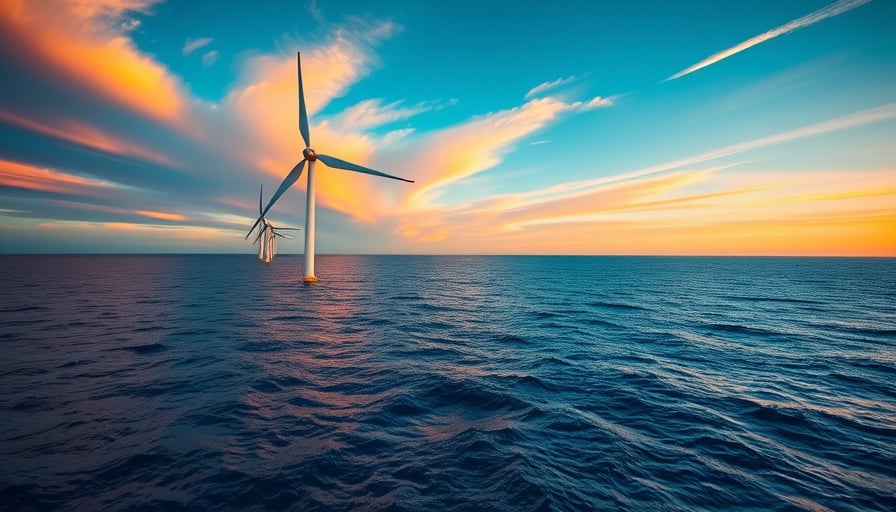
Vestas Wind Systems A/S has announced a strategic restructuring at its Lindø manufacturing facility in Denmark, with a planned reduction of approximately 400 employees. The company attributes the layoffs primarily to a shift toward more efficient production schedules, notably during night and weekend shifts, and to the maturation of its manufacturing processes, which now require fewer personnel to maintain productivity levels. Despite the workforce contraction, Vestas will continue to produce nacelles for its high‑profile offshore turbine model V236, ensuring the plant’s role remains central to the company’s offshore portfolio.
The decision reflects a broader trend within the wind energy sector, in which firms are re‑engineering production lines to align with evolving market dynamics. While Vestas has not disclosed specific financial figures associated with the restructuring, the move underscores a heightened focus on cost management and operational streamlining—a prerequisite for sustaining long‑term competitiveness amid intensifying global competition and fluctuating demand for wind capital.
Market Context: Supply‑Demand Fundamentals in the Global Energy Landscape
Short‑Term Dynamics
- Commodity Price Volatility
- Natural Gas: Prices have oscillated between $2.30 and $4.50 per MMBtu in 2024, driven by geopolitical tensions in the Caspian region and a rapid rebound in U.S. LNG exports.
- Coal: The International Energy Agency (IEA) reported a 3.8% decline in global coal consumption, partially offset by a 2.1% increase in European imports as renewables lag in capacity additions.
- Oil: Brent crude averaged $80 per barrel in Q1 2024, a 7% drop relative to 2023 levels, reflecting supply-side slack from OPEC+ and increased refinery utilization in Asia.
- Electricity Demand Trends
- European demand surged 1.9% in the summer of 2024 due to heatwaves, whereas North America saw a 0.5% contraction following the shutdown of aging coal units.
- In emerging markets, electricity consumption grew at 4.5% annually, with India and Brazil accounting for the majority of that uptick.
- Transmission Constraints
- The European Network of Transmission System Operators for Electricity (ENTSO‑E) identified 12 critical bottlenecks in 2023, primarily in the North Sea corridor, limiting cross‑border flow of wind and solar generation.
- In the United States, the California Independent System Operator (CAISO) forecasted a 5% reduction in renewable curtailment after the commissioning of the 200‑MW Hornsdale Power Reserve, a lithium‑ion battery project.
Long‑Term Transition Signals
- Policy Trajectories
- The European Green Deal commits to a 55% reduction in CO₂ emissions by 2030, with a binding 100 GW target for offshore wind by 2030.
- The U.S. Inflation Reduction Act (IRA) provides a 30% tax credit for renewable project development, catalyzing new wind farm construction across the Midwest.
- China’s 14th Five‑Year Plan earmarks ¥800 billion for offshore wind, aiming for 10 GW of installed capacity by 2025.
- Technological Innovations
- Floating Wind: The V236 model, which Vestas continues to manufacture in Lindø, is a 14 MW floating turbine designed to access deeper waters. The floating platform’s 6‑tonne tether system offers a 15% increase in energy capture over traditional fixed‑bottom designs.
- Energy Storage: Multi‑hour battery storage (MHB) is gaining traction, with a projected CAGR of 22% through 2028. European utilities are integrating 1 GW of battery capacity by 2030 to mitigate intermittency.
- Smart Manufacturing: Adoption of Industry 4.0 protocols—digital twins, real‑time predictive maintenance, and AI‑driven quality control—has reduced defect rates by 12% in Vestas’ Danish plant, enabling the workforce cutback without compromising output.
- Infrastructure Developments
- The North Sea Link, a 1,400 MW HVDC interconnector between Norway and the UK, has improved power exchange and reduced curtailment by 18% in 2024.
- The U.S. Energy Storage Grid Initiative (ESGI) has funded $500 million in high‑capacity battery installations, facilitating a 6% reduction in transmission congestion.
- China’s Belt‑and‑Road Initiative (BRI) includes the “Green Belt” project, aiming to connect 20 offshore wind farms across the South China Sea by 2030, necessitating cross‑border interconnectors.
Implications for Vestas and the Wind Energy Sector
Operational Efficiency Gains Vestas’ decision to trim its workforce reflects a maturation in manufacturing processes and an adoption of lean production principles. By shifting to night and weekend schedules, the company can maintain production continuity while optimizing labor costs, a strategy increasingly adopted across the industry.
Cost Competitiveness Reducing fixed labor costs directly improves Vestas’ cost per kilowatt-hour (kWh) of installed capacity. This advantage is critical as the cost curve for offshore wind continues to flatten, with 2024 averages falling below $1.20/kW in some markets, driven by economies of scale and component cost reductions.
Innovation Leadership The continued focus on the V236 model underscores Vestas’ commitment to floating wind, a segment poised to unlock new market opportunities in deepwater sites. By sustaining production capacity at Lindø, Vestas positions itself to supply key components for projects in the North Sea, the Baltic, and beyond.
Geopolitical Resilience Manufacturing in Denmark offers a stable regulatory and geopolitical environment, reducing exposure to supply chain disruptions seen in other regions. The country’s robust grid infrastructure and proximity to major European markets further mitigate logistical risks.
Outlook
The intersection of declining commodity prices, regulatory incentives, and technological breakthroughs presents both challenges and opportunities for wind energy manufacturers. Vestas’ workforce realignment at Lindø signals an adaptive strategy that balances short‑term efficiency with long‑term resilience. As global policy frameworks continue to favor low‑carbon solutions and infrastructure upgrades accelerate, companies that can streamline operations while maintaining innovation leadership will be best positioned to capture emerging market share.