Corporate News Analysis
Vertiv Holdings Co. has recently captured renewed market attention as a key player in the evolving artificial‑intelligence (AI) infrastructure landscape. The company’s strategic moves—particularly a partnership with Solenis and a high‑profile data‑centre contract in Brunei—underscore its growing relevance in a sector that sits at the intersection of technology, energy, and supply‑chain security.
Strategic Partnerships and Technological Positioning
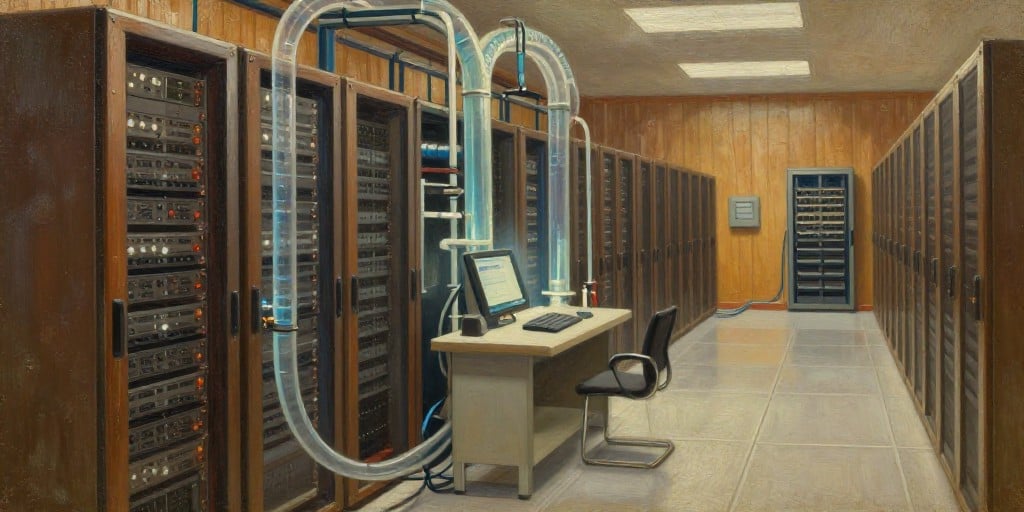
In late November, Vertiv announced a collaboration with Solenis to enhance the reliability of liquid‑cooling systems for AI data‑centres. Liquid cooling is increasingly viewed as a critical enabler of dense, high‑performance computing. By integrating Solenis’ advanced materials and processes, Vertiv aims to deliver more efficient, scalable cooling solutions that can handle the rising thermal loads associated with AI workloads. This partnership positions Vertiv as a specialist in the physical infrastructure that underpins AI operations, a niche that differentiates it from pure software or semiconductor firms.
Government‑Backed Contracts and Supply‑Chain Security
The U.S. government’s focus on securing technology supply chains, particularly in Southeast Asia, has translated into tangible contracts for Vertiv. An administration announcement highlighted a substantial data‑centre tender awarded to the company in Brunei. The contract is part of a broader strategy to secure AI‑enabled infrastructure from U.S. firms, thereby reducing geopolitical risk exposure and ensuring access to reliable hardware and support services. Vertiv’s presence in this region signals its ability to meet stringent regulatory and security requirements—a key competitive advantage in the current geopolitical climate.
Financial Outlook and Operational Focus
During an earnings‑call transcript released earlier in the month, Vertiv’s management emphasized the stability of long‑term operation‑and‑maintenance (O&M) agreements, particularly in India’s transmission and distribution sectors. These contracts provide predictable cash flows and reduce exposure to market volatility. The company also acknowledged a modest but growing data‑centre base, projecting gradual expansion as new projects are approved. While revenue growth remains modest compared with high‑profile chipmakers, Vertiv’s margin profile remains robust, and its balance sheet is described as strong. This financial resilience underpins the company’s capacity to invest in new capabilities and seize emerging opportunities.
Market Context and Investor Sentiment
AI stocks as a group have experienced heightened volatility as investors reassess the relationship between capital spending and sustainable returns. Vertiv, classified as a provider of essential physical infrastructure, sits at a unique nexus: it delivers tangible value that underpins AI workloads while avoiding the speculative price swings characteristic of pure‑play AI vendors. Analysts note that Vertiv’s ability to convert increased demand into stable earnings will be a key metric for investors. The company’s recent partnership activities and government‑backed contracts reinforce its position as a dependable component of the AI ecosystem.
Cross‑Sector Implications
Vertiv’s focus on cooling and power distribution resonates beyond the technology sector. Energy‑efficient data‑centre operations are a growing priority for utilities, real‑estate developers, and governments seeking to reduce carbon footprints. Likewise, Vertiv’s involvement in transmission and distribution across India dovetails with global infrastructure upgrades aimed at improving resilience and integrating renewable sources. Thus, the company’s strategic initiatives reflect broader economic trends—such as the transition to digital economies, the prioritisation of energy efficiency, and the imperative to secure critical supply chains.
Conclusion
Vertiv Holdings Co. demonstrates how a company that specializes in the physical infrastructure of AI can leverage strategic partnerships, government contracts, and a stable O&M portfolio to navigate a market characterized by volatility and rapid technological change. Its actions illustrate the convergence of multiple industries—technology, energy, and infrastructure—while reinforcing the notion that foundational services can generate sustainable value even amid shifting investor sentiment.