Institutional Investor Dynamics and Vertiv’s Strategic Response in a Shifting Data‑Center Landscape
Institutional investors have intensified their scrutiny of the data‑center infrastructure sector during the third quarter of 2026, resulting in a noticeable shift in ownership patterns among data‑center‑related equities. While the broader market experienced a net withdrawal of capital from these stocks, Vertiv Holdings Co. exhibited a comparatively modest decline in its share price relative to peers. This divergence reflects a broader reassessment of valuation for infrastructure companies amid rising political uncertainty surrounding data‑center expansion in the United States.
The sell‑off in data‑center infrastructure coincided with a continued, albeit more measured, buying activity in artificial‑intelligence (AI) and semiconductor equities. Investors appear to remain receptive to the underlying technologies driving digital transformation, yet they are exercising heightened caution around the infrastructure that supports these technologies. This behavioral pattern underscores a nuanced risk‑reward assessment: the growth prospects of AI and semiconductors are perceived to outweigh the potential regulatory and policy risks that may impact data‑center development.
Vertiv’s ATLAS Lab: A System‑Level Testing Ecosystem
In response to evolving market dynamics, Vertiv announced the opening of its ATLAS Lab, a system‑level testing facility that integrates power, cooling, controls, and information‑technology (IT) infrastructure within a single environment. The laboratory is engineered to validate the performance of next‑generation accelerated‑computing architectures before the silicon is available. By identifying and resolving integration challenges early in the design process, Vertiv seeks to mitigate time‑to‑market risks for its customers.
The collaboration with NVIDIA encompasses digital simulation, physical testing, and the deployment of advanced modeling tools. These resources enable Vertiv to align its hardware and software solutions with the precise requirements of cutting‑edge AI workloads. Demonstrating power and thermal management under realistic dynamic load conditions, the ATLAS Lab supports Vertiv’s broader strategy of delivering reliable, high‑density infrastructure tailored to AI‑driven data centers.
Industry‑Wide Trend Toward Liquid‑Cooling Technologies
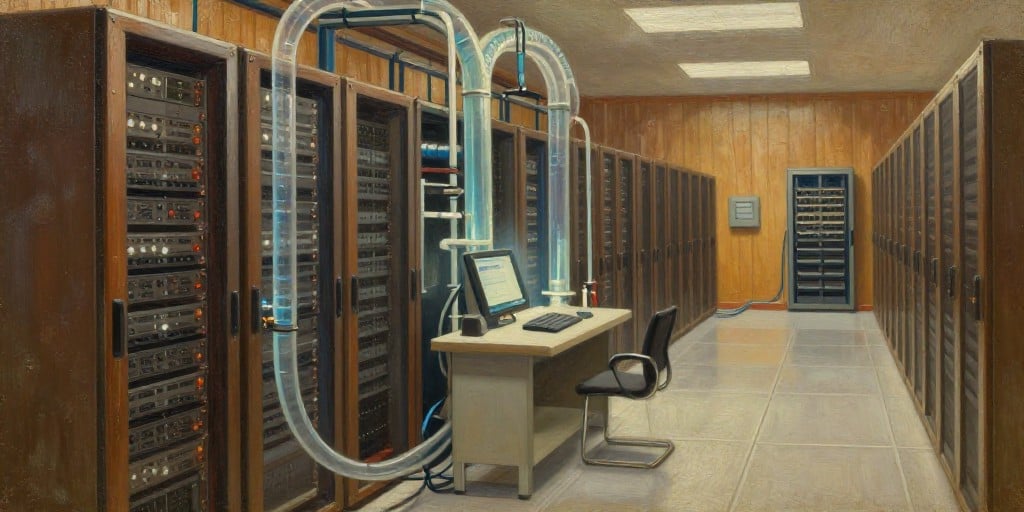
Vertiv’s initiatives occur within a broader industry trend that favors liquid‑cooling technologies. As AI servers demand increasingly higher power densities, liquid cooling has emerged as a critical enabler for maintaining operational stability and energy efficiency. Vertiv is well positioned to capture value in the expanding market for direct‑to‑chip cooling and related components. Its continued expansion of a portfolio that spans power and thermal management solutions for high‑performance computing environments reflects a commitment to addressing the technical challenges associated with next‑generation workloads.
Cross‑Sector Implications
The institutional shift toward AI and semiconductor equities, coupled with cautious sentiment toward data‑center infrastructure, illustrates a broader economic pattern. Investors are reallocating capital toward sectors that exhibit rapid technological advancement and clear monetization pathways while maintaining a defensive posture toward infrastructure that may be subject to regulatory volatility. Vertiv’s focus on providing foundational support for AI workloads—through its ATLAS Lab and advanced cooling solutions—positions the company at the intersection of these trends. By leveraging its expertise in power and thermal management, Vertiv can attract capital flows from investors who recognize the strategic importance of resilient infrastructure in a technology‑driven economy.
Conclusion
Vertiv Holdings Co.’s recent developments highlight a strategic response to both market sentiment and technological imperatives. While institutional investors recalibrate their exposure to data‑center infrastructure, Vertiv’s emphasis on system‑level testing and liquid‑cooling solutions aligns with the growing demand for efficient, high‑density AI computing environments. The company’s ability to bridge the gap between silicon innovation and infrastructure deployment may enhance its competitive positioning as the broader technology ecosystem continues to evolve.